
Alaska Train Routes 2026: The Denali Star, Coastal Classic, Glacier Discovery & Hurricane Turn
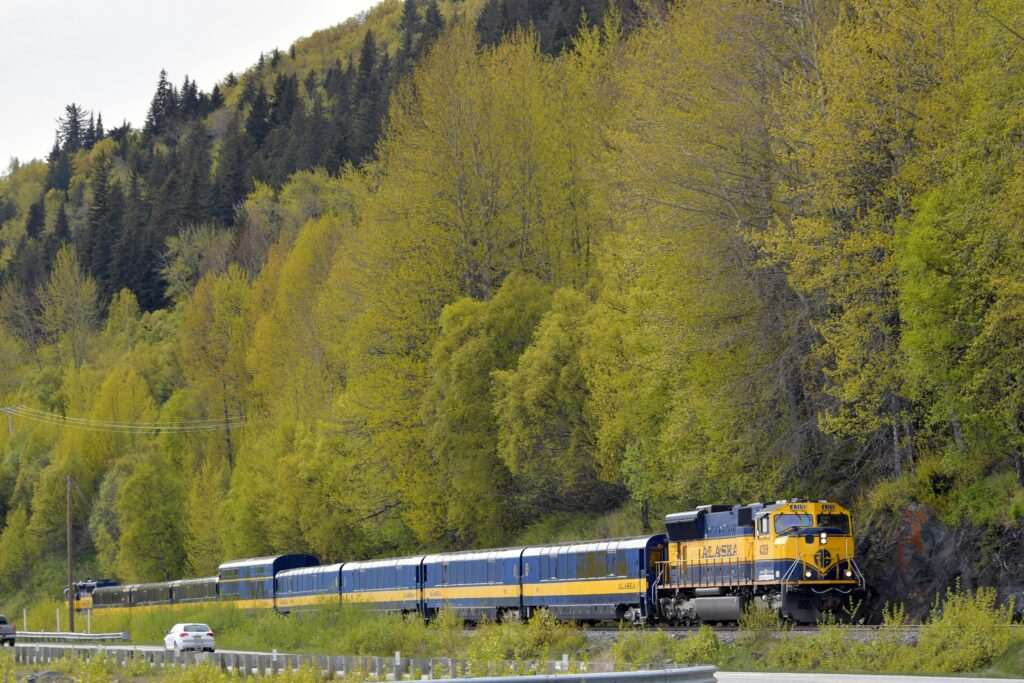
There are faster ways to get around Alaska. There are cheaper ways. But there is no more Alaskan way to travel than by Alaska Railroad — and once you’ve looked up from a domed observation car to watch a moose disappear into spruce forest while Denali floats above the clouds ahead of you, you’ll understand why the railroad has run these same routes for over a century.
Alaska Railroad operates four distinct passenger routes, each offering a genuinely different experience of the state. Here’s the complete 2026 guide to all four — what to expect, which seats to book, and how to string them together into the kind of Alaska trip people plan for years.
The Four Routes
1. Denali Star — Anchorage to Fairbanks (12 Hours)
The crown jewel of Alaska Railroad. The Denali Star departs Anchorage each morning in summer and arrives in Fairbanks that evening, covering 356 miles through some of the most spectacular interior Alaska terrain on earth. The route passes through Wasilla and the Matanuska-Susitna Valley, climbs into the Alaska Range foothills, stops in Talkeetna (the base camp town for Denali climbers), skirts the eastern edge of Denali National Park, crosses the high tundra at Hurricane Gulch, and descends into the Tanana River valley on approach to Fairbanks.
On a clear day — and summer days in interior Alaska are often clear — Denali itself appears above the horizon for extended stretches of the journey, distant and enormous, dwarfing everything around it. No road gives you the same unobstructed, sustained view of the mountain.
Wildlife sightings from the Denali Star are a genuine part of the experience: moose in the lowland spruce, Dall sheep on the cliffs above Hurricane Gulch, and the occasional grizzly bear working the river bars below. The train slows for wildlife without stopping — you have time for photos but you’re always moving.
Season: Daily service runs mid-May through mid-September. Reduced frequency in shoulder season.
2. Coastal Classic — Anchorage to Seward (4.5 Hours)
The shortest route and arguably the most scenically concentrated. The Coastal Classic departs Anchorage in the morning and reaches the coastal town of Seward on Resurrection Bay in approximately 4.5 hours — but those 4.5 hours cover terrain that no road can match.
Leaving Anchorage, the train crosses Turnagain Arm on a raised causeway above the water, offering sweeping views of the inlet, the Chugach Mountains, and — in spring and fall — the bore tides that surge up the arm in a visible wave. The route then climbs into the Kenai Mountains, threading narrow canyons, crossing glacier-fed rivers, and passing within sight of hanging glaciers and alpine snowfields before descending to the coast at Seward.
Seward sits at the gateway to Kenai Fjords National Park, making this an ideal pairing: take the morning train down, spend the day on a glacier or wildlife cruise, and return on the afternoon train (or overnight and explore further). Many visitors combine the Coastal Classic with a day trip to Exit Glacier or a Kenai Fjords boat tour.
Season: Summer only, late May through early September. Service typically runs daily at peak season.
3. Glacier Discovery — Anchorage to Whittier and Grandview (Excursion)
The Glacier Discovery is a summer excursion train running south from Anchorage through the same Kenai Mountain corridor as the Coastal Classic, but branching to serve two different destinations: Whittier (the Alaska Marine Highway ferry port and gateway to Prince William Sound) and Grandview (a remote whistle stop offering a close approach to the Chugach Mountains’ hanging glaciers).
The Grandview branch is especially notable for scenery: the train climbs through tunnels and switchbacks to reach a high alpine bowl surrounded by glaciated peaks, then returns — a round-trip journey that exists primarily for the view, since there’s nothing to do at Grandview except stand in the wilderness and look up.
For travelers connecting to the Alaska Marine Highway ferry system, the Whittier branch provides seamless train-to-ferry transfer for Prince William Sound and Southeast Alaska routing — a genuinely spectacular alternative to driving through the Anton Anderson Memorial Tunnel.
Season: Summer excursion schedule; check Alaska Railroad website for 2026 specific dates.
4. Hurricane Turn — Talkeetna to Hurricane (Flag-Stop Train)
The Hurricane Turn is unlike any other passenger train in the United States. Running between Talkeetna and the remote Hurricane area, this is Alaska’s last active flag-stop train: passengers wave it down from the tracks, board in the middle of nowhere, and ride to wherever they’re going — a remote cabin, a fishing camp, a hunting lodge, or simply a stretch of wilderness you want to explore. No road serves this corridor. The train is the road.
For visitors, the Hurricane Turn is a window into a vanishing Alaska — the Alaska of bush communities, subsistence lifestyles, and people for whom the railroad isn’t a tourist experience but a lifeline. The scenery is spectacular: the Susitna River gorge, tributary canyons, and views of the Alaska Range in clear conditions. Round-trip from Talkeetna takes a full day.
The Hurricane Turn runs on Fridays, Saturdays, and Sundays during summer. It is heavily booked; reserve well in advance.
Season: Weekends, late May through mid-September.
GoldStar vs. Adventure Class: Which Seats to Book
Alaska Railroad offers two service classes on its major routes:
- Adventure Class is the standard coach option — comfortable reclining seats, a snack bar, large windows, and access to the outdoor viewing platforms between cars. For most routes and most travelers, Adventure Class is entirely satisfying and significantly more affordable.
- GoldStar Dome Class is Alaska Railroad’s premium experience: a glass-domed upper level with panoramic 180-degree views, table seating for meals, and full dining service with Alaska-sourced food and drinks. The dome car experience transforms a scenic train ride into a meal event. GoldStar is worth the premium if you’re traveling the Denali Star (the longest route with the most to see) or the Coastal Classic’s mountain section.
Booking tip: On the Denali Star, GoldStar seats on the right side of the car (when traveling northbound) tend to offer the best angles for Denali views in the park section. On the Coastal Classic, both sides provide dramatic scenery but the left side (southbound) often has better angles for Turnagain Arm on departure.
Building a Loop Itinerary
Alaska Railroad’s routes connect naturally into multi-day loop itineraries that avoid backtracking:
- The Classic Loop: Anchorage → Fairbanks (Denali Star, Day 1) → Denali National Park bus tour (Day 2) → return to Anchorage via Parks Highway (Day 3) or continue south to Seward via Coastal Classic (Day 4).
- The Prince William Sound Circuit: Anchorage → Whittier (Glacier Discovery) → ferry through Prince William Sound to Valdez or Cordova → return via Parks Highway to Anchorage. An Alaska Marine Highway + Alaska Railroad combination that covers three completely different Alaska ecosystems.
- The Bush Alaska Day: Anchorage → Talkeetna (by train or rental car) → Hurricane Turn round-trip → overnight in Talkeetna. A two-day side trip from Anchorage that reaches genuinely remote Alaska.
Booking Your Alaska Railroad Tickets in 2026
All Alaska Railroad tickets are available at alaskarailroad.com. Key booking notes:
- GoldStar seats sell out early — book as soon as you have confirmed travel dates, ideally months in advance for July travel.
- The Hurricane Turn is disproportionately popular relative to capacity; book it first if it’s on your itinerary.
- Adventure Class seats have more availability but still fill up on peak summer dates (late June through early August).
- Alaska Railroad connects with several tour operators and cruise lines; check for package pricing if you’re booking as part of a larger Alaska itinerary.
Traveling Alaska by train is slower than flying and less flexible than driving — but it trades convenience for something harder to quantify: the feeling of moving through the landscape rather than over it. The Alaska Railroad has been running these routes since 1923. Some things are worth doing slowly.
No comments yet.