
Alaska Hot Springs 2026: Soaking in the Wild — Chena, Tolovana & Beyond
Alaska has hot springs. Most visitors do not know this, because the famous ones are not near Anchorage — they are concentrated in the Interior, a few hours from Fairbanks, in a landscape of boreal forest, permafrost, and long winter darkness. Getting to them from Anchorage takes commitment: a seven-hour drive or an hour’s flight followed by a rental car. What you find at the other end — a steaming outdoor rock lake surrounded by birch trees in February, with aurora rippling overhead — is worth every mile. This guide covers the three main hot springs destinations accessible from Interior Alaska, what the experience is actually like at each, and how to build a trip that makes the travel worthwhile.
Chena Hot Springs Resort
Chena Hot Springs Resort, located 60 miles east of Fairbanks on Chena Hot Springs Road, is the most developed and most accessible hot springs destination in Alaska. The resort operates year-round, offers lodging on-site, and has made itself into a full destination rather than just a soak stop — which is the right model for a location that requires significant travel to reach.
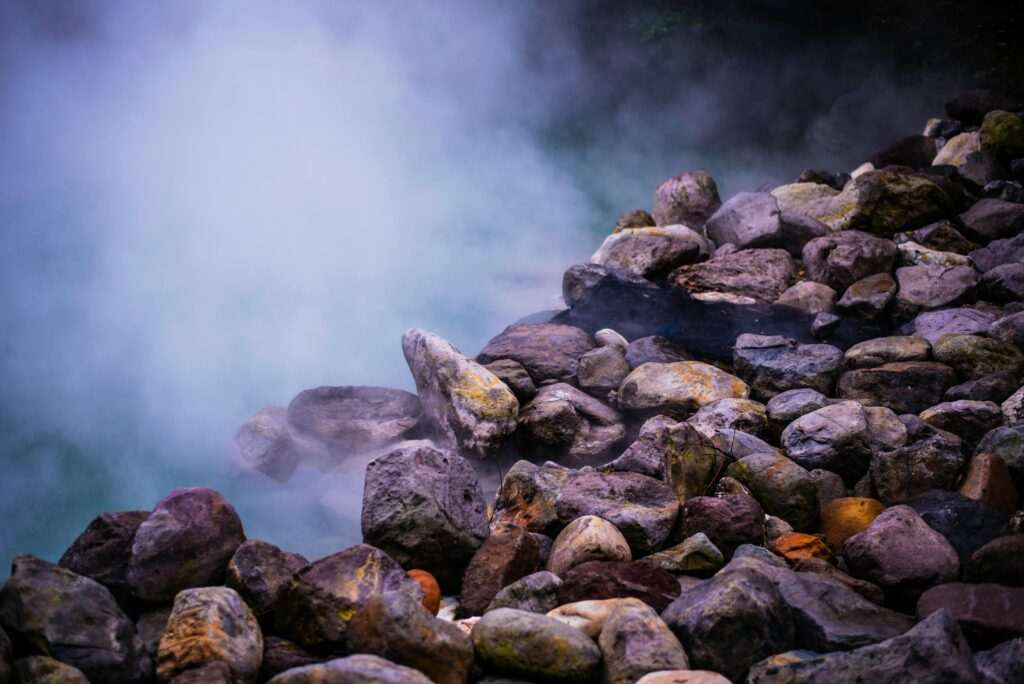
The signature feature is the outdoor rock lake: a naturally heated geothermal pool set into the hillside, open to the sky, surrounded by rocks and spruce. Water temperatures average around 106°F. In winter, steam rises from the surface against sub-zero air temperatures, and the aurora borealis is visible overhead on clear nights from late August through April. The combination — soaking in hot water while the northern lights move overhead — is one of those experiences that photographs can suggest but not fully convey. Visitors based in Anchorage can also explore aurora photography workshops for tips on capturing the lights before heading into the Interior. The resort maintains an Aurora Tool on its website that alerts guests to active aurora conditions; the housekeeping staff will wake guests for significant displays.
Beyond the rock lake, the resort has an indoor pool and hot tubs for guests who prefer covered bathing. Other facilities include an ice museum (kept at -20°F year-round, with ice sculptures carved by the resort’s in-house artist), dog mushing demonstrations and tours in winter, ATV and ziplining in summer, and a functioning renewable energy research campus. The resort powers itself substantially on geothermal energy.
Lodging at Chena ranges from standard hotel rooms and cabins to glamping-style yurts. Book summer weekends and winter aurora season (December–March) well in advance — the resort fills. Day visitors are welcome and pay a fee for rock lake access; the day-use option works for travelers staying in Fairbanks who want the soak without the overnight. Restaurant service is available on-site.
Getting there from Anchorage: Fly Alaska Airlines or Ravn Alaska to Fairbanks International Airport (approximately 1 hour), then drive 60 miles east on Chena Hot Springs Road (about 75 minutes on a paved road). Alternatively, drive the George Parks Highway from Anchorage to Fairbanks — approximately 360 miles, 6–7 hours depending on conditions — and continue east. The Parks Highway drive is excellent scenery, passing Denali’s northern flanks, but it is a significant day of road time. A fly-in/drive-out or drive-in/fly-out combination breaks the monotony.
Tolovana Hot Springs
Tolovana Hot Springs is the backcountry option — three pools maintained by the Bureau of Land Management, located 90 miles northwest of Fairbanks in the hills above the Tolovana River valley, accessible in winter by a 25-mile ski or snowshoe trail and in summer by bush plane. There are no roads into Tolovana. The BLM maintains a small cabin at the springs (reservable through Recreation.gov, approximately $35/night) with a woodstove and bunks for up to seven people; wood is provided. Beyond the cabin, it is wilderness.
The three pools at Tolovana have been developed minimally — concrete tubs and wooden platforms set around naturally occurring hot water seeps, with temperatures ranging from approximately 100°F to 120°F depending on which pool you choose. The setting is remote boreal forest, with no resort infrastructure, no lights, and no cell service. In winter, the approach via ski or snowshoe is a two-day trip each way with a winter camping overnight on the trail; experienced winter travelers find it one of the more rewarding backcountry experiences in Interior Alaska. In summer, bush plane charter from Fairbanks reaches the springs in under an hour — contact Alaska air taxi operators for current rates and scheduling.
Tolovana is appropriate for experienced backcountry travelers with winter skills or budget for a bush plane flight. It is not a first-timer destination, and the trail condition in winter requires adequate preparation — proper gear, navigation skills, and fitness for multi-day ski travel in cold temperatures. The BLM Fairbanks Field Office publishes current trail conditions.
Manley Hot Springs
The community of Manley Hot Springs sits at the end of the Elliott Highway, 160 miles west of Fairbanks — a 4-to-5-hour drive on a highway that transitions from pavement to gravel on the final stretch. About 70 people live in Manley year-round, making it one of Interior Alaska’s smallest road-accessible communities. The hot springs themselves are private, operated by a local family who has maintained the bathing facility for generations: a greenhouse-style solarium with individual concrete soaking tubs fed by natural spring water, available by appointment or walk-in during posted hours.
The experience at Manley is entirely different from Chena’s resort atmosphere. You book a tub at the greenhouse, soak at your own pace, and experience hot springs the way Interior Alaska residents have been using them for a century — without amenities, without aurora forecasting apps, without gift shops. The Manley Roadhouse, one of Alaska’s oldest continuously operating hotels (opened 1906), offers basic lodging and meals. The surrounding country — the Tanana Flats, the approach to the Alaska Range, the wide boreal river valleys — is spectacular in its flatness and scale.
Manley is a destination for travelers who want the hot springs experience embedded in authentic Alaska small-town life rather than resort infrastructure. The Elliott Highway is passable year-round but should be driven with caution in winter; check road conditions with the Alaska DOT before departing.
What About Hot Springs Near Anchorage?
There are no developed or easily accessible hot springs near Anchorage, the Kenai Peninsula, or the Chugach region. Alaska’s geothermal activity is concentrated in the Interior and in remote corners of the state. Serpentine Hot Springs, in the Bering Land Bridge National Preserve on the Seward Peninsula, is one of the finest primitive spring settings in the state — a stunning outcrop of granite tors with a BLM bathhouse — but it requires a bush plane from Nome. The hot springs experience most visitors are imagining — steam, boreal forest, northern lights or midnight sun — requires the Interior.
Best Season: Winter vs. Summer
The two seasons offer genuinely different experiences, and neither is clearly superior.
Winter (November–March) is the aurora season. Chena’s rock lake at -20°F with the northern lights active overhead is the defining experience — soaking in hot water in the cold amplifies the contrast in a way that photographs can suggest but not replicate. Fairbanks typically has more clear nights in winter than summer. The days are short (less than four hours at solstice) and temperatures are genuinely cold, but winter is when Chena is at its most atmospheric.
Summer (June–August) brings the midnight sun. At Fairbanks’ latitude, the sun barely sets in June; soaking in the rock lake at 11 PM in full daylight, with birch leaves out and surrounding hills green, is a completely different Alaska experience. Summer also makes Tolovana accessible by bush plane and pairs hot springs with a Denali road trip. Fairbanks summers run 70–80°F with long stretches of clear weather — more reliable than the coastal fog of the Kenai Peninsula.
Combining Hot Springs with Other Alaska Adventures
A Fairbanks trip for hot springs pairs naturally with Denali National Park, which sits on the Parks Highway halfway between Anchorage and Fairbanks. Driving north from Anchorage, spend a day at Denali — a bus tour into the park interior, a hike in the Denali foothills, or simply the view of the mountain from the highway on a clear day — then continue north to Fairbanks and east to Chena. The reverse works equally well. The total loop (Anchorage → Denali → Fairbanks → Chena → back to Anchorage) covers roughly 800 miles and works as a 4-to-5-day itinerary with meaningful time at each stop.
In winter, the same combination holds: Fairbanks aurora viewing, dog mushing on the Chena flood control area trails, and a night or two at Chena Hot Springs Resort makes a complete Interior Alaska winter trip that covers everything most visitors want from the far north. Book aurora season accommodation — particularly at Chena — 4–6 weeks in advance, as winter weekends fill quickly with visitors from Anchorage, the rest of Alaska, and Japan.
Alaska’s hot springs require a trip, and the trip is the point. Chena is the most accessible, most complete, and most rewarding for first-time visitors: get there in winter if you can, soak in the rock lake after dark, and wait for the aurora. It is one of those Alaska experiences that actually lives up to the idea of it.
Featured photo by Koen Swiers on Pexels.



No comments yet.