Alaska Fishing License Guide 2026: How to Buy, Rules & What to Know Before You Cast
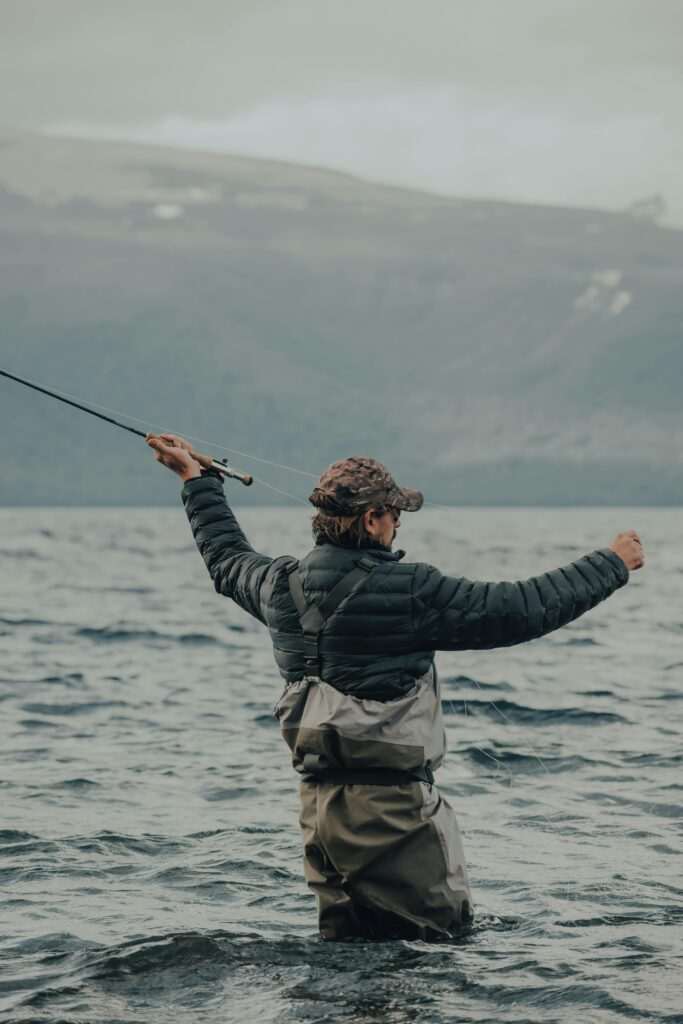
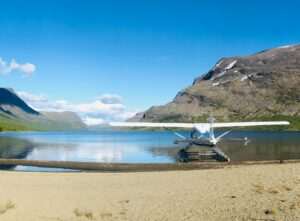
Alaska fishing is as advertised. Five species of Pacific salmon. Halibut the size of doors. Wild rainbow trout and Dolly Varden in glacier-fed streams. Arctic grayling rising to dry flies in rivers that get no fishing pressure because reaching them requires a floatplane or a long hike. If fishing is why you’re coming to Alaska — or if you’re already here and wondering whether to pick up a rod — the short answer is yes, absolutely, and this guide will walk you through everything you need to get legal, get equipped, and get on the water in 2026.
Who Needs a License
Nearly everyone fishing in Alaska needs a sport fishing license. The specifics:
- Non-residents: All non-residents 16 and older need a sport fishing license. No exceptions for occasional fishing or “just trying it” — if you’re holding a rod with bait in Alaska water, you need a license.
- Alaska residents: Residents under 18 and 60 or older are exempt from the basic sport fishing license requirement (though you may still need a King Salmon stamp — see below). Residents 18–59 need a license.
- Military: Active-duty military members stationed in Alaska may qualify for resident rates — check current ADF&G rules.
When in doubt: get a license. The fine for fishing without one is considerably more than the cost of a license, and Fish & Wildlife troopers do check, especially at popular spots like Ship Creek and the Kenai River during peak season.
License Types and 2026 Pricing
Non-resident sport fishing licenses come in several duration tiers, which makes it easy to match your license to your actual trip length:
- 1-day non-resident sport fishing license
- 3-day non-resident sport fishing license
- 7-day non-resident sport fishing license
- 14-day non-resident sport fishing license
- Annual non-resident sport fishing license
Prices change annually; verify current 2026 rates on the Alaska Department of Fish and Game website at adfg.alaska.gov before purchasing. Multi-day licenses are typically the best value if you’re fishing more than once — the per-day cost drops significantly with the longer options.
The King Salmon Stamp: Required Separately
This is the single most common licensing mistake visitors make: the sport fishing license alone does not allow you to retain king salmon. If you want to keep a king (chinook) salmon, you need a separate King Salmon Stamp in addition to your base license. The stamp is available in the same places as the base license, at an additional cost. Non-residents fishing specifically for king salmon — at Ship Creek during the June–July run, on the Kenai River, or on saltwater charters — must have both the license and the stamp. If you’re releasing all kings, you don’t need the stamp. If there’s any chance you’ll want to keep one, get it before you go to the water.
Where to Buy Your License
Alaska makes licensing relatively convenient. Your options:
Online: The Alaska Department of Fish and Game online licensing portal (hunt.alaska.gov) lets you purchase and print your license before you leave home. You can also access your license digitally on your phone — ADF&G accepts digital licenses in the field. Buying online in advance is the simplest approach.
Sporting goods stores: REI Co-op Anchorage and Big Ray’s Outdoor Gear both sell fishing licenses alongside tackle and gear — useful if you want to pick up equipment at the same time. Cabela’s/Bass Pro Shops in Wasilla is another major option if you’re heading up the Parks Highway.
Fred Meyer: Fred Meyer Midtown and other Fred Meyer locations sell fishing licenses at the sporting goods counter — convenient if you’re doing a grocery run before heading to the river. Most Fred Meyer stores in Alaska are licensed vendors.
License kiosks: Automated license kiosks are present at many sporting goods and outdoor retailers across the state. Hours vary but kiosks at some locations are available after store hours.
At the fishing site: Some guide operations and charter boats sell licenses on-site or handle licensing as part of their service — confirm before you go if you’re booking a guided trip.
Key Fishing Spots Near Anchorage: What You Need to Know
Ship Creek: King Salmon in Downtown Anchorage
One of the more improbable fishing experiences in the world is available within walking distance of Anchorage’s downtown hotels: Ship Creek Salmon Fishing puts anglers on a real king salmon run in an industrial creek that flows behind the Alaska Railroad depot and under a highway overpass. The kings run from late May through July, with peak timing varying year to year. Dozens of anglers line the banks shoulder to shoulder during peak days — it’s chaotic, social, and productive for those who work it right.
The Ship Creek fishery is also accessible for silver (coho) salmon in August and September, and the lower creek has some winter steelhead opportunity. Regulations at Ship Creek change year to year and are subject to emergency orders in-season — always check the current ADF&G Sport Fishing Regulations Booklet and the ADF&G website for Ship Creek emergency orders before fishing. Hook regulations (single barbless is common), retention limits, and open periods can shift based on run strength assessments.
Russian River and Kenai River: The Combat Fishing Experience
About two hours south of Anchorage on the Kenai Peninsula, the Russian River confluence with the Kenai is arguably the most famous sockeye (red) salmon fishery in Alaska. During the First Russian River sockeye run (typically early June) and especially the Second Run (mid-July through August), the riverbanks fill with hundreds of anglers wading and casting in conditions locals have dubbed “combat fishing.” The density is real — you’re fishing inches from strangers — but so is the catch rate when the fish are in.
The Russian River is a fly-fishing-only section with single barbless hook requirements. Having the right terminal tackle matters: most anglers use a technique called “fly-lining” — drifting a large fly through the current without a strike indicator, letting the fish take by feel. Guided options on the Kenai River proper offer better instruction for those unfamiliar with the technique. Alaska Fish On Charters operates on the Kenai River and can get you on sockeye with the guidance that makes the dense regulations and techniques less overwhelming. Big Time Alaskan Fishing Adventures is another well-regarded Kenai area guide operation for salmon and trout.
Eklutna Tailrace: Year-Round Rainbow Trout
The Eklutna Tailrace, where water released from the Eklutna Lake hydroelectric facility enters the Knik Arm drainage about 30 miles north of Anchorage, maintains cold water temperatures year-round and sustains a resident rainbow trout population that provides some of the most accessible trophy-size trout fishing near the city. Check current ADF&G regulations before fishing here — rules around catch limits, gear restrictions, and open seasons can change. The tailrace is a known quantity among Anchorage-area anglers but sees less pressure than Ship Creek or the Russian River, making it a quieter option for those who find the combat fishing scene unappealing.
Gear Basics: What You Need for Alaska Salmon
You don’t need to bring specialized gear from home — all of it is available at Anchorage sporting goods stores — but understanding what you’re shopping for helps:
- Rod and reel: For Alaskan salmon, a medium-heavy spinning rod in the 8’6″–10′ range handles most situations. A reel with a smooth drag and 15–20 lb monofilament or braid handles kings and sockeye. For the Russian River fly-fishing section, a 7–8 weight fly rod with a floating or sink-tip line is standard.
- Terminal tackle rules: Many Alaska waters — particularly fly-fishing-only sections and certain regulated streams — require single, barbless hooks. Check the specific regulations for your target water before rigging. Using treble hooks where single hooks are required is a common violation.
- What to bring to the water: Waders and wading boots are useful at Ship Creek and essential on the Russian River. A chest pack or fishing vest for terminal tackle. A net for landing. A cooler if you’re planning to keep fish — fresh Alaska salmon deteriorates quickly without refrigeration.
Understanding Catch and Retention Rules
Alaska fishing regulations specify both the number of fish you can retain and, in some cases, the size. For salmon, regulations typically specify a daily limit and a possession limit (how many you can have in your possession at once, often double the daily limit). For kings specifically, rules may further limit the number per day and per season.
Catch-and-release is always an option and is encouraged when fish are not in peak condition or when you’ve reached your limit. For released fish: handle as briefly as possible, keep the fish in the water while removing the hook, and revive in the current before release — this is especially important for kings, which are large and tire significantly during the fight.
Species identification matters, particularly at Ship Creek and the Kenai, where multiple salmon species may be present. Learn to distinguish kings (large spots on the back, black gums) from sockeye (no distinct spots on back, red-eye in season) from silver/coho (bright silver with smaller spots, white gums) — different rules apply to each, and misidentification isn’t a valid defense during a citation.
Where to Get the Current Regulations
The official source for Alaska sport fishing rules is the ADF&G Sport Fishing Regulation Booklet, published annually and available free at all license vendors, ADF&G offices, and as a PDF download from adfg.alaska.gov. The booklet is detailed but well-organized — look up your specific waterbody and species to find applicable rules.
Critical: check the ADF&G website for emergency orders before heading to any popular fishery. Emergency orders are in-season regulatory changes (opening or closing a fishery, adjusting limits) based on real-time run assessments. Ship Creek in particular may have emergency orders in effect during the king salmon season. The ADF&G hotline (1-907-267-2218 for Southcentral Alaska) also provides recorded updates on current conditions and emergency orders.
Guided vs. Self-Guided: When It’s Worth the Money
Self-guided fishing at Ship Creek and Eklutna Tailrace is straightforward and practical for most visitors — the fisheries are accessible, the regulations are manageable, and the fishing is close to Anchorage. A few hours of YouTube research on Alaska salmon techniques and a trip to a sporting goods store for tackle is sufficient preparation.
The Kenai River during sockeye season is where a guide earns its cost. The fly-fishing-only regulations, the technique requirements, the crowd management, and the sheer volume of fish and regulations all become much more manageable with someone who fishes it daily. A half-day guided float on the Kenai during the July sockeye run typically results in limits for anglers who follow instruction — and limits on Alaska sockeye are generous. The math often works out, especially for first-timers who’d otherwise spend half their day untangling gear and watching everyone around them catch fish.
For halibut and king salmon in saltwater, a charter boat is effectively the only practical option from Anchorage — the offshore halibut grounds require a vessel, local knowledge, and heavy gear most visitors don’t bring. Charter operations out of Seward, Homer, and Whittier offer day trips that handle all the logistics, including fish cleaning and packaging for transport.
Alaska fishing is one of the state’s defining experiences, and the licensing and regulation system — while detailed — exists to protect runs that are genuinely extraordinary. Get the right license, check the current regulations, and then get out there. The fish are real, the rivers are beautiful, and the memory of a king salmon on the end of your line in downtown Anchorage is not something you’ll forget.
Photo by Timon Cornelissen via Pexels

No comments yet.