
Alaska Border Crossing for Canadians: Passport, Customs & What to Expect
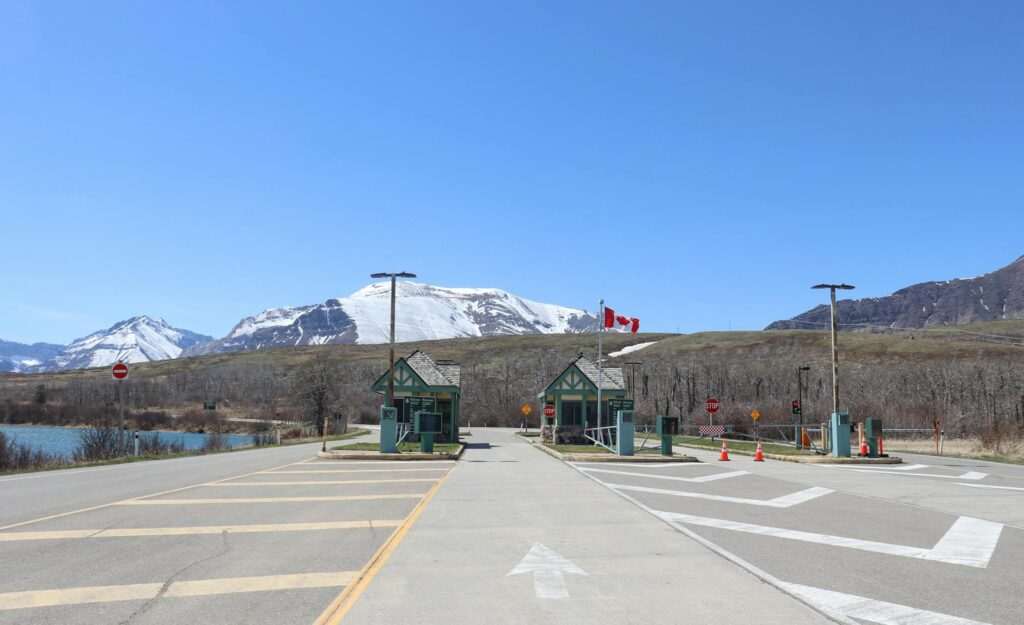
Every overland journey from Canada to Alaska passes through U.S. Customs and Border Protection. It doesn’t matter whether you’re driving the Alaska Highway from Whitehorse, cruising up through Skagway, or making the scenic run through Stewart — the border crossing is part of the trip. Most Canadian travelers breeze through in under 20 minutes. But showing up prepared makes it even smoother, and a few common mistakes (especially around firearms and plants) can turn a quick stop into a lengthy delay.
Here’s everything you need to know about crossing from Canada into Alaska in 2026, including the three main land crossings, what CBP officers ask, what you can and can’t bring, and how to re-enter Canada on the way home.
The three main Alaska border crossings from Canada
1. Beaver Creek, YT / Tok, AK — Alaska Highway (primary route)
This is the main overland entry point for Canadians driving the Alaska Highway (ALCAN). The U.S. Port of Entry is at Tok, Alaska — a small highway town about 200 km (125 miles) from the border. Beaver Creek is the last Canadian community before the crossing, and it’s a good place to stop for fuel and a final check of your documents.
Wait times here are typically the lowest of Alaska’s land crossings because traffic is lower volume than the Skagway or Hyder crossings. Most travelers in summer report processing times of 5–20 minutes. The CBP app (CBP One) has a border wait time feature, though land crossing data can be limited — for Alaska, current Facebook groups for Alaska Highway travelers are often more accurate for real-time conditions.
2. Skagway, AK / Carcross, YT — Klondike Highway
If you’re coming from Whitehorse via the Klondike Highway, you’ll enter Alaska through Skagway. This is a popular summer route because Skagway itself is a major cruise port and historic Gold Rush town — many travelers combine a ferry or cruise leg with the overland drive. The port can be busier than Beaver Creek during peak cruise season (June–August), so expect slightly longer waits on days when ships are in port.
Skagway to Anchorage is approximately 900 km (560 miles) via the Alaska Highway through Whitehorse and Tok — a long day’s drive or a comfortable two-day trip with a stop in the Matanuska Valley.
3. Hyder, AK / Stewart, BC — Cassiar Highway connection
Hyder is a tiny, unique community on the Alaska Panhandle that’s essentially accessible only from Stewart, BC. This is a soft entry — Hyder has no staffed U.S. Customs office, and you can drive in freely from Canada. However, when you return to Canada through the CBSA port in Stewart, you’ll be re-entering Canadian territory as if you’d been in the U.S. (because you have been). Have your passport ready for the Canadian side.
Hyder is a destination in its own right: Fish Creek Wildlife Observation Site is one of the best places in North America to watch bears feeding on salmon at close range. It’s not a practical through-route to Anchorage, but if you’re touring the Cassiar Highway, the Stewart/Hyder loop is worth the detour.
What documents do Canadian travelers need?
A valid Canadian passport is sufficient for Canadian citizens crossing into Alaska. You don’t need anything beyond that for routine tourist entry. A few specifics worth knowing:
- Canadian passport: Required for adults. Canadian-born citizens travelling with a birth certificate and photo ID are technically permitted under some land-crossing rules, but a passport eliminates any complications — especially if your trip involves flying within or out of Alaska.
- NEXUS card: Canadian travelers enrolled in NEXUS can use their card at U.S. land crossings instead of a passport. NEXUS is accepted at Tok (Beaver Creek crossing) and Skagway. It doesn’t speed up the interview process significantly at Alaska crossings, but it’s useful if you travel frequently between Canada and the U.S.
- Global Entry: Primarily for air travel, but the trusted-traveler status can also smooth land crossing interviews. Worth having if you fly back from Anchorage.
- Children: Minors crossing with both parents: passports or birth certificates (with passport recommended). Minors crossing with one parent or a non-parent adult: bring a notarized consent letter from the absent parent(s). CBP takes unaccompanied minor crossing seriously.
What CBP officers typically ask at the Alaska crossings
The interview at a U.S. land crossing is usually brief. Officers are checking for admissibility, not trying to make the crossing difficult. Common questions include:
- Where are you headed? Answer: Anchorage (or wherever in Alaska). Be specific.
- How long are you staying? Have a rough answer ready — “two weeks” or “ten days” is fine. You don’t need to be exact.
- What’s the purpose of your visit? Tourism, visiting family, fishing, etc.
- Are you bringing any goods to sell, or gifts worth over $100? Honest answer. Gifts are fine but declare them.
- Are you bringing any firearms, plants, or food products? This is where people run into trouble. See the sections below.
Firearms: the most common complication
Alaska is a hunting and shooting state, and many Canadian hunters and sportsmen travel there legally with firearms. But the U.S. border crossing rules are strict, and a miscommunication here can result in your vehicle being searched and your trip delayed by hours.
- Handguns (prohibited in Canada for most travelers): If you’re transporting a handgun through Canada to reach Alaska, Canadian law requires either a Prohibited Firearms licence or an Authorization to Transport. Most travelers won’t have these. Don’t bring a handgun through Canada without proper Canadian documentation — you’ll have a problem on the Canadian side before you even reach the U.S. border.
- Rifles and shotguns: Long guns are generally transportable through Canada for sporting purposes, but must be declared at the Canadian CBSA crossing. When you reach U.S. CBP, declare all firearms. Officers will record the serial number. You don’t need special U.S. paperwork if you’re a Canadian citizen entering for hunting or sporting purposes — but the firearm must be for personal use, not resale.
- Ammunition: Legal to bring in reasonable quantities for personal use. Declare it.
- The golden rule: Declare everything. CBP would rather hear “I have two rifles and 200 rounds” than discover it during a secondary inspection.
Plants, food, and agricultural restrictions
U.S. CBP has strict rules about agricultural products crossing the border to prevent the introduction of pests and diseases.
- Fresh fruits and vegetables: Generally restricted. Packaged, commercially sealed food is fine. Don’t bring loose produce from a Canadian farm stand across the border.
- Plants and soil: Restricted. Don’t bring cuttings, seeds, or soil-covered roots.
- Meat: Commercial packaged meat is fine. Fresh or home-processed meat from hunting is more complex — check CBP guidelines before crossing.
- Firewood: Some states restrict the import of firewood to prevent the spread of invasive insects. Ask at the crossing or check current CBP guidelines.
Vehicle requirements: insurance and registration
Your Canadian auto insurance covers you in the U.S. as long as your policy includes U.S. coverage — which most major Canadian insurers provide as standard. Check your pink card (proof of insurance) before you leave: it should reference U.S. coverage. If it doesn’t, call your insurer.
- Vehicle registration: Bring your registration documents. CBP may ask to see them.
- Rental vehicles: If you’re crossing in a rental car, you need written permission from the rental company to take the vehicle into the U.S. Not all Canadian rental companies allow this — confirm before booking.
- Speed limits and measurements: Alaska uses miles and Fahrenheit. At the Beaver Creek/Tok crossing, the speed limit shifts from km/h to mph. The posted 55 mph (90 km/h) on the Alaska Highway feels slower than it looks if you’re calibrated to metric signs.
CBSA re-entry: returning to Canada from Alaska
Coming home through CBSA at the Yukon/Alaska border is usually quick, but there are a few things to have ready:
- Duty-free exemption: Canadian residents can bring back up to CAD $800 in goods duty-free after an absence of 48 hours or more. Under 48 hours, the limit drops to CAD $200. Keep receipts for anything you purchased in Alaska.
- Alcohol and tobacco: Included in your duty-free allowance. One 1.14 litre bottle of spirits or equivalent.
- Declaring goods: If you bought fishing equipment, gear, souvenirs, or electronics, declare the total value. Under-declaring is a customs offence and not worth the fine.
- Food from Alaska: Fish and game you caught or harvested in Alaska are generally allowed back into Canada if properly packaged and labeled. Check CBSA guidelines on bringing back sport-caught fish.
- Currency: Carrying over CAD $10,000 in cash (or equivalent) into Canada must be declared. Not an issue for most travelers, but worth knowing.
What to expect once you’re in Anchorage
Most Canadians driving the Alaska Highway arrive in Anchorage after two to three days on the road from Whitehorse. The city’s a full-service hub — fuel is readily available (prices fluctuate but are generally comparable to or lower than remote Yukon stops), and Anchorage has the full range of accommodation options.
If you want a downtown base with easy access to Anchorage’s restaurants and walking areas, the Sheraton Anchorage Hotel is centrally located near the main retail and dining district. The DoubleTree by Hilton Anchorage Downtown is another solid downtown option with amenities suited for road-weary travelers.
Once you’re settled, the outdoor opportunities open up fast. Chugach Adventures runs guided excursions into the Chugach range just east of the city — a natural first move after a few days of highway driving. For salmon fishing, Alaska Fishing Adventures offers Cook Inlet and Turnagain Arm charters that put you on the water with a local guide who knows where the fish are running.
Do Canadian citizens need a passport to cross into Alaska by car?
Yes — a valid Canadian passport is the recommended document for crossing into Alaska at any land crossing. While Canadian citizens with enhanced driver’s licences (EDL) may be permitted at some U.S. land crossings, not all provinces issue them and not all Alaska crossings accept them. A passport removes any ambiguity and is required if you plan to fly within or out of Alaska during your trip.
What is the best border crossing for driving the Alaska Highway from Whitehorse?
The Beaver Creek, YT / Tok, AK crossing on the Alaska Highway is the primary and most straightforward route. It typically has the shortest wait times of Alaska’s land crossings, and the road conditions on both sides are well-maintained. Allow about 200 km (125 miles) from Beaver Creek to Tok, then roughly 480 km (300 miles) from Tok to Anchorage on the Glenn Highway.
Can Canadians bring firearms across the Alaska border?
Long guns (rifles and shotguns) can be brought across for hunting and sporting purposes, but they must be declared at both the Canadian CBSA and U.S. CBP crossing. Canadian transport rules apply for the journey through Canada. Handguns are significantly more complicated due to Canadian transport restrictions — consult both CBSA and CBP guidelines before your trip if you plan to bring one.
Do I need U.S. car insurance to drive in Alaska?
Most major Canadian auto insurance policies include U.S. coverage automatically. Check your pink card — it should reference liability coverage in the United States. If you’re unsure, call your insurer before departure. Rental vehicles require written permission from the rental company to cross into the U.S.; confirm this when you book.
The Alaska border crossing is genuinely not the scary part of the trip — it’s a five-minute interview, a document check, and then you’re on one of the most spectacular drives in North America. Prepare the paperwork, declare your firearms and groceries honestly, and you’ll be in Anchorage before the day is out.
No comments yet.