
Marionette Making in Anchorage: Construction, Stringing, and Performance Workshops (2026)
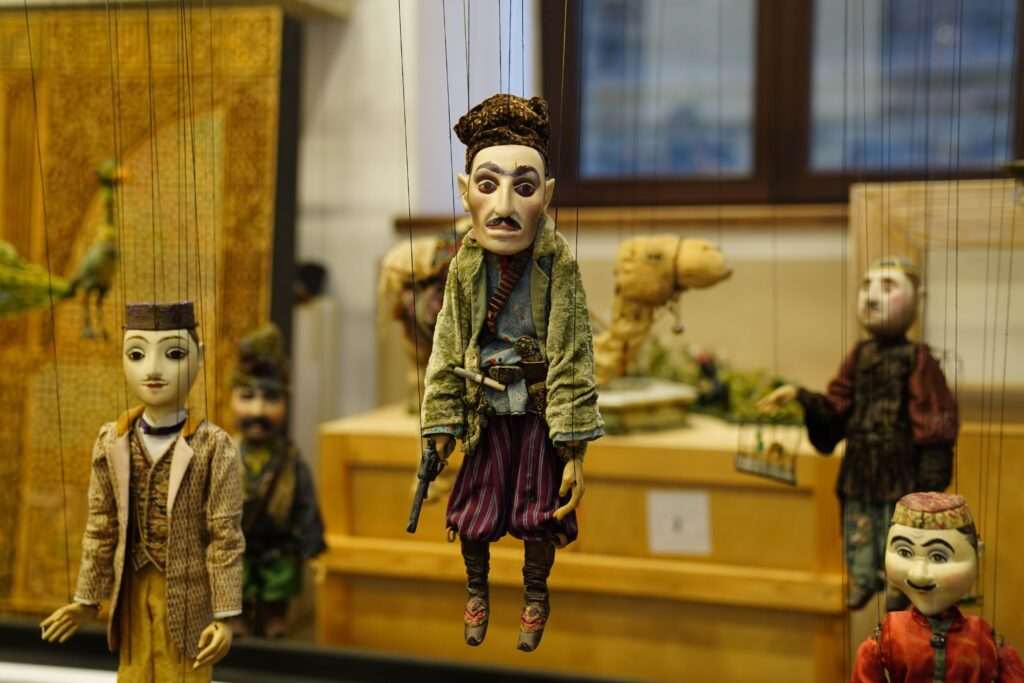
Marionette making — the craft of building string-controlled puppets capable of fluid, lifelike movement — is among the most technically demanding and theatrically powerful of all puppet traditions. Unlike hand puppets or shadow puppets, a well-made marionette can replicate the full range of human and animal movement: walking, sitting, gesturing, dancing, falling, rising, and expressing emotion through body language. That capacity for expressive movement comes from the precision of the marionette’s construction — the articulation of its joints, the placement of its string attachment points, and the design of its control bar (the crutch) that the puppeteer holds and manipulates to translate hand and wrist movement into the puppet’s action. Marionette traditions span centuries and cultures: the Italian commedia dell’arte figures from which the name derives (Maria → marionette, the small figures used in religious street theater), the Sicilian opera dei pupi (full-armor knights in elaborate battle narratives), the Czech marionette tradition that produced internationally recognized artists, and the contemporary theatrical work of companies like the Jim Henson Company and Handspring Puppet Company that have brought marionette technique into mainstream theater and film. In Anchorage, marionette making workshops connect to both the theatrical craft tradition and the broader Alaskan art and cultural community. This guide covers construction, stringing, control, performance, and the form’s history in 2026.
Carving or Casting the Head and Body
The marionette’s head and body can be constructed by several methods depending on the desired aesthetic, the maker’s skills, and the intended scale of performance:
Carved Wood
Traditional European marionettes are carved from wood — linden (basswood), lime wood, or pine — shaped with gouges and knives, then sanded and painted. Carved wooden marionettes have the warmth and physical presence of handmade objects, a satisfying weight that aids the fluid quality of their movement, and the capacity for very fine painted detail in the face. The carving process for a marionette head begins with a rough block reduced to the approximate skull shape, then refined with gouges and knives to establish features, then sanded and sealed before painting. Beginners often find a pre-roughed head blank (a head form already reduced to general proportions) significantly more accessible than starting from a raw block.
Papier Mache
Papier mache construction (over a clay or balloon armature) produces lightweight, hollow heads that are easier for beginners to achieve than carving while still allowing full painted surface detail. The head form is built up in layers, dried, removed from the armature, sanded, sealed, and painted with acrylic paints and varnish. Papier mache marionettes are lighter than wooden ones, which affects their movement quality — lighter puppets respond more readily to subtle crutch movements but can feel less grounded than heavier wooden figures.
Cast Foam and Latex
Professional theatrical marionettes increasingly use cast foam latex or silicone for heads and hands — materials that allow very fine surface detail reproduction, can be painted with flexible paints, and produce a slightly soft, organic quality that reads well under stage lighting. Foam casting requires mold-making skills and materials; it’s a more advanced construction approach than carving or papier mache but produces results that bridge the gap between marionette craft and special effects prop-making.
Body Construction and Jointing
The marionette body consists of multiple segments — torso, upper and lower arms, upper and lower legs, hands and feet — connected by joints that allow realistic articulation. Joint construction determines the quality and range of movement:
- Cord joints: Segments connected by cord looped through holes drilled at the joint points, with the cord length determining the range of motion. Simple, light, and effective for basic movement. Used in folk marionette traditions worldwide.
- Leather joints: Thin leather strips sewn or tacked to the segment ends provide a flexible connection with a natural resistance that prevents flopping while allowing full articulation. Leather joints produce smooth, controlled movement and are preferred for performance-quality marionettes.
- Ball-and-socket joints: More complex to construct but producing the most realistic range of motion, ball-and-socket jointing allows rotation as well as flexion — permitting shoulder rotation, wrist rotation, and neck movement in multiple planes. Standard in high-end theatrical marionettes.
Body proportions for marionettes typically deviate from realistic human proportions — slightly larger heads, shorter torsos, longer limbs — to read correctly under stage lighting and at performance distances. The traditional puppet proportion rule: what reads as realistic from 10 feet away in stage light often looks wrong when examined close-up at a workshop table.
Stringing
String placement determines which movements are controllable and how natural the puppet moves. Each string attachment point corresponds to a specific movement capability — more strings mean more expressive potential but greater complexity in operation:
A basic nine-string marionette has: two head strings (left and right temple), two shoulder strings, two hand strings, two knee strings, and one back string. This configuration supports walking, head turns, hand gestures, and sitting. A more complex professional marionette may have 15–25 strings including individual finger control, lip movement, and independent eye control.
String tension must be balanced: each string should be taut when the puppet hangs in its neutral standing position, with no strings pulling the figure out of alignment when at rest. Tuning a marionette’s string balance — adjusting individual string lengths until the figure hangs naturally upright with the correct posture — can take as long as the initial construction.
The Control Bar (Crutch)
The crutch is the wooden or metal device the puppeteer holds, from which all the strings are attached. Its design directly determines what movements are performable and how natural they feel to execute:
A basic horizontal crutch consists of a central bar (held in the hand) with a hook at one end for the head strings and attachment points for the body strings. Detachable crossbars that can be held or set down allow the puppeteer to manipulate one part of the puppet independently while another hangs freely — walking a marionette while leaving the arms swinging naturally, or setting down the leg bar to concentrate on hand gestures.
The crutch’s weight, balance, and the positions of string attachment points all affect the puppeteer’s ability to execute fluid movement. Professional crutch design is a craft in itself — the weight distribution affects fatigue during long performances, and the positions of hooks and bars are calibrated for specific intended movements.
Costume and Hair
Costuming a marionette requires adaptation of standard sewing techniques for very small scale and for the specific movement requirements of the figure. Fabric must be light enough not to weigh down the puppet’s movement, flexible enough to allow joint articulation without restriction, and detailed enough to read at performance distance. Alaska-themed marionette costumes — traditional Alaska Native garments, outdoor adventure gear, wildlife-inspired character designs — give Anchorage marionette work distinctive regional character.
Hair for marionettes uses real hair, yarn, fur fabric, or synthetic doll hair depending on the character and scale. Yarn or roving felted onto the head surface produces a textured, permanent hair treatment; loose strands glued or sewn to a fabric skullcap produces moveable hair that responds to the puppet’s movement.
History: Italian Origins to Jim Henson
Marionette tradition traces to medieval European religious street theater, where small carved figures (often of the Virgin Mary — “little Mary” → marionette) performed biblical scenes at festivals. Italian Renaissance theater developed the first sophisticated mechanical puppet theater, and the commedia dell’arte character types (Pulcinella, Pantalone, Arlecchino) appeared as marionettes before they transferred to live performance.
The 19th century saw an explosion of professional marionette theater across Europe — elaborate traveling companies with casts of dozens of articulated figures performed opera, melodrama, and spectacle in dedicated puppet theaters. Sicilian pupi (armored knights) and Czech marionette theater developed sophisticated local traditions that persist today.
Jim Henson’s Muppets redefined what puppet performance could do in television and film contexts — his characters combined hand puppet and marionette techniques in hybrid constructions controlled by multiple performers simultaneously, producing a range of expression that traditional marionette technique can’t achieve alone. Henson’s influence on contemporary puppet theater is impossible to overstate; virtually every professional puppet company working today situates its work in relation to his legacy.
Marionette Making Workshops in Anchorage
Anchorage marionette workshops typically run multiple sessions (4–8 hours total across 2–3 meetings) given the construction complexity involved — head/body construction, jointing, stringing, and crutch assembly each require dedicated time. Single-session introductory workshops cover simpler constructions (papier mache head, basic wooden body, simple 5-string crutch) that introduce the technique without full theatrical marionette complexity.
Workshop prices run $65–$120, reflecting material costs and session length. A beginning home marionette kit (pre-roughed head blank, body segments, jointing leather, control bar hardware, and stringing materials) costs $40–$80 from theatrical supply companies. Anchorage craft workshop participants can show and sell their finished work at year-round events including the Anchorage Market & Festival, the Anchorage Native Arts & Culture Festival, and the Alaska State Fair. Our free things to do in Anchorage guide covers the theater venues and performance spaces where puppet theater and marionette performance appears in Anchorage’s performing arts calendar. Our Anchorage hiking guide covers the outdoor environments and wildlife that provide the richest source material for Alaska-themed marionette character design and storytelling.
Photo by Tahir Xəlfə on Pexels.




No comments yet.