
Leather Crafting Workshops in Anchorage 2026 — Wallets, Tooling and Hand Stitching
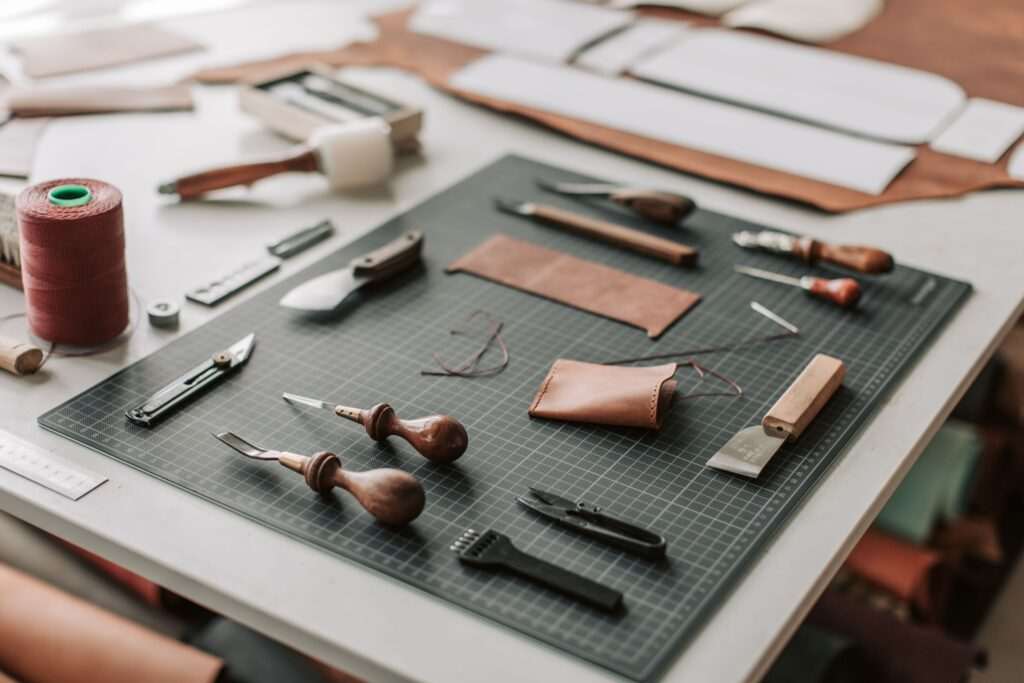
Leather crafting occupies a unique place among handcraft traditions — the material is ancient, the tools haven’t changed fundamentally in centuries, and the finished objects are genuinely durable in a way that most handmade goods aren’t. A wallet hand-stitched in vegetable-tanned leather develops a patina over decades of use, absorbing the oils and friction of its owner’s hands into a material that becomes more beautiful as it ages. A belt tooled with a personal design becomes an heirloom. The craft has seen a significant revival driven partly by the maker movement’s interest in durable, repairable goods and partly by the visual appeal of the tooling, carving, and finishing processes that produce leather objects with aesthetic character no machine-produced good replicates. Anchorage’s craft workshop scene includes leather crafting instruction with an Alaska dimension: the cold-climate utility of leather goods (wallets, card holders, knife sheaths, bag straps) connects directly to outdoor and working life in a way that feels authentic here. This guide covers leather crafting workshops in Anchorage in 2026, the materials and tools involved, and how to approach the craft as a continuing practice.
Vegetable-Tanned vs. Chrome-Tanned Leather
Not all leather is equal for crafting, and the tanning method determines what a piece of leather can do:
Vegetable-tanned leather uses plant-based tannins (from oak bark, sumac, and other sources) in a slow, traditional tanning process that produces leather with a firm, natural quality ideal for tooling, carving, and developing patina. Veg-tan leather accepts moisture tooling (the leather is dampened before stamping, which makes it temporarily pliable and able to hold impressed designs). It’s stiff when dry, supple when conditioned, takes dye evenly, and develops a rich patina with age and use. Herman Oak, Wickett and Craig, and Horween are the most respected American veg-tan tanneries; their leather commands premium prices but produces noticeably superior tooling and finishing results. Virtually all leather tooling and carving instruction uses vegetable-tanned leather.
Chrome-tanned leather uses chromium salts in a fast industrial process (hours rather than weeks) producing leather that’s softer, more pliable, and water-resistant from the start. Chrome-tan dominates the fashion and upholstery leather market — garment leather, furniture leather, and most commercial leather goods use chrome-tan. It doesn’t tool or carve (the faster tanning process changes the fiber structure in ways that prevent clean impressions) and doesn’t develop patina the same way veg-tan does. For bags, garments, and lining applications where tooling isn’t required, chrome-tan leather has advantages. For most leather crafting instruction, veg-tan is the correct choice.
Essential Tools
Leather crafting requires a specific set of tools that differ from most other craft disciplines:
- Cutting tools: A sharp rotary cutter or craft knife with fresh blades cuts leather cleanly. Dull blades drag and tear rather than cut, producing rough edges. A metal straight edge and cutting mat are essential companions. Leather punches (round-hole punches, oblong punches for belt holes) produce clean, compressed-edge holes that don’t fray.
- Swivel knife: The fundamental carving tool — a curved blade that swivels in its handle to follow curved lines. Used to incise design lines into moistened veg-tan leather before stamping or beveling. The quality of swivel knife work determines everything that follows in carved leather projects.
- Stamping tools and maul: Metal stamps with decorative or functional impressions are struck with a maul (leather mallet) into moistened veg-tan leather to create texture and design. Basket weave, pear shader, camouflage, and geometric stamps are the most common starting set. The maul must be heavy enough to drive the stamp cleanly in one strike — light tapping produces inconsistent depth.
- Edge beveler: A small tool that removes the sharp edge from cut leather edges, producing a smooth, professional edge profile that’s both more comfortable and more durable than a raw cut edge.
- Stitching groover and pricking iron: The stitching groover cuts a shallow channel parallel to the leather edge where stitching will lie, recessing the thread below the surface where it’s protected from abrasion. The pricking iron marks evenly spaced stitch holes in the groove.
- Harness needles and waxed linen thread: Leather hand stitching uses two needles simultaneously in a saddle stitch — both needles pass through each hole from opposite sides, creating a lockstitch that’s more secure than a machine lockstitch (if one stitch breaks, the others don’t unravel). Waxed linen thread or braided polyester thread are the standard choices; waxed thread slides through leather without catching and has historically appropriate character for natural-tanned leather.
Dyeing and Finishing
Coloring and finishing leather is where the aesthetic character of a piece is established:
- Leather dye (spirit-based): Fiebings Pro Dye and similar spirit-based dyes penetrate the leather fiber and produce rich, saturated color that becomes part of the leather rather than sitting on top. Applied with a wool dauber or sponge, multiple thin coats produce more even coverage than a single heavy application. Spirit dyes require a resolene or leather finish coat to seal and prevent rub-off.
- Leather paint: Acrylic leather paints (Angelus, DecoArt) sit on the surface and allow for more detailed, multi-color work including gradients and realistic illustration. More prone to cracking if the leather flexes significantly; better suited for firm, flat pieces than wallets and belts.
- Natural finish (no dye): Veg-tan leather left undyed develops its own patina from natural oils and use — the honey-tan that darkens over years to a rich chestnut is one of the most appealing qualities of natural leather. Many makers prefer to leave small pieces (card holders, key fobs) undyed and let the patina develop naturally.
- Finish and conditioner: Neatsfoot oil, leather balm, or beeswax-based conditioners applied after dyeing or to finished natural leather maintain suppleness and protect from drying. A resolene or acrylic finish coat seals dyed pieces and reduces rub-off.
Beginner Projects
The projects best suited to beginning leather crafters develop the full range of foundational skills without requiring advanced techniques:
- Key fob: A single-layer rectangular piece with a hole at one end and a split ring or snap hook. Teaches clean cutting, edge beveling, dyeing, and basic finishing. Completeable in under an hour.
- Card holder or slim wallet: Two rectangular pieces stitched together with one or more card pockets. Introduces saddle stitch, pocket construction, and edge finishing. The most popular beginner project in Anchorage workshops.
- Belt: A single long strip cut to width, with punched holes and a buckle. Straightforward construction that teaches clean long cuts, consistent hole spacing, and buckle attachment. Excellent for practicing even saddle stitching along a long straight line.
- Simple tooled coaster or patch: A flat veg-tan piece with a stamped or carved design. Introduces moisture tooling, swivel knife carving, and stamp work without the construction complexity of a 3D object.
Leather Crafting Workshops in Anchorage
Anchorage leather crafting workshops range from introductory wallet and card holder sessions (2–3 hours, producing a finished functional piece) to more advanced tooling and carving workshops focused on decorative leather work. Several outdoor and sporting goods retailers with leather repair capabilities periodically offer instruction in leather maintenance and repair skills relevant to Alaska outdoor gear.
Workshop prices run $50–$95, with leather, tools (provided during the session), thread, and hardware included. The higher end covers workshops that provide premium leather (Herman Oak or Horween) and more complex projects like bifold wallets or small bags. Alaska-specific projects — knife sheaths, axe masks, rifle slings — appear in workshops oriented toward the outdoor and sporting community. Anchorage craft workshop participants can show and sell their finished work at year-round events including the Anchorage Market & Festival, the Anchorage Native Arts & Culture Festival, and the Alaska State Fair. Our free things to do in Anchorage guide covers the craft markets and maker community events where Anchorage leather workers sell their work. Our Anchorage hiking guide covers the outdoor environments where leather goods — sheaths, straps, pack repairs — see their most direct use in Alaska.
Photo by Anna Tarazevich on Pexels.




No comments yet.