Kenai National Wildlife Refuge 2026: Canoeing, Fishing & Wildlife in Alaska’s Backyard
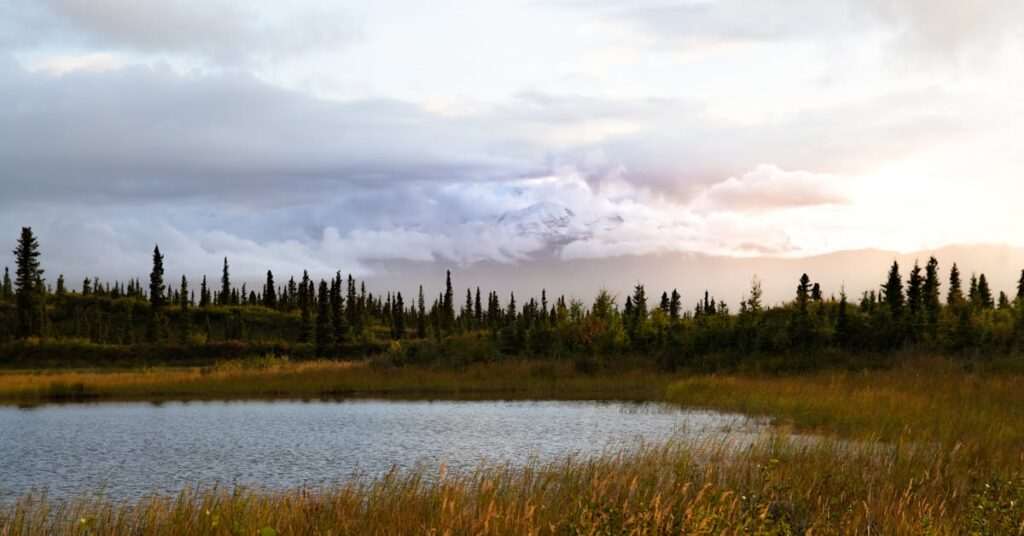
The Kenai National Wildlife Refuge sits on the northwestern side of the Kenai Peninsula, two hours and thirty minutes from Anchorage by car. It’s two million acres — larger than Delaware and Rhode Island combined — and most of it is accessible only by canoe, floatplane, or foot. Within those acres are more than 4,000 lakes, two major canoe trail systems, portions of some of Alaska’s best salmon rivers, and one of the highest concentrations of moose anywhere on earth.
Most Alaska visitors prioritize Denali or Kenai Fjords for their single big park day. The Kenai Refuge rewards visitors who dig a little deeper — particularly those who want paddling, fishing, or wildlife immersion rather than a summit or a glacier. Day trips from Anchorage are possible, but overnight or multi-day stays are what the refuge is built for.
Getting There from Anchorage
From Anchorage, take the Seward Highway south along Turnagain Arm, then pick up the Sterling Highway at the Tern Lake Junction (about 90 miles from Anchorage). The Sterling Highway passes through Cooper Landing — a good fuel and food stop — and continues through the heart of the Kenai Peninsula toward Soldotna, the service hub for the refuge. The Kenai National Wildlife Refuge Visitor Center is on Ski Hill Road in Soldotna, about 150 miles and 2.5 hours from Anchorage. Most canoe put-ins and campgrounds are accessed via gravel roads off the Sterling Highway between Cooper Landing and Soldotna.
The Canoe Trail Systems
The refuge’s two canoe systems are among the finest flatwater wilderness canoe routes in the United States — lesser-known than the Boundary Waters, but with comparable lake-and-portage paddling and far fewer people.
Swanson River Canoe Route
The Swanson River system is the longer and more remote of the two routes, connecting 80 miles of waterways across more than 40 lakes linked by 46 portages. Portage distances range from a few hundred feet to over a mile — some through wet, spruce-tundra terrain that requires a portage cart for loaded canoes. Most parties take 5 to 10 days for a full traverse. Shorter 2 to 4-day loops using a subset of the lakes are also possible and give you a representative experience of the system.
The primary put-in for the Swanson River route is at the Paddle Lake put-in via Swan Lake Road off the Sterling Highway. Dispersed camping is permitted throughout the route — no designated sites, no permit system — with bear canisters required for all overnight trips. The lakes in the Swanson River system support nesting trumpeter swans, loons, and a variety of waterfowl; wildlife sightings from the canoe are one of the defining experiences of the route.
Swan Lake Canoe Route
The Swan Lake system is shorter, more accessible, and better suited for first-time refuge visitors or those with limited time. The route connects approximately 30 lakes over about 60 miles of interconnected waterways, with portages generally shorter and better maintained than those in the Swanson system. A popular 7-lake loop takes 2 to 3 days. The Swan Lake put-in is accessed via Swan Lake Road, about 17 miles north of Sterling.
Both systems are at their best from mid-May through mid-September. Ice-out typically happens in late April to early May, opening the canoe season. Water levels on portage connecting streams can be low by late August in dry years — check conditions with the refuge visitor center before heading out.
What to Bring
Navigation is essential: download the official refuge canoe trail maps before departure (available free at the visitor center and online). The lake systems have limited signage and can be disorienting in flat light or fog. A GPS or compass is backup; a printed waterproof map is insurance. Other essentials: a bear canister for all food and scented items (required by refuge regulations for overnight travel), dry bags for gear and sleeping equipment, a repair kit for your canoe hull, and a portage cart for the longer Swanson River carries. Mosquitoes are intense from mid-June through late July — head nets and full coverage are not optional.
Fishing the Kenai and Moose Rivers
The Kenai River — running through the refuge’s eastern edge near Cooper Landing — is one of the most productive salmon rivers in the world and holds the world record for chinook (king) salmon. The river is open to sport fishing for multiple species throughout summer, with different seasons and regulations governing each run. An Alaska fishing license (available online at adfg.alaska.gov or at sporting goods stores in Anchorage and Soldotna) is required for all anglers 16 and older.
Chinook (King) Salmon: The first king run enters the Kenai River in mid-May, with a second, larger run peaking in July. Kings in the Kenai can exceed 90 pounds. The upper Kenai near Cooper Landing is popular for guided drift boat fishing; the lower river near Kenai and Soldotna supports bank fishing. Regulations are complex and change annually — verify current rules on the ADFG website before fishing.
Sockeye (Red) Salmon: The Russian River confluence near Cooper Landing is one of the most famous dipnetting and sport fishing spots in Alaska, with sockeye runs peaking in late June through mid-July. Expect crowds during peak run. The Kenai River’s late July sockeye run also draws significant angler traffic near Soldotna.
Rainbow Trout: The Kenai system holds some of the largest wild rainbow trout in Alaska, with fish regularly exceeding 20 inches. The upper Kenai near Skilak Lake is particularly productive, with catch-and-release regulations applying to resident rainbows in some sections. The Moose River, entering the Kenai near Sterling, is a quieter option with good rainbow trout fishing accessible from the road.
Guided fishing is widely available in the Soldotna and Cooper Landing areas, ranging from half-day spin-casting trips to multi-day fly-fishing float trips. Booking 4 to 8 weeks ahead is standard for peak-season guided trips. Local adventure operators, including Anchorage Kayak Adventures, can connect visitors with Kenai-area outfitters and guided paddling options.
Wildlife of the Kenai Refuge
Moose are the signature wildlife species of the Kenai lowlands. The refuge supports one of the highest moose densities in Alaska — estimates run to over 3,000 animals in the refuge alone. On the Sterling Highway between Cooper Landing and Soldotna, moose sightings from the road are almost guaranteed. In September, during the rut, bulls become visible and vocal in ways they aren’t during summer; roadside moose sightings spike.
Black bears are common throughout the refuge and are regularly seen along roadsides, particularly near salmon streams in late summer. Brown (grizzly) bears are present but less frequently encountered, moving through the interior more than the road corridors. Both species require standard bear country protocol: make noise on trails, carry bear spray, store food properly.
Wolves inhabit the Kenai lowlands but are rarely seen by casual visitors. The refuge supports several pack territories; sightings are most likely in early morning on remote canoe routes or during winter.
Trumpeter swans nest on the refuge lakes in spring and summer, particularly in the canoe trail systems. The swans return to Alaska in May and are present through September. Early-morning canoe travel in May and June offers the best viewing opportunities for nesting birds on the water.
Bald eagles are year-round residents, concentrated near fish-bearing rivers and streams. The Kenai River corridor supports consistent eagle viewing from late June through August when salmon are running.
Visitor Center and Permits
The Kenai National Wildlife Refuge Visitor Center in Soldotna is the best starting point for any refuge visit. Staff provide current maps, canoe trail conditions, camping information, and fishing regulation updates. The center offers free entry, rotating wildlife exhibits, and ranger-led programs throughout summer. Hours vary seasonally; check the refuge website before visiting. No canoe trail permits are required for day use or overnight dispersed camping on the canoe routes — registration is voluntary but encouraged for safety tracking.
Camping in the Refuge
The refuge has several developed campgrounds including Hidden Lake (on Skilak Lake Road, tent and RV sites with pit toilets) and Engineer Lake. Fees are typically $10–$15 per night at developed sites. Dispersed camping throughout the backcountry is free with no permit required. The Skilak Lake Road — a 19-mile loop off the Sterling Highway through the heart of the refuge — provides access to several campgrounds, trailheads, and lake overlooks.
Best Times to Visit by Activity
May: Canoe season opens after ice-out. Trumpeter swans return and are highly active on the lakes. Wildflowers appear on the tundra. Fewer visitors than midsummer; cold nights require a full sleeping kit.
July: Peak salmon season on the Kenai River. The sockeye run on the Russian River draws the largest crowds of the year. Warm temperatures, long days, and maximum wildlife activity — but also maximum mosquitoes and the busiest campgrounds.
September: The moose rut begins, with bulls audibly bugling and becoming unusually visible. Fall color arrives in the birch forest and blueberry understory. Coho (silver) salmon begin their run. Crowds drop significantly after Labor Day. For wildlife-focused visitors who can tolerate shorter days and colder temperatures, September may be the best month of all.
Day Trip vs. Overnight from Anchorage
A day trip from Anchorage to the refuge is feasible but limited. You can drive the Skilak Lake Road, stop at the visitor center in Soldotna, and fish the Kenai River near Cooper Landing in a single day. What you can’t do in a day is the canoe systems — even a short overnight loop requires a night in the field. For the full Kenai NWR experience, plan for at least two nights: one to set up camp and explore, one to paddle, fish, or simply listen to loons calling across a lake that has no other human beings on it for as far as the sound carries.
Guided multi-activity itineraries combining Kenai NWR canoeing with adjacent Kenai Peninsula activities can be arranged through operators like Adventures by True North and Get Up and Go Tours.

No comments yet.