Alaska State Parks Near Anchorage 2026: Chugach, Eklutna & More
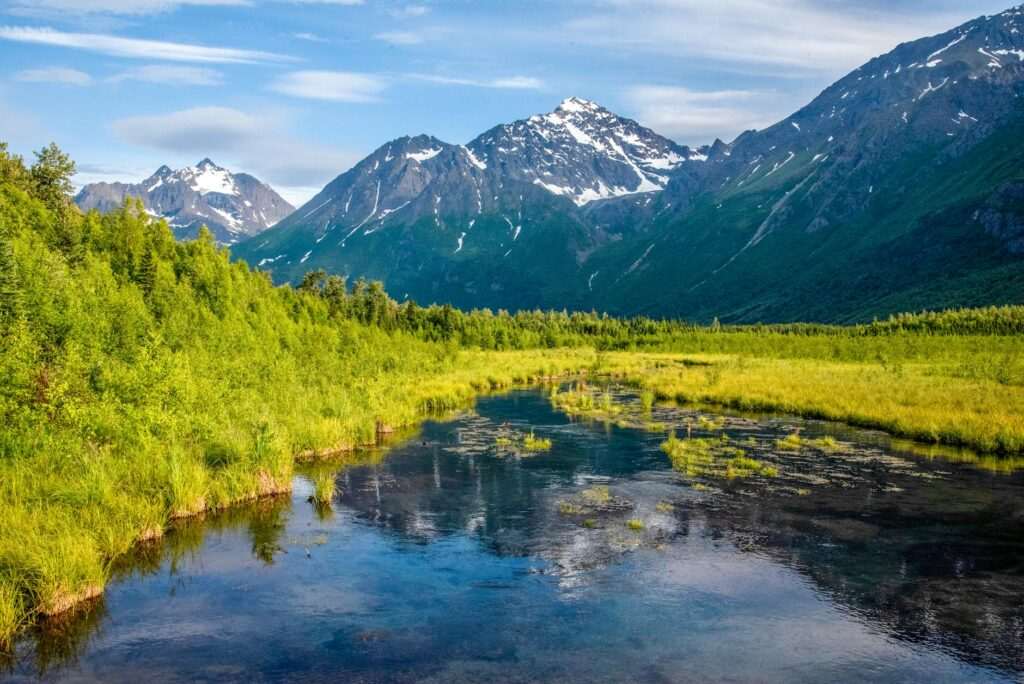
Anchorage is surrounded by Alaska State Parks land on three sides, and the access is immediate — you can park downtown and be on Chugach State Park trail within 20 minutes, or drive 26 miles to Eklutna Lake Recreation Area for a full day of kayaking and mountain biking. The parks near Anchorage range from a 495,000-acre wilderness park directly behind the city to a developed recreation corridor with paved roads and rental equipment. Here’s what each major park near Anchorage offers and how to plan your visit in 2026.
Chugach State Park — Alaska’s Urban Wilderness
Chugach State Park wraps around the eastern and southern edges of Anchorage and is one of the largest state parks in the United States at 495,000 acres. The front range trails start within the city limits; the backcountry extends into mountains that see very few visitors. For most Anchorage visitors, the relevant portion is the front range trail network accessible from three main trailheads:
Glen Alps Trailhead
The most-used access point, reached via Upper Huffman Road off O’Malley Road. The parking area at 2,100 feet is itself a viewpoint overlooking the city and Cook Inlet. From here, trails branch to Flattop Mountain (the most-climbed peak in Alaska, 1.3 miles round-trip from the lot), the Powerline Pass route (a broad, flat valley corridor popular for hiking and biking), and the ridgelines extending north and south along the front range. Parking fee or State Parks pass required. The lot fills by mid-morning on summer weekends.
Prospect Heights Trailhead
A second front-range access point off Hillside Drive with trails connecting to the Powerline Pass corridor from the north end. Less crowded than Glen Alps in peak season, with a similar range of terrain. The trails from Prospect Heights connect to the Campbell Creek watershed and Far North Bicentennial Park, giving hikers the option of a longer loop rather than an out-and-back.
Eagle River Nature Center
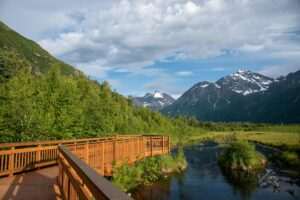
About 12 miles northeast of downtown on the Eagle River Road, the Nature Center sits at the head of a river valley with access to the Albert Loop Trail (3 miles, flat) and the longer Crow Pass Crossing trail (a 24-mile backcountry route to Girdwood). The valley is excellent bear viewing terrain in salmon season — our bear viewing near Anchorage guide covers the Eagle River corridor in detail.
Eklutna Lake Recreation Area
Eklutna Lake is the largest lake in the Chugach State Park system, fed by the Eklutna Glacier and surrounded by peaks that wall off the valley on three sides. The recreation area, about 26 miles northeast of Anchorage via the Glenn Highway, has a campground, a day-use area, and a concession operation at the lakeshore that makes it the most developed state park experience near the city. Lifetime Adventures at Eklutna Lake rents kayaks, canoes, and fat bikes at the lakeshore trailhead — the 12-mile trail along the lake to the Eklutna Glacier terminus is one of the best mountain bike routes accessible from Anchorage, and the lake itself is turquoise-glacial in color on clear days.
The campground has tent and RV sites on a first-come basis. Cell service is absent in the valley. The road to the recreation area is paved and accessible to standard vehicles; no high clearance required.
Portage Valley State Recreation Area
The Portage Valley corridor, about 50 miles south of Anchorage on the Seward Highway, technically sits within Chugach National Forest (federal) rather than Alaska State Parks, but functions as a day-use recreation area with trails, a visitor center, and wildlife viewing. The Byron Glacier trail (1 mile to a hanging glacier), the Moraine Loop, and the Portage Glacier boat tour all operate from the same corridor. Our Turnagain Arm bore tide guide covers the Seward Highway section you’ll drive to reach Portage Valley — the Turnagain Arm pullouts on this route are worthwhile stops in both directions.
Chugach National Forest — Adjacent Federal Land
Much of the terrain south and east of Anchorage falls under Chugach National Forest rather than Chugach State Park, but the visitor experience is continuous — trails cross administrative boundaries without signage distinguishing them. The Resurrection Pass trail system on the Kenai Peninsula and the trail network on the south side of Portage are all accessible as extensions of the state park experience. No entrance fees for National Forest land.
Fees and Passes
- Chugach State Park day use: $5/vehicle at Glen Alps and Prospect Heights trailheads (fee station). Annual State Parks pass covers all Alaska state park day use.
- Eklutna Lake: $10/vehicle day use. Campsite fees vary.
- Portage Valley / Chugach National Forest: No day-use fee for trail access.
The Alaska Public Lands Information Center in downtown Anchorage manages information for both Alaska State Parks and Chugach National Forest and has current maps, conditions reports, and trail closures for all areas around the city. It’s the single best pre-trip stop for anyone planning outdoor recreation near Anchorage. Far North Bicentennial Park on Anchorage’s east side connects to Chugach State Park trails and provides another access point for the front range without the Glen Alps parking pressure.

No comments yet.