
Curling in Anchorage 2026 — Try the Olympic Sport at Alaska’s Best Club
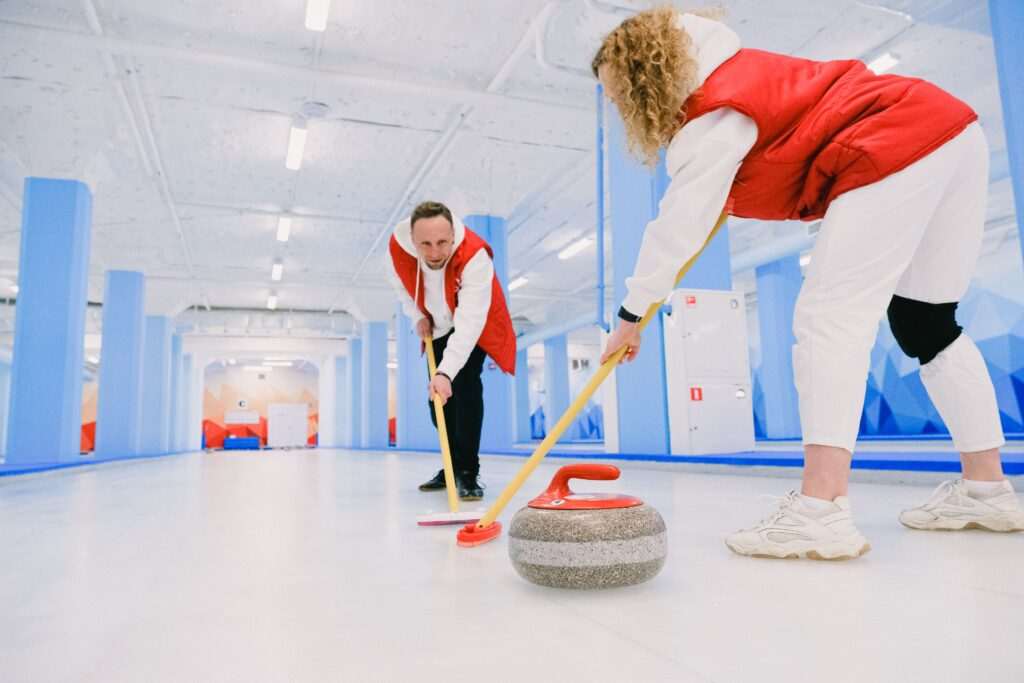
Curling has a longer and more serious history in Alaska than most visitors expect. The Anchorage Curling Club has operated for decades, producing competitors who have reached national and international levels, and the club runs a full slate of recreational and competitive programming through the winter season. For visitors and new residents, the entry point is a learn-to-curl session that requires no prior experience and no special equipment — the club provides everything, including the specific footwear required for the ice. The sport looks impenetrable from the outside, but an hour with an instructor dissolves most of the mystery. It is also, by any reasonable measure, one of the more unusual things you can do with an afternoon in Anchorage.
Anchorage Curling Club
The Anchorage Curling Club operates a dedicated curling facility with multiple sheets of dedicated curling ice — a surface distinct from standard hockey or figure skating ice in its texture, preparation, and maintenance. Curling ice is pebbled, created by spraying fine droplets of water that freeze into a texture that allows the granite stones to travel with a predictable curl. The facility includes the sheets themselves, a viewing area, and the clubhouse space where the post-match social tradition plays out.
The club runs league programming from roughly October through March, aligned with the coldest months when the appeal of a controlled indoor sport is highest. Learn-to-curl events are offered on a scheduled basis through the season and can often be booked as private group experiences for birthday parties, corporate outings, and team events. The club is located in Anchorage’s sports facility corridor and is accessible by car from downtown and midtown.
Learn to Curl: What to Expect
A standard learn-to-curl session runs approximately two hours and covers the fundamentals: delivery from the hack (the foothold at each end of the sheet), the sliding position, the release, and the basics of sweeping. Instructors walk participants through each element before anyone gets on the ice, and the first delivery attempts happen with hands-on guidance. Most first-timers land their first stone in a reasonable vicinity of the target by the end of the session.
Equipment is provided by the club. Curling shoes have one slippery sole and one gripping sole — the slider goes on the foot opposite your delivery hand, allowing you to glide out of the hack while maintaining control. Wear comfortable athletic clothing that allows a low squat position; curling delivery involves getting quite close to the ice. The ice temperature in the curling facility is colder than a hockey rink because the surface is maintained differently, so a layer under your athletic wear is practical.
Cost for a learn-to-curl session runs approximately $20 to $30 per person, with group rates available for parties of eight or more. Private group bookings — for corporate teams, bachelorette parties, or family outings — are available at a flat rate that includes the ice time, equipment, and an instructor for the duration. Book at least a week ahead for weekend group sessions; weekday availability is typically more flexible.
How Curling Works
The game is played between two teams of four on a sheet of ice 150 feet long. Each team delivers eight stones per end — alternating with the opposing team — aiming for the circular target (the house) at the far end. After all sixteen stones are delivered, the team with the stone closest to the center of the house scores a point for each of their stones that is closer to the center than the opposing team’s nearest stone. A game runs eight or ten ends depending on the format.
The skip — the team’s captain — calls the shot and directs the sweepers from the far end of the sheet. Sweepers use brooms to scrub the ice ahead of the moving stone, which reduces friction and allows the stone to travel farther and curl less. The communication between the skip and sweepers — rapid calls that adjust sweeping intensity based on the stone’s speed and curl — is the part of curling that looks most baffling from outside and most satisfying once you understand it. Sweeping is also the highest-effort element of the game: vigorous sweeping at the right moment can move a stone’s final position by several feet.
League Play: Casual and Competitive
The Anchorage Curling Club supports multiple league levels, from social recreational leagues aimed at beginners and casual participants to competitive leagues that produce players who have represented Alaska in national championships. The recreational leagues run in the evening and are structured to be accessible — mixed-ability teams, relaxed scoring, and an emphasis on learning the game rather than winning it.
Alaska’s curling community has historically punched above its weight at the national level. The state’s climate, its Scottish and Canadian immigrant history, and the practical appeal of a competitive indoor sport during long winters have all contributed to a curling culture that is more developed than the sport’s national profile in the United States suggests. Competitive league players at the Anchorage club include people who have qualified for national mixed and senior championships, and the club’s coaching resources reflect that competitive depth.
The Broomstacking Tradition
Curling has a social custom that distinguishes it from most competitive sports: at the end of every match, both teams meet in the clubhouse, and the winning team traditionally buys the first round for the losing team. This post-match gathering — called broomstacking — is considered a mandatory part of the game at every level from casual recreational play to national championships. It is not optional etiquette; it is part of what curling is.
The tradition originated in Scotland (curling’s country of origin) and has been maintained with unusual consistency across the sport’s global spread. At the Anchorage Curling Club, it plays out in the clubhouse after league matches — a social window that often runs longer than the match itself. For visitors who want to experience curling as more than a sport, the broomstacking period is where the real character of the game becomes clear. It is a reason why curling clubs tend to produce friendships that extend well beyond the ice.
Winter Activities to Pair With Curling
A curling session fits naturally into a winter afternoon in Anchorage. Ben Boeke Ice Arena runs public skating sessions and is an accessible ice experience for visitors who want to extend the ice-theme before or after a curling session — the two activities share a winter aesthetic without duplicating each other. Hilltop Ski Area, Anchorage’s in-city alpine ski area on the edge of the Chugach, adds a full outdoor winter day to a curling evening. For those looking for an indoor sports and recreation complex, Avis Alaska Sports Complex offers a range of athletic programming at the UAA campus that can round out an active day without requiring a drive to the mountains.
The winter season in Anchorage — November through March — when curling leagues are in full operation is also when the northern lights are visible on clear nights. A curling match that ends by 9 or 10 p.m. leaves time to drive north on the Glenn Highway or to the hillside east of the city for aurora viewing, which adds a genuinely unusual combination of activities to an Anchorage winter visit.
Can beginners try curling in Anchorage?
Yes — the Anchorage Curling Club runs learn-to-curl sessions specifically for beginners with no prior experience. Sessions last approximately two hours, include all equipment (curling shoes, stones, and brooms), and cover delivery, sliding technique, and sweeping with hands-on instruction. Cost is approximately $20 to $30 per person. Group bookings for eight or more are available at a flat rate.
When is curling season in Anchorage?
The Anchorage Curling Club runs league and recreational programming from approximately October through March. Learn-to-curl sessions are offered throughout the season. Summer programming may be limited or unavailable as the facility focuses on ice maintenance for the competitive season. Contact the club directly for current scheduling.
What should I wear for curling?
Wear comfortable athletic clothing that allows a low squat position — curling delivery involves significant knee flexion. The curling facility is colder than a standard indoor space, so a warm base layer under athletic wear is practical. Curling shoes are provided by the club; wear athletic socks. Avoid jeans or restrictive clothing.
Is curling a good group activity in Anchorage?
Curling is an excellent group activity for mixed-ability groups of all ages. The Anchorage Curling Club accommodates corporate team outings, birthday parties, and family groups through private bookings that include ice time, equipment, and an instructor. The social tradition of broomstacking — both teams gathering after the match — makes it one of the more socially engaging sports you can try as a group.
Curling in Anchorage is available, accessible, and better than the sport’s outside reputation suggests. One session with the Anchorage Curling Club is usually enough to understand why Alaska has produced competitive curlers at the national level — the game rewards patience and strategy more than athleticism, the ice does things you do not expect, and the clubhouse afterward is almost always worth staying for. Book a learn-to-curl session, wear something warm, and do not be surprised if you want to sign up for a league by the time you leave.
Featured photo by Lara Jameson on Pexels.
No comments yet.