Knik Glacier Alaska 2026: ATV & Hike Guide Near Palmer
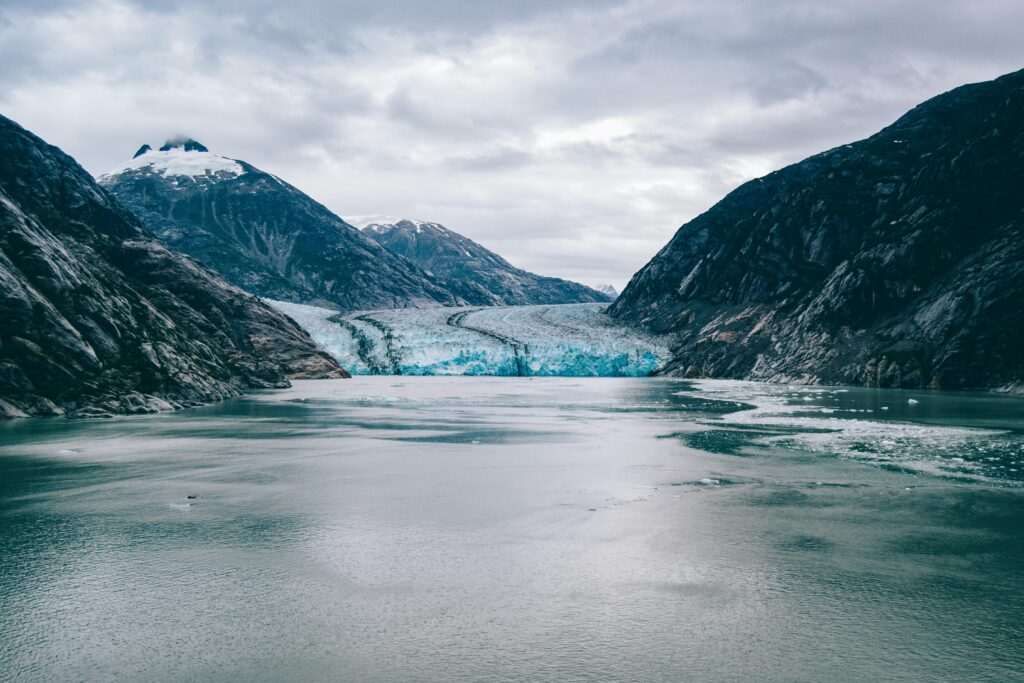
Most glaciers near Anchorage come with gated access, admission fees, and guided tour requirements. Knik Glacier does not. This massive valley glacier at the end of Knik River Road from Palmer is accessible by ATV across the braided river flats below it — or on foot during low water — and it costs nothing to reach. The glacier is larger than many visitors expect: a sweeping blue-ice face rising above a moraine lake, with icebergs calving into the water at its terminus. It is one of the most dramatic glacier experiences accessible from the Anchorage area, and it remains significantly less visited than Matanuska because reaching it requires some effort and route-judgment that not everyone is prepared for.
Getting to Knik Glacier
From Palmer, drive northwest on Knik River Road approximately 26 miles to the end of the maintained road. The drive itself passes through Mat-Su farmland and transitions into glacial outwash terrain as the valley narrows. At road’s end, you are at the edge of the Knik River flats — a broad braided river system with channels that shift with water level and season. The glacier is visible ahead across the river, but reaching it requires crossing those channels.
ATV is the recommended access method. The braided gravel flats are navigable by four-wheel-drive ATV, and several outfitters in Palmer and Wasilla offer guided ATV glacier tours that handle the route-finding and river-reading for you. For first-time visitors, a guided tour removes the uncertainty of the crossing entirely. Independent foot travel across the braided channels is possible in mid to late summer when water levels are at their lowest — typically July and August — but requires judgment about channel depth and current, good waterproof footwear, and confidence in moving water. Some crossings can be knee-deep even in low water. Do not attempt independent foot crossings in spring or after heavy rain when the river runs high.
The Glacier
Knik Glacier is a valley glacier fed by the massive Chugach icefield above. The active terminus calves into the lake that has formed at its base, producing icebergs that drift across the water. The blue-ice face at the terminus is dramatic in the way Alaskan glaciers are — not polished and accessible, but raw, fractured, and very clearly alive in the way moving ice is. The sounds of calving carry across the lake on still days. The lake itself has a character unlike anything at road-accessible glacier sites: no viewing platforms, no railings, no interpretive signs. You are looking at an active glacier in its actual working state.
The glacier has receded significantly over recent decades, as virtually all Alaska glaciers have. The moraine lake at the terminus did not exist in its current form even a generation ago. This history is visible in the exposed rock and gravel on both sides of the valley where the ice once lay.
ATV Tours vs. Independent Access
Guided ATV tours from Palmer and Wasilla area outfitters are the most straightforward option for most visitors. Tours typically include round-trip ATV transport from a staging area to the glacier terminus, with time at the ice. Operators handle the river crossings and know current conditions. Book in advance during summer weekends — tours fill quickly in July and August.
Independent foot access demands preparation. The round trip from road’s end to the glacier and back is 10 or more miles across active glacial outwash — gravel, standing water, and shifting creek channels throughout. Plan a full day and check recent conditions from local outfitters before attempting it independently.
When to Go
June through September covers the accessible season. July and August offer the lowest river levels for foot crossings and the most stable weather. June sees higher snowmelt flows making crossings more difficult. September is possible but the days shorten quickly and water temperatures make any misstep more consequential. Spring travel across the flats is not recommended due to river levels.
What to Bring
There are no facilities at Knik Glacier — no restrooms, no water, no services of any kind. Bring at least 2 liters of water per person, food for a full day, waterproof boots, layers for the wind off the glacier, bear spray, and sun protection. The glacier environment reflects significant UV even on overcast days. A trekking pole or two makes the foot crossing more stable. Download offline maps before departing — cell service is unreliable on the Knik flats.
Combining with a Palmer Day
Knik Glacier works best as the anchor of a full Palmer-area day. The Musk Ox Farm in Palmer is 20 minutes from the Knik River Road turnoff and pairs naturally before or after the glacier trip — the only working musk ox farm in the world and an easy hour’s stop. The Matanuska Glacier, about 100 miles northeast on the Glenn Highway, gives a useful point of comparison: it’s more structured and accessible, with guided walkways on the ice surface, while Knik is wilder and more demanding. For those building a longer Mat-Su visit, Hatcher Pass and Independence Mine adds alpine terrain and historic gold mining character to the mix — about 30 miles from Palmer via the Palmer-Fishhook Road.
Can you visit Knik Glacier without a tour?
Yes, but it requires crossing the braided Knik River flats independently — by ATV or on foot in low water. The crossing demands route-reading ability and appropriate footwear. Guided ATV tours remove that uncertainty and are recommended for first-time visitors. Independent foot access is viable in mid to late summer (July–August) when water levels are lowest.
How far is Knik Glacier from Anchorage?
Approximately 75 miles from downtown Anchorage — about 50 minutes to Palmer, then 30–40 more minutes on Knik River Road. Budget a full day for the round trip including time at the glacier.
Is there an admission fee to visit Knik Glacier?
No — access to Knik Glacier does not require a fee or admission ticket, unlike Matanuska Glacier. Independent access is free. Guided ATV tours charge for the tour service itself but there is no site-entry fee.
When is Knik Glacier accessible?
June through September. July and August offer the best conditions — lowest river levels for crossings and stable weather. ATV tours operate through the full summer season. Foot access is most practical in late July and August. Spring and high-water periods are not suitable for independent crossings.
Featured photo by Sandra Seitamaa on Pexels.

No comments yet.