
Alaska Railroad from Anchorage 2026 — Scenic Train Rides to Denali & Seward
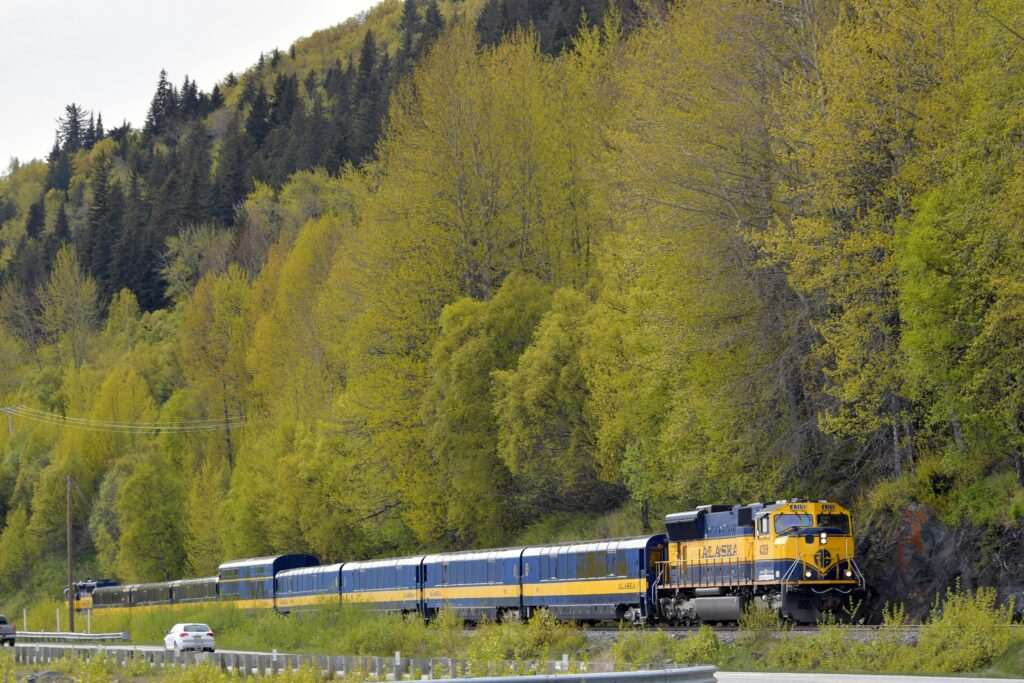
The Alaska Railroad offers something most American rail journeys can’t match: genuine wilderness. Within minutes of leaving Anchorage’s downtown depot, the city drops away and you’re tracking alongside glacier-fed rivers, spruce-covered valleys, and — on clear days — one of the tallest peaks on Earth. Traveling by train here isn’t just transportation. It’s the trip itself.
Whether you’re heading north toward Denali or south to saltwater and sea otters in Seward, Alaska Railroad routes from Anchorage are among the most scenic rail journeys in North America. This guide covers every route, what it costs, what to expect onboard, and how to book before the best seats sell out.
Why Train Travel Makes Sense in Alaska
Alaska’s road system is famously sparse. Many of the landscapes the railroad passes through are otherwise inaccessible without a small plane or a multi-day backcountry trek. The train goes where highways don’t — through river gorges, past hanging glaciers, and across tundra that’s invisible from the Parks Highway. It also lets you actually look at the scenery rather than watch for moose in the road.
For visitors, the train solves a real logistical problem: you get point-to-point transportation with luggage, meals, and panoramic windows included, without the pressure of driving unfamiliar roads in variable weather.
Denali Star — Anchorage to Denali National Park
The flagship route of the Alaska Railroad runs 356 miles north from Anchorage to Denali National Park, with intermediate stops in Talkeetna and Wasilla. The full journey takes about 8 hours each way.
Departing daily from May 11 through September 15, 2026, the Denali Star crosses the Alaska Range, bridges the Susitna River, and passes through some of the densest moose habitat in the state. On clear days, Mt. Denali — at 20,310 feet — appears on the right side of the train roughly two hours before the park stop.
Service Classes
- Adventure Class — Standard coach seating with panoramic windows, onboard café, and reserved seats. Fares from $189 one way.
- Gold Star Service — Glass-domed upper level with 360° views, white-tablecloth dining, open bar, and dedicated attendants. Fares from $309 one way. Gold Star sells out in June and July — book this class before May.
Best seat tip: Sit on the left (west) side of the train traveling northbound from Anchorage for the best angle on Denali when it’s visible.
Coastal Classic — Anchorage to Seward
The Coastal Classic runs 114 miles south from Anchorage through Turnagain Arm and into the Kenai Mountains, ending in Seward on Resurrection Bay. The ride takes about 4 hours and it’s one of the most geologically dramatic rail corridors in the country.
The route passes through the Portage Valley, hugs the edge of Turnagain Arm where bore tides are sometimes visible, crosses a high mountain summit at Grandview (1,000 feet elevation), and descends through old-growth forest before reaching the sea. Spencer Glacier is visible from the train on the southern approach.
The Coastal Classic runs daily in June, July, and August, with selected dates in May and September. Fares from $129 (Adventure Class) to $249 (Gold Star). Most visitors pair the one-way train ride with a glacier or wildlife cruise out of Seward, then return by shuttle or rental car.
Glacier Discovery — Anchorage to Whittier
The Glacier Discovery is the shortest of the main routes at about 2.5 hours from Anchorage to Whittier, the gateway port for Prince William Sound. It runs selected dates June through August.
Whittier itself is a fascinating stop — the entire town essentially lives in a single building, and the port hosts regular wildlife and glacier cruises into Prince William Sound. The most popular itinerary is the train-cruise-train combo: take the morning Glacier Discovery to Whittier, board an afternoon Prince William Sound cruise, then take the evening train back to Anchorage. It makes for a full but completely self-contained day trip.
This route also passes through the Anton Anderson Memorial Tunnel — at 2.5 miles, one of the longest combined road-and-rail tunnels in North America.
Aurora Winter Train — Anchorage to Fairbanks
The Aurora Winter Train is the Alaska Railroad’s year-round wilderness service, running twice weekly between Anchorage and Fairbanks from September through May. It’s one of the last flag-stop trains in the United States: passengers can request stops at remote cabins, trailheads, and backcountry access points with no road access.
For visitors, the appeal is the winter landscape — boreal forest under deep snow, northern lights potential on overnight trips, and moose and caribou sightings that are rare during summer’s leafy understory. The train is fully heated with dining service. It’s a slow journey (12 hours to Fairbanks) but deliberately so.
Practical Booking Tips
- Book Gold Star early. June and July dates typically sell out 6–8 weeks in advance. Adventure Class has more capacity but popular departures fill too.
- Baggage allowance: 2 checked bags (up to 50 lbs each) plus 1 carry-on per ticket. Oversized gear (bikes, packrafts) requires advance arrangement.
- The depot is walkable. The Anchorage Depot is at 411 W 1st Avenue, a 10-minute walk from downtown hotels. Free parking is available adjacent to the building.
- Alaska Railroad Gift Shop: The Alaska Railroad Gift Shop at the depot carries branded merchandise, maps, and Alaska souvenirs — worth a stop before boarding.
- Weather and views: Denali is only visible on clear days, and the Interior can be overcast in early summer. If your trip is specifically about seeing Denali from the train, check the forecast before departure.
- Cancellation policy: Refunds are available up to 24 hours before departure. Gold Star changes require 48 hours notice.
Seasonal Notes
The peak season for the Denali Star and Coastal Classic is late June through mid-August, when daylight runs to 19 hours and wildlife is most active. May and September are quieter, with lower crowds and slightly reduced frequencies but the same spectacular scenery. The Aurora Winter Train runs September through May for those looking beyond the summer visitor window.
Spring (May) is particularly rewarding on the Denali route — the birch trees haven’t fully leafed out, which opens up views of the Alaska Range that are obscured by foliage in midsummer.
Plan Your Alaska Railroad Trip
Start with the Alaska Railroad listing for current schedules, routes, and direct booking links. If you’re parking downtown, the Anchorage Depot has free adjacent parking and opens 90 minutes before scheduled departures. Arrive early — check-in and luggage handling take time when the train is full.
For a day trip that covers both train travel and Prince William Sound scenery, the Glacier Discovery to Whittier paired with a PWS cruise is the best single-day itinerary available from Anchorage.
Frequently Asked Questions
How far in advance should I book Alaska Railroad tickets?
For Gold Star Service in June or July, book at least 6–8 weeks out. Adventure Class on popular routes should be booked 3–4 weeks ahead. The Aurora Winter Train has more flexibility, but weekend departures fill quickly.
Can I do a round trip on the Coastal Classic in one day?
Yes — the train departs Anchorage in the morning, arrives in Seward by midday, and returns the same evening. Many visitors pair this with a Kenai Fjords boat tour out of Seward’s small boat harbor for a full-day itinerary.
Is the Alaska Railroad dog-friendly?
Small dogs in carriers may be allowed in some seating areas — contact Alaska Railroad directly to confirm current pet policies before booking. Service animals are permitted on all routes.
What’s the difference between Adventure Class and Gold Star?
Adventure Class provides comfortable coach seating with panoramic windows and access to an onboard café. Gold Star adds a glass-domed upper observation level, full-service dining with Alaska seafood and regional dishes, an open bar, and a dedicated attendant. The views are extraordinary in both classes.
Is there Wi-Fi on Alaska Railroad trains?
Wi-Fi is not available on most routes — which most passengers consider a feature rather than a flaw. Cell service is also limited through much of the Interior. Download any maps or entertainment before boarding.



No comments yet.