
Bodenburg Butte Trail Palmer: Mat-Su Valley’s Best Quick Hike
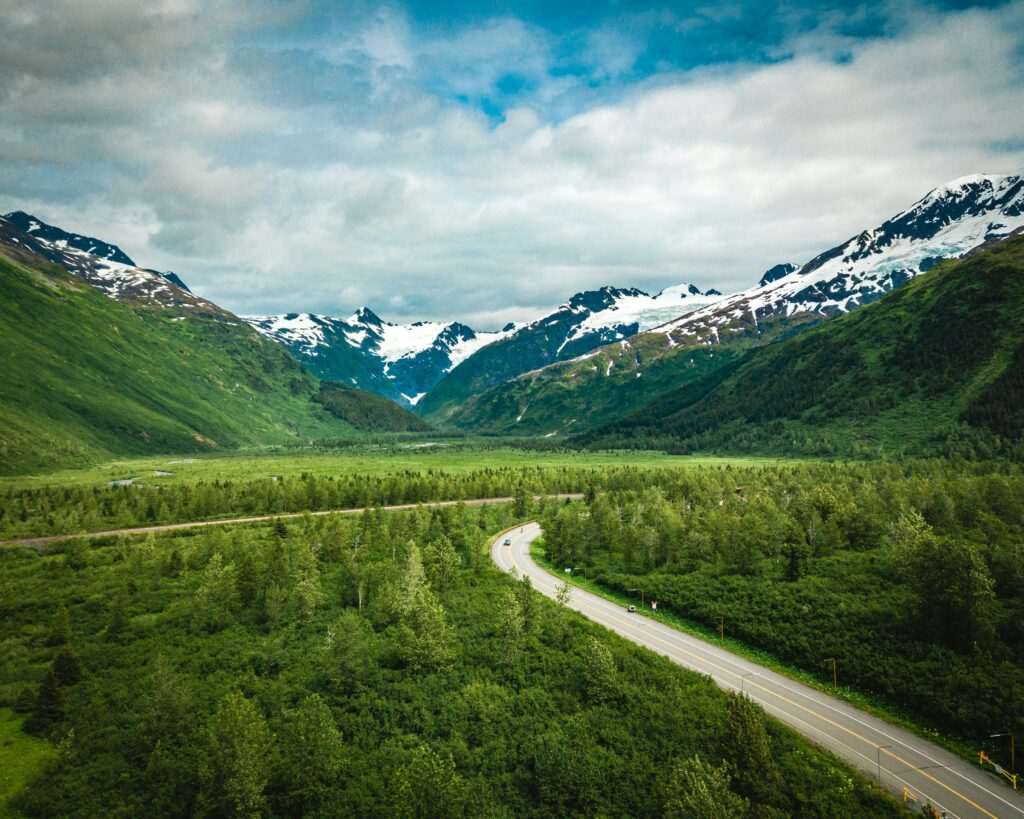
Most hikes in Alaska demand a full day, a long drive, and a willingness to suffer. Bodenburg Butte near Palmer is not most hikes. At 1.5 miles round trip with about 700 feet of gain, it is done and dusted in an hour or two — and the reward at the top is a panoramic view of the entire Matanuska-Susitna Valley that most visitors never get to see. You can watch the Matanuska River snake through a patchwork of farms and homesteads while Pioneer Peak rises behind you and the broad face of the Chugach fills the horizon to the south. For the effort involved, it is one of the best viewpoints in Southcentral Alaska.
Where Is Bodenburg Butte?
The butte sits about 45 minutes northeast of Anchorage, just outside the small farming community of Butte, Alaska. From Anchorage, take the Glenn Highway north past Eagle River, through Eklutna, and continue toward Palmer. Exit at the Old Glenn Highway and follow it south a short distance to Bodenburg Loop Road. The trailhead is tucked along Bodenburg Loop Road and is clearly signed. The drive itself is scenic — the Glenn Highway curves around the base of the Chugach Range and drops into the Mat-Su Valley in a way that makes the landscape feel suddenly much larger than anything you left behind in Anchorage.
Parking at the trailhead is limited to a small gravel pullout. Arrive early on summer weekends — this is a well-known local gem and the lot fills up by mid-morning. Facilities at the trailhead are minimal, so plan accordingly.
The Hike
The trail begins gently through a mix of birch and spruce before the terrain steepens considerably. Bodenburg Butte is a classic roche moutonnée — a glacially sculpted bedrock hill that was smoothed on one side and plucked steep on the other as the Matanuska Glacier advanced across the valley during the last ice age. That glacial history is directly responsible for the abrupt grade you feel underfoot as you near the summit.
The upper portion of the trail crosses open grassy slopes with loose soil and exposed rock. Footing requires some attention, particularly when wet. Trekking poles help on the descent if you have them. The summit itself is a broad, grassy dome with a few rocky outcroppings — a good spot to spread out and eat lunch while the view does the work.
Round-trip time for most hikers runs between 45 minutes and 90 minutes. Fit hikers can push the pace; families with young children should plan for the slower end of that range. The steepness makes it less suitable for toddlers, but older children who are comfortable with a genuine uphill grind will manage fine and feel genuinely accomplished at the top.
What You See at the Summit
The view from Bodenburg Butte is the reason people keep coming back. The Mat-Su Valley floor spreads out below in a nearly unbroken expanse — agricultural fields, the silver thread of the Matanuska River, small homesteads, and the distant sprawl of Palmer and Wasilla to the west. The perspective is unusual for Alaska: instead of looking up at peaks, you are looking down at a working agricultural landscape framed by mountains on every side.
Pioneer Peak dominates the view to the east, its ridgeline dropping sharply to the valley floor. The Chugach Range fills the southern skyline. On clear days the Alaska Range appears faintly on the northwestern horizon. Bald eagles and other raptors are frequently spotted riding thermals above the summit, and moose are commonly visible in the fields and spruce patches below. It is the kind of vantage point that makes the scale of Alaska tangible in a way that is easy to miss while driving through it.
Best Season to Visit
Bodenburg Butte is accessible from roughly April through October. In early spring the trail can be muddy and slippery from snowmelt, and the upper grassy slopes hold standing water. By June the conditions firm up and the wildflowers on the open slopes — lupine, fireweed, geranium — are at their peak. August and September offer golden light and the first hints of autumn color in the birch stands below. Avoid the trail during or immediately after heavy rain, as the steep sections become genuinely slick.
Combining Bodenburg Butte with a Palmer Day Trip
The butte makes an ideal centerpiece for a half-day or full-day trip to the Palmer area. The Eagle River Nature Center, about 25 minutes back toward Anchorage, offers a different style of nature experience — flat riverside trails and interpretive exhibits that work well as a pre-hike warm-up or post-hike wind-down for families.
Palmer itself is worth an hour of exploration — the historic downtown has a handful of good cafes, the Colony House Museum tells the story of the 1930s federal colonization program that gave the town its agricultural identity, and the Saturday farmers market in summer showcases the vegetables that grow to improbable sizes in the long Mat-Su days. The valley’s growing season is short but intense, and local produce stands along the Old Glenn Highway sell vegetables through late September.
For visitors interested in wildlife, the Chugach State Park boundaries extend close to the butte area, and the drive up the Glenn Highway from Anchorage frequently produces moose sightings along the corridor. The Matanuska River valley just below the butte is prime moose habitat, particularly in early morning and evening.
Practical Tips
Bring more water than you think you need — the exposed upper slopes are warm on sunny summer days and there is no water on the trail. Sun protection matters since there is no shade at the summit. A light wind layer is useful as the hilltop catches valley breeze. Dogs are welcome; keep them leashed near the road and watch the steep grassy descent with smaller dogs. The Anchorage Museum pairs well for visitors who want deeper context for the agricultural and glacier history visible from the summit.
Frequently Asked Questions
Is Bodenburg Butte good for kids? Yes, for children aged 7 and up who are comfortable with a sustained uphill. The grade is genuinely steep and toddlers will struggle on the upper section, but older kids typically find it a satisfying challenge.
Is there an entrance fee? No fee or permit required. Parking is a small informal pullout along Bodenburg Loop Road at the trailhead sign.
Can I see Denali from the summit? Occasionally under very clear conditions, but valley haze typically obscures it at 150 miles. The dramatic reliable views are Pioneer Peak to the east and the Chugach to the south.


No comments yet.