
McHugh Creek Trail Anchorage 2026 — Seward Highway Alpine Hike with Turnagain Arm Views
Fifteen miles south of Anchorage on the Seward Highway, at mile marker 112, a parking area on the east side of the road marks the McHugh Creek Wayside — the trailhead for one of the most dramatically positioned hikes accessible from the city. McHugh Creek Trail climbs from Cook Inlet shoreline elevation into Chugach State Park terrain with views across Turnagain Arm that open quickly and don’t quit. The trail offers two distinct experiences in one: a moderate lower route to a Turnagain Arm overlook that most fit hikers can complete in an afternoon, and an upper extension into alpine terrain that pushes into real backcountry and eventually connects toward the Rabbit Lake drainage.
Lower McHugh Creek Trail
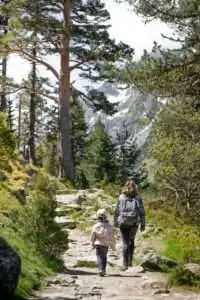
The lower trail runs approximately 4 miles round trip from the wayside parking lot to the main overlook above Turnagain Arm. The route follows McHugh Creek upstream through alder and spruce forest before breaking into more open terrain on the upper hillside, where the view across the Arm opens to the Kenai Mountains on the far side. The climb gains roughly 1,400 feet over two miles — steady and consistent, not technical.
The overlook itself is the payoff: Turnagain Arm stretches below in both directions, the bore tide visible on its schedule, and on clear days the Alaska Range appears to the north. This is the destination for most visitors to McHugh Creek, and it earns its place among the best Turnagain Arm viewpoints on the entire Seward Highway corridor. Round trip takes two to three hours at a moderate pace.
Upper McHugh Trail — Alpine Extension
Beyond the overlook, the trail continues into progressively more demanding terrain — another four or more miles into the alpine zone above treeline, climbing toward Ptarmigan Valley and the ridgeline connecting eventually toward the Rabbit Lake drainage on the far side of the Chugach. This extension is a serious undertaking: strenuous, unmaintained above treeline, and best suited for hikers with full-day endurance and experience navigating alpine terrain. Total distance and gain for the full upper extension make it an eight-plus-mile, 2,000-plus-foot day.
Most Anchorage hikers use the lower trail as the primary objective and treat the upper route as an option for experienced groups who want to extend the day. The two-trail character of McHugh Creek is part of what makes it useful — it’s one of relatively few Seward Highway trailheads that can satisfy both a moderate-pace family group and a more serious group of alpinists on the same morning.
Wildlife
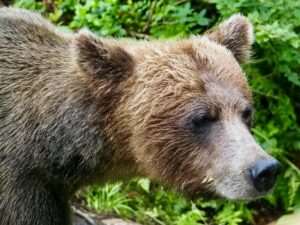
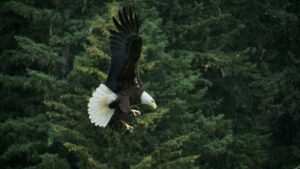
Dall sheep are reliably visible on the rocky slopes above the lower trail, often close enough to observe in detail from the main overlook. McHugh Creek itself holds salmon in late summer — pink and silver — and the presence of bears in the drainage reflects that. Brown bear are common in Chugach State Park; carrying bear spray and making noise in the brushy lower trail sections is standard practice. Bald eagles work the Turnagain Arm shoreline visible from the overlook. The upper alpine zone holds ptarmigan and occasional golden eagle sightings above the ridgelines.
Practical Information
The McHugh Creek Wayside requires a state park day-use fee — currently $5 per vehicle — payable at the trailhead iron ranger. The parking lot is smaller than Glen Alps and fills on peak summer weekends; arriving before 9am avoids competition for spots. The lot also has picnic tables and restroom facilities, making it a workable day-stop on a longer Seward Highway drive.
The lower trail is accessible May through October in most years. The upper route is best attempted July through September when snow has cleared from the alpine terrain. Both routes require standard day-hiking gear: waterproof trail boots, wind shell, insulating layer (the overlook is exposed and can be significantly colder than the parking lot), trekking poles for the descent, bear spray, and enough food and water for the distance you intend to cover.
Combining with the Seward Highway
McHugh Creek sits at a natural stop point on a Seward Highway scenic drive — southbound travelers hit it roughly 20 minutes after leaving Anchorage, well before the highway reaches Girdwood or Portage. Combining a McHugh Creek lower trail hike with a stop at the turnouts along Turnagain Arm and continuing south toward Girdwood or the Portage Glacier road makes a compact and scenically varied half-day from Anchorage. The bore tide on Turnagain Arm — visible from the highway shoulder and from the McHugh overlook alike — runs on a predictable tidal schedule worth checking before heading out.
How long is McHugh Creek Trail?
The lower trail to the Turnagain Arm overlook is approximately 4 miles round trip with about 1,400 feet of elevation gain — typically two to three hours. The upper route extends another 4 or more miles into alpine terrain and becomes a strenuous full-day hike with total gain exceeding 2,000 feet. Most visitors complete the lower trail only.
Where is the McHugh Creek trailhead?
The McHugh Creek Wayside is on the Seward Highway at mile marker 112, approximately 15 miles south of downtown Anchorage — about 20 minutes by car. The parking area is on the east (mountain) side of the highway and is signed from the road. A $5 state park day-use fee is required.
Is McHugh Creek Trail good for beginners?
The lower trail is suitable for hikers in reasonable fitness — the climb is steady and the trail is well-trodden to the overlook. It is not a flat nature walk; 1,400 feet of gain over two miles requires genuine cardiovascular effort. The upper extension is strenuous and appropriate only for experienced hikers with full-day stamina and alpine terrain comfort.
What wildlife can you see at McHugh Creek?
Dall sheep are common on the rocky slopes above the overlook. Brown bear use the drainage, particularly in late summer when McHugh Creek holds salmon — carry bear spray throughout the hike. Bald eagles are visible along Turnagain Arm from the overlook, and ptarmigan inhabit the upper alpine terrain on the extension route.
McHugh Creek Trail delivers a Turnagain Arm panorama within twenty minutes of Anchorage, with enough vertical to feel earned and enough extension route for those who want more. Check the bore tide schedule, pack the bear spray, and give yourself the full two hours to the overlook — the view doesn’t wear out quickly.

No comments yet.