
Alaska Wildlife Conservation Center 2026 — Portage Valley’s Drive-Through Wildlife Sanctuary
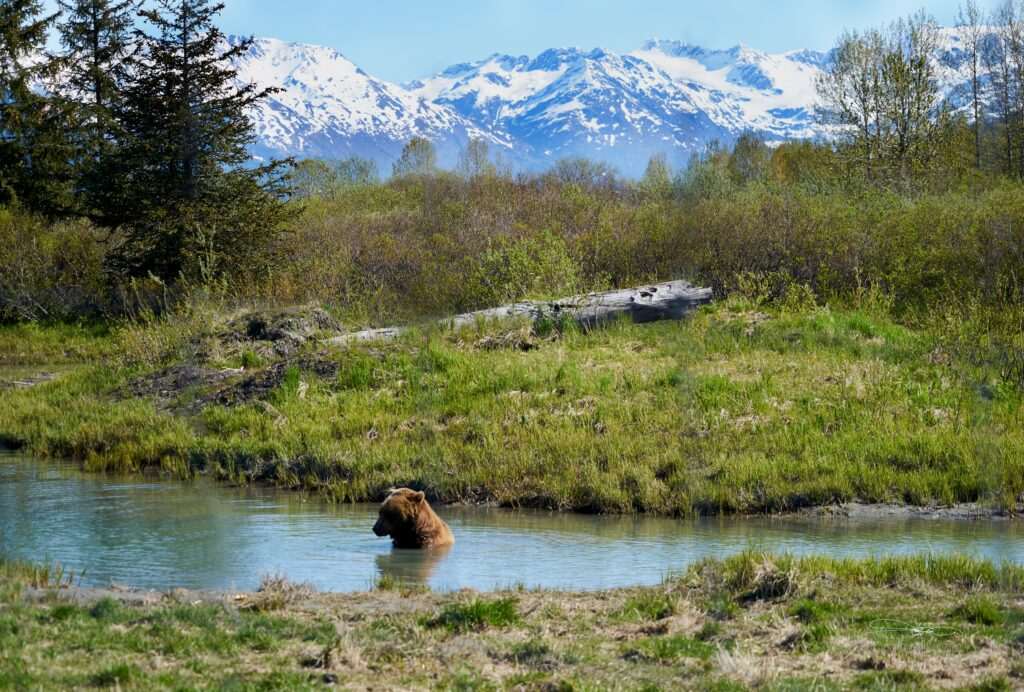
Fifty miles south of Anchorage on the Seward Highway, Portage Valley opens into one of the most scenic corridors in Southcentral Alaska — and at the entrance to that valley sits the Alaska Wildlife Conservation Center, a nonprofit sanctuary housing the state’s largest collection of orphaned, injured, and non-releasable Alaska wildlife. A visit combines genuine wildlife viewing — brown bears, bison, musk ox, moose, wolves, elk, caribou, and lynx — with the mountain scenery of the Chugach Range. It’s one of the most accessible Alaska wildlife experiences within day-trip range of Anchorage, and it works for families, photographers, and first-time Alaska visitors equally well.
What the AWCC Is
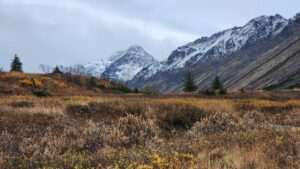
The Alaska Wildlife Conservation Center operates as a wildlife sanctuary, not a zoo. Every animal at the AWCC arrived because it couldn’t survive in the wild — orphaned cubs, injured adults, animals imprinted on humans, or species taken from illegal possession. The center’s mission is to rehabilitate what can be released and provide permanent sanctuary for what can’t. The animals live in large natural enclosures designed to maintain their behavioral patterns, and the setting along Portage Creek with Chugach peaks as a backdrop produces photography that looks nothing like a conventional zoo.
The species roster is extensive: brown and black bears, wood bison (a historically significant restoration project for Alaska), musk ox, moose, gray wolves, elk, caribou, Sitka black-tailed deer, lynx, and eagles. The bison herd in particular is worth noting — the AWCC has been central to efforts to restore wood bison to Alaska, a subspecies absent from the state for more than a century.
The Experience: Drive-Through and Walking Areas
The AWCC is laid out along a 1.5-mile road through the property, with a mix of drive-through sections and walk-in enclosure viewing areas. Most visitors drive the main loop at their own pace, stopping at each enclosure. The bears are typically the most active draws — multiple enclosures house brown and black bears in separate large habitats, and viewing distances are close enough for clear photography without a telephoto lens.
The musk ox enclosure is another highlight. These prehistoric-looking animals move surprisingly quickly and interact with each other in ways that make sustained watching worthwhile. The wolf habitat requires patience — wolves often rest during the middle of the day — but morning visits typically find them active. The bison field is the largest enclosure and the most open, with the herd moving across a meadow framed by the valley’s steep mountain walls.
Walking paths run alongside several of the enclosures, and the center has accessible viewing platforms at key points. Plan two to three hours for a thorough visit. The gift shop and snack area near the entrance offer a convenient break point, and staff naturalists are typically available to answer questions about specific animals.
Combining with Portage Glacier
The Alaska Wildlife Conservation Center sits at the head of Portage Valley, and the Portage Glacier and Begich Boggs Visitor Center are just a few miles further up the road. The combination makes a natural full-day itinerary from Anchorage: drive the Seward Highway south, stop at AWCC, continue to Portage Glacier for the visitor center exhibits and the boardwalk glacier view, and return. If you want to get on the water, Portage Glacier Cruises (MV Ptarmigan) runs boat tours to the glacier face — the most dramatic way to see the ice.
The Begich Boggs Visitor Center at Portage Lake has excellent interpretive exhibits on glacial geology and the Chugach National Forest ecosystem. Budget an extra 45 minutes to an hour if you’re adding it. The round trip from Anchorage, including both AWCC and Portage Glacier, is achievable in a single day with an early start.
When to Go and What to Expect
The AWCC is open year-round, with reduced hours in winter. Summer (May through September) is the peak season — longer hours, more active animals, and the green valley backdrop that makes the photography exceptional. June and July offer the best combination of animal activity and daylight. Bears are most active in morning and evening; arriving when the center opens gives you the best wildlife viewing before midday heat and visitor volume increase.
Dress in layers regardless of season — Portage Valley channels cold air off the glacier and can be significantly cooler than Anchorage, even on warm summer days. Bring rain gear; the valley gets more precipitation than the city. For photography, a lens with at least 200mm reach is useful for the wolf and lynx enclosures, though most of the bear and bison viewing is close enough for shorter focal lengths.
How far is the Alaska Wildlife Conservation Center from Anchorage?
The AWCC is approximately 50 miles south of Anchorage on the Seward Highway — about an hour’s drive. The entrance is in Portage Valley, just before the road junction that leads to Portage Glacier and the Begich Boggs Visitor Center.
What animals can you see at the AWCC?
Brown bears, black bears, wood bison, musk ox, moose, gray wolves, elk, caribou, Sitka black-tailed deer, lynx, and eagles. The bison herd and the brown bear enclosures are typically the most popular viewing areas. Animal activity varies by time of day — mornings are generally best.
How long does a visit to the AWCC take?
Plan two to three hours for a thorough visit. The drive-through loop is 1.5 miles, but most visitors stop frequently and spend time at multiple enclosures. Adding Portage Glacier and the Begich Boggs Visitor Center turns it into a full-day outing from Anchorage.
Is the AWCC worth it as an Anchorage day trip?
Yes, particularly for first-time Alaska visitors who want guaranteed wildlife viewing without a backcountry trip. The combination of species diversity, close viewing distances, and the Portage Valley mountain setting makes it one of the more rewarding easy day trips from the city. The drive on the Seward Highway is worth taking on its own merits.
The AWCC delivers what wildlife viewing in Alaska can’t always guarantee: the animals are there. Brown bears, musk ox, wood bison, wolves — all within an hour of Anchorage, in a valley that looks like the wilderness it borders. Go in the morning, plan time at Portage Glacier afterward, and take the Seward Highway home slowly. There’s a lot to look at between Portage and the city.
Featured photo by Francisco Cornellana Castells on Pexels.

No comments yet.