
Fat Biking Near Anchorage Alaska: Complete 2026 Guide
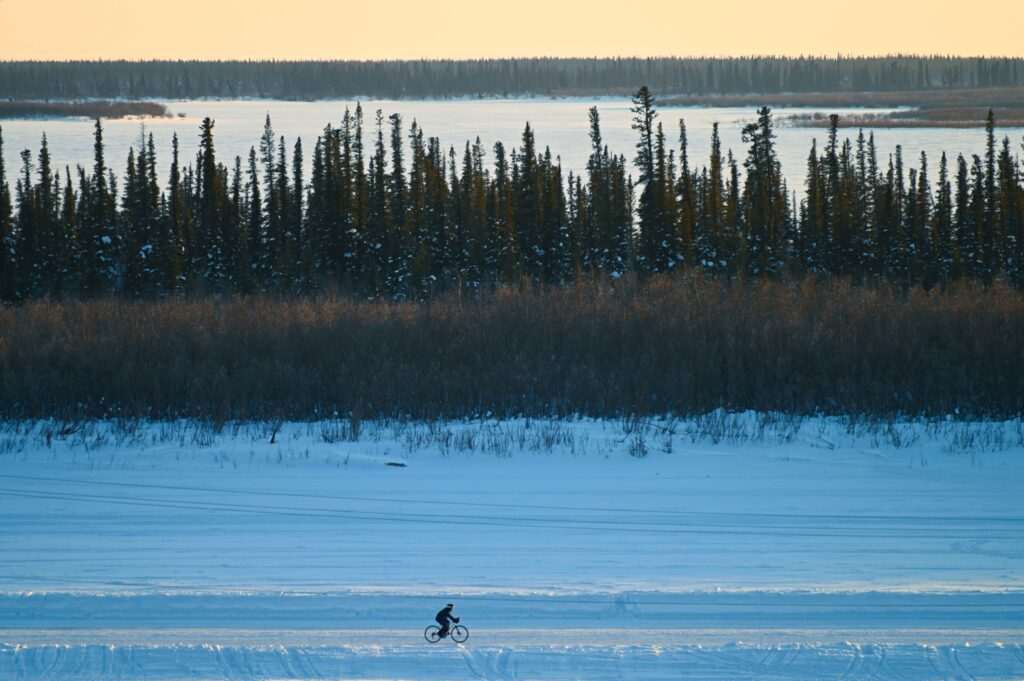
Fat biking — riding oversized, low-pressure tires across snow and ice — has become one of the fastest-growing winter sports in Alaska, and Anchorage sits at the center of it. The city’s extensive trail network, which draws mountain bikers all summer, transforms into a fat bike playground from November through March. Groomed singletrack at Kincaid Park, frozen lakeside routes north of the city, and the wind-swept hardpack of the Coastal Trail all offer distinct fat biking experiences within an easy drive of downtown. For riders willing to layer up and adjust their tire pressure, Anchorage delivers some of the most accessible winter cycling terrain in the country.
What Is Fat Biking?
Fat bikes are purpose-built for riding on surfaces that would stop a standard mountain bike cold. The defining feature is the tire: 3.8 to 5 inches wide, compared to 2–2.4 inches on a conventional trail bike. Run at very low pressure — typically 3 to 8 PSI on snow, versus 25–35 PSI on a standard trail bike — fat tires spread weight across a large contact patch and float over soft snow rather than sinking through it. On hard-packed groomed trails or frozen lake surfaces, the traction is surprisingly capable, and the bikes handle more like mountain bikes than novelty equipment.
In Anchorage, fat biking is a mainstream winter sport, not a fringe activity. Trail grooming infrastructure exists specifically to support it, rental fleets are available, and the community of riders who commute, train, and recreate on fat bikes through the winter is substantial.
Kincaid Park: The Premier Fat Bike Destination
Kincaid Park, located at the southwest tip of Anchorage on a bluff above Turnagain Arm, is the anchor of the city’s fat biking scene. The park’s 36-kilometer groomed Nordic ski trail network is shared with fat bikers during winter — an arrangement that produces some of the smoothest, most rideable winter trail surfaces in Southcentral Alaska. When the grooming machine passes, the corduroy surface grips fat tires well and rewards consistent pedaling over technical maneuvering.
The terrain at Kincaid ranges from wide, gentle meadow loops suitable for beginners to rolling, forested singletrack that challenges experienced riders. The Coastal Spruce Loop and the trails threading through the park’s boreal forest interior are particular highlights — views of Turnagain Arm open periodically through the trees, and on clear days the Alaska Range is visible across the inlet. Trail conditions at Kincaid are posted regularly by the Anchorage Nordic Ski Club, which maintains the grooming schedule.
Kincaid’s parking lot and trailhead are accessible from Raspberry Road. Arrive early on winter weekends — the lot fills by mid-morning when conditions are good. The park is lit for evening use on some of its inner loops, extending the usable hours during the darkest months of December and January.
The Tony Knowles Coastal Trail in Winter
The Tony Knowles Coastal Trail runs 11 miles from downtown Anchorage to Kincaid Park along the shore of Cook Inlet. In summer it draws runners, cyclists, and rollerbladers. In winter, it becomes one of Anchorage’s most atmospheric fat biking routes — wind-packed snow along the bluff offers a firm, fast surface, and the view west across the inlet to Sleeping Lady and the Alaska Range is best appreciated from the saddle of a bike moving through cold, clear air.
The Coastal Trail is not groomed for fat biking in the way Kincaid is, which means conditions vary significantly. After a windstorm, the exposed sections can be glare ice — studded tires are worth the investment for riders who use the Coastal Trail regularly. After fresh snow without wind, the packed surface is ideal. The trail’s grade is gentle throughout, making it accessible to beginners and a useful connector route for riders linking downtown to Kincaid.
Hillside and the Chugach Foothills
The Hillside district in south Anchorage and the lower flanks of the Chugach Mountains provide fat biking terrain with a very different character from Kincaid — steeper, more technical, and less groomed. The network of trails accessible from Chugach State Park trailheads in the Hillside area includes singletrack that rides well in midwinter when cold temperatures consolidate the snowpack. These trails are not specifically groomed for fat bikes and require more judgment about conditions — deep, unconsolidated snow after a storm can make them unrideable, while a hard freeze following a warming period produces fast, locked-in surfaces.
The Gasline Trail, which traverses the Hillside parallel to the pipeline easement, is one of the most popular fat bike routes in this zone — a wide, relatively smooth corridor through birch and spruce that catches wind and firms up quickly after snowfall. The trailheads off Upper O’Malley Road and Prospect Heights provide access to this network.
Eklutna Lakeside Trail
The Eklutna Lakeside Trail, accessed from the Eklutna Lake trailhead off the Glenn Highway, runs 13 miles along the east shore of Eklutna Lake into the heart of Chugach State Park. In summer it is a busy bike and pedestrian route. In winter, the frozen lake surface becomes rideable directly, and the trail itself firms up into one of the most scenic fat bike routes accessible from Anchorage. The valley walls rise steeply on both sides, glaciers visible at the head of the valley, and traffic thins considerably compared to summer.
The full out-and-back to the end of the lake at Eklutna Glacier is approximately 26 miles — a serious day on a fat bike in winter conditions. Most riders target the first 5–8 miles, which provides the landscape payoff without committing to a full expedition. Pack extra food and a spare tube; the cold makes flat repairs time-sensitive.
Renting a Fat Bike in Anchorage
Fat bikes are available for rent from several Anchorage outfitters, making it practical to try the sport without buying a bike. REI Anchorage carries a rental fleet of fat bikes seasonally; Paramount Cycles, an independently owned shop, offers fat bike rentals and is a good source of current trail condition reports. Both shops can advise on tire pressure settings for current conditions — a service worth using, since optimal pressure varies from 3 PSI on soft powder to 8–10 PSI on groomed corduroy or hard pack.
Rental rates typically run $40–$70 per day. Reserve ahead on winter weekends, especially following a fresh snowfall when demand spikes. Most rental shops include a helmet; bring your own winter cycling gloves and insulated footwear.
Tire Pressure: The Most Important Adjustment
Tire pressure is the primary variable that determines how a fat bike performs on snow. The general rules:
- Soft, ungroomed snow: 3–5 PSI. Lower pressure maximizes the contact patch and helps the tire float rather than sink.
- Groomed Nordic track or packed trail: 6–10 PSI. Slightly higher pressure reduces rolling resistance without sacrificing traction.
- Hard pack or ice: 8–12 PSI, plus consider studded tires. Studs add significant traction on glare ice and are worth mounting for the Coastal Trail’s exposed sections.
- Never inflate to road or standard trail pressures. A fat bike tire at 20+ PSI on snow behaves like a standard tire — it sinks, slides, and makes the bike genuinely difficult to control.
Carry a small pump and a pressure gauge on any ride. Temperatures change throughout the day, and so do trail surfaces. Being able to add or release air at the trailhead or mid-ride is a practical skill that makes every outing more enjoyable.
What to Wear for Cold-Weather Fat Biking
Fat biking generates significant body heat despite the cold, which means managing moisture and layering thoughtfully is more important than simply adding insulation.
- Base layer: Merino wool or synthetic moisture-wicking fabric. Cotton holds sweat and chills rapidly — avoid it entirely.
- Mid layer: Fleece or lightweight insulating jacket. This layer comes off first when you overheat on climbs.
- Shell: Wind-resistant, water-resistant outer layer. Even without precipitation, wind at speed on the Coastal Trail or open Kincaid meadows makes a shell essential.
- Hands: Lobster-claw cycling gloves or pogies (handlebar mitts) rated for temperatures around 10–20°F. Cold fingers degrade brake control quickly.
- Feet: Insulated, waterproof cycling shoes or standard winter boots compatible with flat pedals. Clipless pedals can freeze in cold conditions — most Anchorage fat bikers run flat pedals in winter.
- Face and head: Balaclava or neck gaiter plus a cycling-specific helmet liner. Goggles or sunglasses for bright days on open trails where snow glare is significant.
Shoulder Season and Muddy Trail Considerations
The fat bike season in Anchorage extends into the shoulder seasons on either end of winter. In October and November, before full snow coverage, fat bikes handle the loose dirt and mud of trails that would ruin a standard mountain bike’s day. In March and April, as snow softens, the same fat tires that floated over powder are useful on wet, variable surfaces.
Shoulder-season riding requires more ethical judgment. Soft spring trails can sustain damage from tire ruts that persist through summer. Most Anchorage trail organizations ask riders to avoid soft, thawing trails — if your tires are sinking more than an inch, it is probably too early. The same applies to autumn: fresh snow over unfrozen ground can mask conditions that damage the tread.
Planning Your Ride
For a first fat biking outing near Anchorage, start at Kincaid Park on a day when the trails are freshly groomed. The grooming schedule is posted on the Anchorage Nordic Ski Club’s website and social channels. Arrive with slightly deflated tires (ask the rental shop to set pressure for you), dress in layers you can open at the chest to vent heat, and plan a two-hour loop using the park’s wider, more forgiving trails before tackling the technical singletrack.
Fat biking in Anchorage rewards repeat visits — conditions change daily, different trails suit different weather windows, and the experience of riding through birch forest on fresh corduroy in the low winter light is one of the distinctly Alaskan pleasures that draws riders back every season.
No comments yet.