
Tide Pooling Near Anchorage Alaska 2026 — Best Spots, Timing & What You’ll Find
Cook Inlet doesn’t do tides like other places. The extreme tidal range here — up to 38 feet at Anchorage — is one of the largest on the planet, and the rhythmic exposure of rocky intertidal zones along Alaska’s outer coast produces some of the most species-rich tide pools in North America. For visitors based in Anchorage, the best tide pooling requires a day trip south or southwest: Kachemak Bay near Homer, about four hours down the Sterling Highway, and the Seward coastline, about two and a half hours southeast on the Seward Highway. Within Anchorage itself, Cook Inlet’s mudflats expose at low tide but the substrate is silty, not rocky — the dramatic intertidal life of barnacles, sea stars, urchins, and anemones lives on the boulder-and-cobble shores of the outer coast. This guide covers where to go, when to time the tides, what to look for, and how to stay safe when the water turns.
Understanding Alaska’s Extreme Tides
Before heading out, understanding the tidal dynamics of Southcentral Alaska is essential — not just for finding exposed pools, but for safety. Cook Inlet’s funnel shape concentrates tidal energy, producing ranges that reach 32–38 feet at Anchorage and 20–26 feet at Kachemak Bay. At Seward on Resurrection Bay, the range is more moderate at 10–14 feet, which still exceeds most Pacific tide pooling destinations but allows more time to work the pools before water returns.
The practical implication: in areas with large tidal ranges, the water returns fast. Walking into a coastal cove at low tide without checking the tide table is how people get cut off. NOAA publishes hourly tide predictions for Seldovia, Homer, Seward, and other Alaska locations. Before any tide pool excursion, pull the table for your specific location and plan to be walking back toward shore before the tide turns. Incoming water in many Alaska coves accelerates quickly once it starts — faster than most visitors expect.
Best Tide Pooling Locations Near Anchorage
Kachemak Bay State Park — The Premier Destination
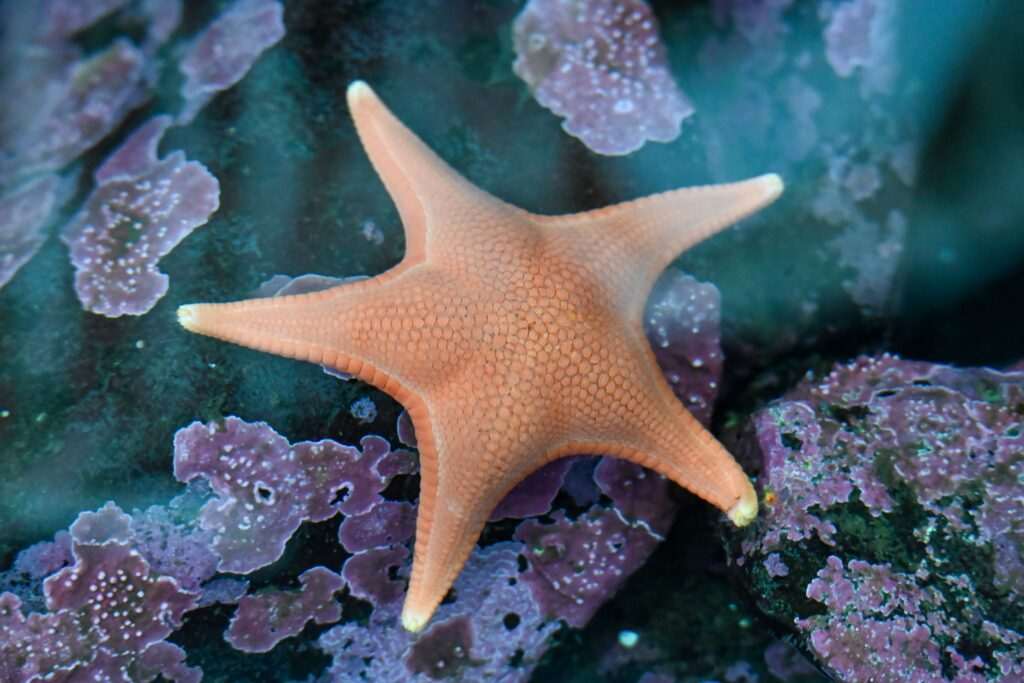
Kachemak Bay State Park, accessible only by water taxi from Homer Spit, is the finest tide pooling destination within a day’s reach of Anchorage. The park encompasses the south shore of Kachemak Bay — a protected estuary where cold, nutrient-rich Gulf of Alaska water meets the bay’s shallower reaches. The rocky intertidal zones here hold exceptional species diversity: purple sea urchins, giant green anemones, leather sea stars, ochre sea stars, turban snails, hermit crabs, tidepool sculpins, chitons, limpets, and dense mussel beds.
Access requires a water taxi from Homer Spit to the Grewingk Glacier area or other park landing points on the south shore. Water taxis run from May through September. Plan the trip around the tide schedule and give yourself at least two hours of low-tide window at the destination. The lowest tides of the month — minus-tide events of -1 to -3 feet — expose the most species-rich lower zones. These large negative tides are predictable weeks in advance and are worth planning a trip around specifically.
Bishops Beach, Homer
Bishops Beach, a long public beach on the east side of Homer accessible by road, offers driveable tide pooling along its rocky reefs at low tide. The pools here are smaller and less diverse than the outer Kachemak Bay coast, but they’re reachable without a boat — park at the beach access and walk the shoreline as the tide drops. Look for anemones in depressions that retain water, barnacle fields on exposed rocks, and shore crabs and hermit crabs in the shallower zones. Bishops Beach is a practical option for families with young children who want a real intertidal experience without water taxi logistics.
Homer is approximately 225 miles south of Anchorage via the Sterling Highway — about four hours of driving. Given the distance, combining Bishops Beach with a Kachemak Bay water taxi excursion on separate days during an overnight stay is more efficient than attempting both in a single day. Homer has year-round lodging options ranging from budget rooms to waterfront properties on the Spit.
Lowell Point, Seward
Lowell Point, accessible by road just south of downtown Seward on Resurrection Bay, provides rocky intertidal access within a much shorter drive from Anchorage — approximately two and a half hours via the Seward Highway. The point’s rocky shoreline exposes at low tide to reveal mussel beds, barnacle-covered boulders, hermit crabs, urchins, and sea stars. The tidal range at Seward is more moderate than Kachemak Bay, giving a longer window to explore once the tide drops.
Lowell Point pairs naturally with other Seward activities — an Exit Glacier hike or a Kenai Fjords boat tour can share the same day trip. Before or after visiting the pools, the Alaska SeaLife Center in downtown Seward provides an excellent orientation to the same species you’ll encounter on the rocks: the center’s touch tanks hold sea urchins and intertidal invertebrates, and the exhibits on Kenai Fjords ecosystem species help visitors identify the animals they’re seeing in the field.
Cook Inlet Tidal Habitat Near Anchorage
Anchorage itself doesn’t have classic rocky tide pools — the substrate along Cook Inlet is silty mudflat, not boulder and cobble. But the mudflats that expose at low tide along the Tony Knowles Coastal Trail offer a different kind of tidal experience: at extreme low tides the exposed flats draw shorebirds by the thousands during migration, and the channels hold clams and Dungeness crab in their lower margins. This isn’t tide pooling in the traditional sense, but the coastal trail’s low-tide exposures show the scale of Cook Inlet’s tidal range in dramatic terms — and give a sense of tidal ecology before you head to the outer coast.
Potter Marsh Bird Sanctuary, about ten miles south of Anchorage on the Seward Highway, is another example of Cook Inlet tidal influence at close range. The marsh feeds and drains with tidal cycles, and the boardwalk puts you above the intertidal-adjacent habitat where waterfowl and shorebirds exploit the tidal flat productivity. Neither the Coastal Trail nor Potter Marsh are tide pool destinations, but both illustrate why driving to the outer coast for true rocky intertidal access is worth the extra hours.
What You’ll Find in Alaska Tide Pools
Alaska’s intertidal zones are colder and richer than most visitors expect. The cold, nutrient-rich water supports exceptional marine invertebrate diversity. Species by tidal zone:
High intertidal (exposed most of the time): Barnacles, periwinkle snails, limpets, and rockweed algae. These organisms survive hours of air exposure and are visible even at moderate tides.
Mid intertidal: Dense mussel beds, shore crabs, hermit crabs, chitons with their distinctive eight-plated shells, and the beginning of sea star territory. This zone requires a moderately low tide to explore.
Low intertidal (exposed only on large minus tides): The most spectacular zone — giant green anemones with fully extended tentacles, purple and red sea urchins, leather stars and ochre sea stars, tidepool sculpins camouflaged against the rock, nudibranchs, and encrusting coralline algae that tints rocks pink and purple. Accessing this zone requires timing a minus-tide event and arriving before water returns.
Safety: Tides, Footing, and Wildlife
Rocky intertidal footing is treacherous. Kelp-covered rocks and wet algae are as slippery as ice. Water shoes or boots with grip soles are non-negotiable; smooth-soled sneakers lead to falls on barnacle-covered surfaces. Move slowly, test each step, and avoid stepping on any living organisms.
Watch the tide. Know when it turns and plan to be heading back to shore at least 30 minutes before the predicted low. The difference between a relaxed exploration and getting cut off by returning water is checking the tide table before you leave. NOAA Tides and Currents publishes free predictions for every Alaska coastal location. At Kachemak Bay and other high-range locations, the tide can return noticeably within minutes of turning.
Eagles are common at coastal areas throughout Southcentral Alaska. Keep food bags closed. Sea otters occasionally appear in kelp beds offshore from intertidal areas — they are federally protected and must not be approached or disturbed.
What to Bring
Waterproof boots or water shoes with grip soles are the single most important item — nothing else about your kit matters if you’re sliding off wet rocks. Beyond footwear: a waterproof bag or dry bag for your phone and camera, a field guide to Pacific Northwest intertidal species (covers all Alaska species), a hand lens for examining small snails and barnacles, and the iNaturalist app for real-time species identification from photos. Dress in windproof layers even in summer — the wind off the water at low tide drops apparent temperature significantly on any Alaska coast.
For a Kachemak Bay day trip specifically, bring water and snacks. There are no services at state park water taxi landing sites on the south shore. A full low-tide window can run two to three hours if timed to a strong minus tide; plan food and water accordingly.
Leave No Trace at the Tide Pools
Alaska’s intertidal zones are protected under state and federal regulations. Do not collect living invertebrates, shells, or marine plants from state parks or federal lands — this applies throughout Kachemak Bay State Park and all Kenai Fjords National Park shorelines. Turning rocks to look underneath is acceptable if you return each rock to its exact original position; leaving a rock flipped exposes organisms on its underside to lethal sun exposure. Do not pry limpets, chitons, or anemones from the rock surface. Photograph everything, touch gently with wet hands, and leave the pools exactly as you found them.
Where is the best tide pooling near Anchorage?
Kachemak Bay State Park, accessed by water taxi from Homer Spit about four hours south of Anchorage, offers the best species diversity and lowest tidal exposure in Southcentral Alaska. Lowell Point near Seward (about 2.5 hours from Anchorage) provides good rocky intertidal access with a shorter drive. Both require checking the NOAA tide schedule and timing your visit to a low or minus tide event.
When is the best time for tide pooling near Anchorage?
May through September is the practical season. The largest low tides — minus-tide events below 0.0 feet — expose the most diverse lower intertidal zones. These occur roughly monthly on a predictable schedule and are worth building a trip around. NOAA Tides and Currents provides free predictions for Homer, Seldovia, and Seward locations specifically.
Is tide pooling safe in Alaska?
Yes, with awareness of the tidal schedule and proper footwear. The primary hazards are returning tides and slippery wet rocks. Check the tide table before you go, plan to return shoreward before the tide turns, wear boots or water shoes with grip soles, and move deliberately on wet rock surfaces. Cook Inlet tides return quickly — do not underestimate the timing.
What animals live in Alaska tide pools?
Sea stars (ochre and leather stars), purple sea urchins, giant green anemones, multiple chiton species, hermit crabs, shore crabs, limpets, periwinkles, mussels, barnacles, and tidepool sculpins in the lower zones. Alaska’s cold, nutrient-rich water supports richer invertebrate diversity than most Pacific coastal regions further south, and minus-tide exposures reveal the full range.
Tide pooling near Anchorage rewards the extra drive time to the outer coast. A minus tide at Lowell Point in Seward, a giant green anemone with its tentacles fully extended in six inches of crystal-clear cold water, a leather star moving across barnacle-covered rock — these are encounters with marine life most Alaska visitors never think to look for. Check the tide table, bring your waterproof boots, and go at low tide. The pools are there.
Featured photo by Beth Fitzpatrick on Pexels.
No comments yet.