
Ice Fishing Near Anchorage Alaska: Complete 2026 Guide
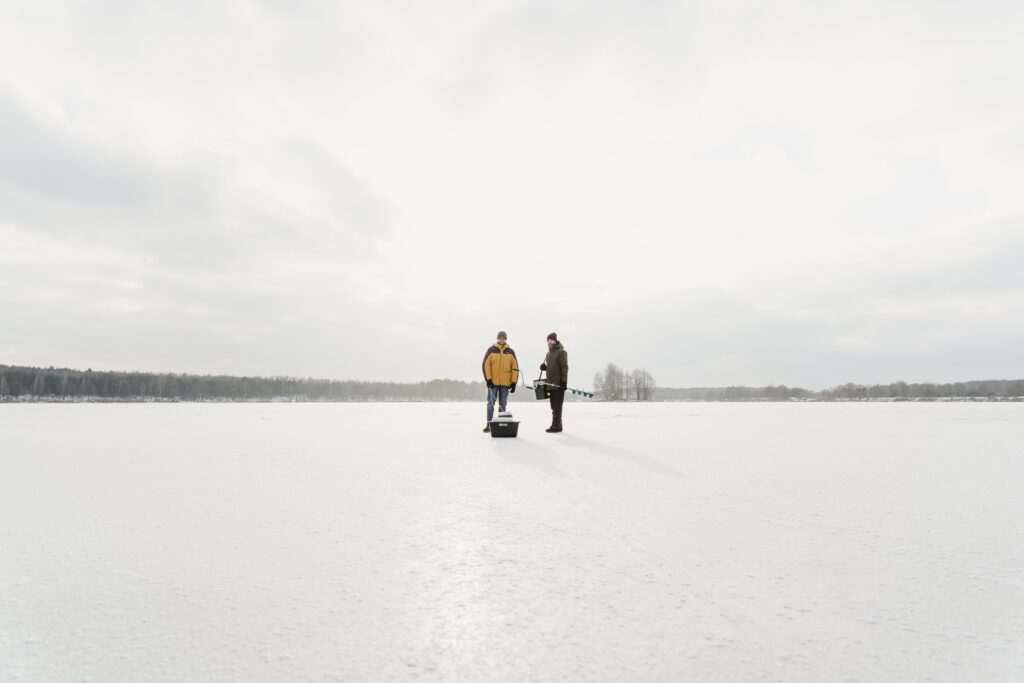
Alaska earns its reputation for summer fishing — salmon runs, trophy halibut, river char — but the state’s winter fishery is an entirely different and often overlooked pursuit. Within an hour of downtown Anchorage, several lakes freeze reliably from December through March, giving anglers access to rainbow trout, Arctic char, burbot, and northern pike without leaving the road system. Ice fishing near Anchorage demands less gear than a backcountry expedition and rewards patience with some of the most productive freshwater fishing available in Southcentral Alaska.
When to Go: The Ice Fishing Season
The Anchorage-area ice fishing season typically runs from late December through early March, though safe ice can form earlier or break up later depending on winter temperatures. The target window for most anglers is mid-January through February, when ice thickness peaks and cold but manageable weather makes extended sessions on the lake comfortable with proper gear.
Ice conditions vary year to year and lake to lake. Smaller, shallower lakes near Anchorage freeze earlier and more consistently than larger, deeper bodies. Always check current ice thickness before venturing out — the Alaska Department of Fish and Game posts weekly fishing reports during winter that include ice conditions and recent catch data for the major Anchorage-area lakes. For guided introductions to winter fishing, Big Time Alaskan Fishing Adventures offers trips that include all gear and local knowledge.
Top Ice Fishing Spots Near Anchorage
Jewel Lake
Located in southwest Anchorage, Jewel Lake is the most accessible ice fishing destination for city residents — a 68-acre lake embedded in a residential neighborhood, reachable without a vehicle. ADF&G stocks Jewel Lake with rainbow trout each spring, and those fish carry over into winter, making it a consistent producer for anglers drilling holes through 12–18 inches of ice. The lake’s small size means fish tend to concentrate in the deeper central basin; start there and move if you are not finding activity within an hour. Parking is available at Jewel Lake Park on the west shore.
Eklutna Lake
Eklutna Lake, located approximately 26 miles northeast of Anchorage via the Glenn Highway, is the largest body of water in Chugach State Park and offers a fundamentally different ice fishing experience from the urban lakes. At 7 miles long and 870 acres, Eklutna holds Dolly Varden char and rainbow trout that run larger on average than the stocked fish in smaller lakes. The lake sits in a steep-walled glacial valley — visually dramatic, and cold enough to produce reliable ice in most winters. Access is via the Eklutna Lake Road from the Thunderbird Falls exit on the Glenn Highway. The Chugach State Park Eagle River Trailheads area provides winter parking and access to the park’s network of lakes and trails, making it a practical starting point for first-time visitors to the area.
Eklutna’s size and depth also mean ice thickness varies across the lake. Stick to areas where other anglers have drilled and confirmed safe thickness, especially early in the season.
Finger Lake
Finger Lake, near Wasilla in the Matanuska-Susitna Valley about 45 minutes north of Anchorage, offers perhaps the most consistent rainbow trout fishing of any Southcentral lake accessible by road. ADF&G stocks Finger Lake heavily, and the fish typically grow to 12–16 inches in the lake’s fertile water. The adjacent Finger Lake State Recreation Site provides parking and a launch area. Ice fishing pressure can be significant on weekends, but the lake produces throughout the week, and the fish respond well to small jigs tipped with wax worms or PowerBait. Finger Lake typically develops safe ice by early January.
Campbell Creek Lakes
Several small lakes along the Campbell Creek corridor in south Anchorage — including Teal, Cheney, and Campbell Lake — offer urban ice fishing within the Anchorage greenbelt trail system. These are primarily stocked rainbow trout fisheries, with fish running 10–14 inches in a typical winter. The greenbelt trails provide access by foot or ski. For families introducing children to ice fishing, the short distances and accessible terrain make the Campbell Creek lakes a practical first stop.
Kenai Peninsula Options
Anglers willing to extend their range by two hours south will find substantially more productive winter fisheries on the Kenai Peninsula. Kenai Lake, Skilak Lake, and a network of smaller lakes hold rainbow trout, Dolly Varden, and burbot. The tradeoff is weather — the peninsula corridor can close in quickly with storm conditions, and winter driving on the Seward and Sterling highways requires full winter preparation. For a guided approach to peninsula winter fishing or a multi-day adventure that combines ice fishing with other winter outdoor pursuits, Alaska Alpine Adventures offers winter expedition planning and guided services throughout Southcentral Alaska.
Target Species
Understanding what you are fishing for shapes both tactics and timing.
- Rainbow trout: The primary target in most Anchorage-area stocked lakes. Rainbows are most active in the water column from 6 to 20 feet below the ice surface. Light jigs, small spinners, and bait presentations at mid-depth produce well. Activity peaks in morning and late afternoon.
- Dolly Varden / Arctic char: Found in larger, colder lakes like Eklutna. Dolly Varden tend to hold near the bottom and along the lake margins. Jigging spoons that flutter on the drop are particularly effective. Dollies are often more aggressive than rainbows and hit larger presentations.
- Burbot: Alaska’s only freshwater cod species, burbot are a winter specialty — they spawn under the ice in January and February and are highly active in cold water when trout slow down. Burbot are bottom feeders; fish with cut bait or smelt on or near the lake floor. They are excellent table fare, often described as the “poor man’s lobster.”
- Northern pike: Present in lakes north and west of Anchorage, particularly in the Matanuska-Susitna Valley. Pike are aggressive ambush predators and respond well to large tip-ups rigged with smelt or sucker meat. Check current ADF&G regulations for pike — some lakes have special harvest rules intended to manage pike populations and protect native species.
Ice Safety: What You Must Know
Ice safety is the non-negotiable foundation of winter fishing in Alaska. The standard guidelines:
- 4 inches of clear, blue ice: Minimum for a single person on foot. White or opaque ice is weaker than clear ice of the same thickness — treat it as thinner.
- 8–12 inches: Required for snowmobile or ATV access.
- 12–15 inches: Required for light vehicles.
- Never trust ice uniformly. Thickness varies across a lake. Springs, inflows, outlet channels, and areas of moving water beneath the surface all create weak spots. Drill test holes every 150 feet when moving to a new area. If ice looks dark or sounds hollow, back away.
- Self-rescue picks: Carry ice picks (two metal spikes on a cord worn around your neck). If you break through, the picks allow you to pull yourself onto solid ice.
- Life jacket or float suit: Some serious ice anglers wear float suits that provide both warmth and buoyancy if they go through.
- Don’t fish alone on unfamiliar ice. The buddy system is standard practice in Alaska’s ice fishing community.
Essential Gear for Anchorage Ice Fishing
A basic ice fishing setup does not require significant investment. For day trips near Anchorage, the core kit includes:
- Ice auger: Hand augers work for lakes with ice up to 18 inches thick; power augers speed up drilling on thicker ice or when drilling many holes. A 6-inch diameter hole handles trout and char comfortably.
- Ice fishing rod and reel: Short, sensitive rods (24–36 inches) with light-action tips detect subtle strikes in cold water. Load with 4–6 lb monofilament or fluorocarbon for trout; heavier line for burbot and pike.
- Tip-ups: For pike and large char, tip-ups allow you to fish multiple holes simultaneously while drilling or moving. Rig with a bobber stop set to the appropriate depth and a live or cut bait presentation.
- Shelter: A portable ice shelter or flip-over sled shields anglers from wind. Even a simple windbreak improves comfort significantly in typical January conditions. Shelters also retain heat and allow fish to approach holes without spooking in bright light.
- Insulated clothing and boots: Standing still on ice in sub-zero temperatures requires more insulation than hiking or skiing. Pac boots rated to -40°F, insulated bib overalls, and a windproof shell are standard. Hand warmers are a practical supplement.
- Sled or gear bag: Pulling gear across ice on a plastic sled is the standard approach. Backpacks work for short carries from parking areas.
Licensing and Regulations
An Alaska sport fishing license is required for all anglers 16 and older. Non-resident licenses are available by the day, three-day, or season. Licenses can be purchased online through the ADF&G website, at major sporting goods retailers in Anchorage including Cabela’s and REI, and at many gas stations near popular fishing destinations.
Bag limits, size minimums, and gear restrictions vary by lake and species — do not assume that the regulations from one lake apply to another. The annual ADF&G sport fishing regulations booklet is the authoritative source; a free copy is available wherever licenses are sold, or in digital form at the ADF&G website. Some Anchorage-area lakes have special stocking-related regulations (bait restrictions, single-hook requirements) intended to maximize the quality of the fishery for all anglers.
Planning Your Trip
For a first ice fishing outing near Anchorage, Jewel Lake or one of the Campbell Creek corridor lakes is the practical starting point — close, stocked, predictable, and forgiving for anglers learning the mechanics of setting up on ice. Finger Lake near Wasilla rewards the extra drive with consistently larger trout and more productive fishing on weekday visits. Eklutna Lake is the choice for anglers who want a more expedition-oriented experience with the possibility of larger Dolly Varden in a genuinely wild setting.
Plan to arrive at first light — an hour before and after sunrise produces the most reliable trout activity. Bring more clothing than you think you need. And check the ADF&G weekly report before you go: ice conditions, recent catch data, and any closures are updated regularly through the winter season. Alaska’s urban ice fishing is a genuinely productive and accessible winter sport; the barrier to entry is low, and the fish are there.
Featured photo by Tima Miroshnichenko on Pexels.
No comments yet.