
Anchorage Winter Travel Guide 2026: Aurora, Dog Sledding & Cold-Weather Alaska
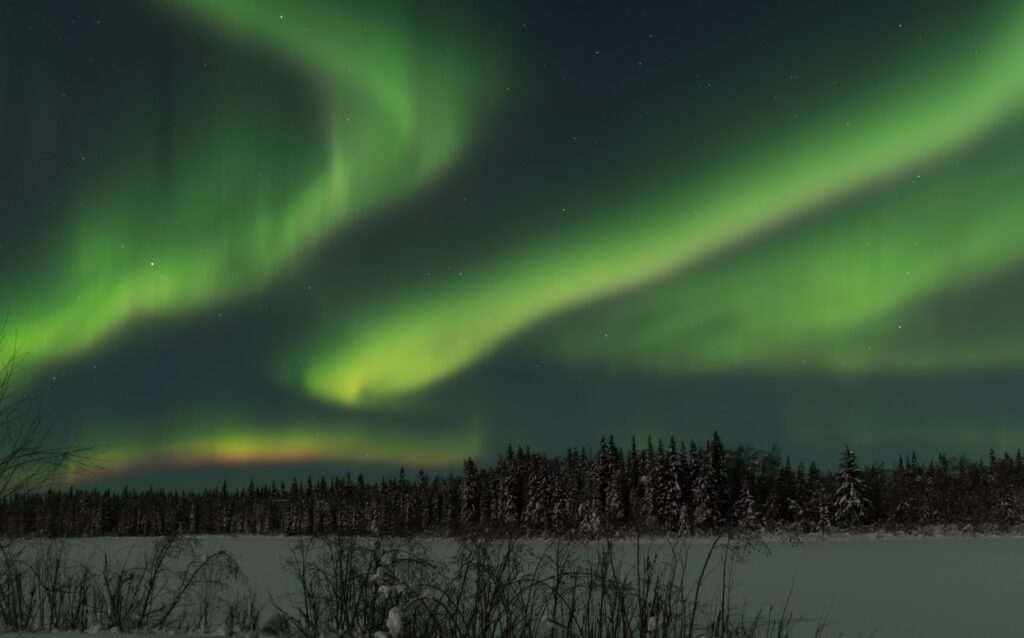
Anchorage in winter is a different city than the one that appears in summer travel brochures. The population drops, the daylight shortens dramatically, and the temperatures require real preparation. What you get in exchange: aurora borealis on most clear nights from December through February, a city that functions remarkably well in extreme cold, world-class skiing 45 minutes away, and the Iditarod Trail Sled Dog Race — one of the great spectacles in American sport — launching from downtown in early March. Winter visitors who arrive prepared find Anchorage in its quietest and in some ways most distinctly Alaskan form.
Why Visit Anchorage in Winter
The case for winter is built on exclusivity and value. The aurora borealis is only visible in darkness — Anchorage’s 19 hours of summer daylight that makes summer hiking so productive make aurora viewing impossible. The Iditarod exists only in winter. Dog sledding, Nordic skiing on uncrowded trails, and snowmobile access into the Chugach backcountry are winter-only activities. On the value side, hotel rates in Anchorage drop 30–50% from summer peaks, flights from the Lower 48 cost considerably less, and popular restaurants that require advance reservations in July can be walked into on a Tuesday in January.
Winter is also when Anchorage’s local character is most visible. Without the summer tourism layer, the city’s restaurant scene, neighborhood life, and cultural programming reflect the actual community. The Fur Rendezvous festival (Rondy) in February — a long-running Anchorage winter celebration with dog mushing, sprint races, and outdoor events — is a genuinely local event that rewards timing a visit around it.
Aurora Borealis: Best Viewing Near Anchorage
Anchorage sits within the auroral oval and sees frequent aurora activity from late September through early April, with December through February the peak window. The challenge is light pollution: downtown Anchorage’s glow washes out all but the strongest displays. Productive aurora viewing requires getting 10–20 miles from the city center. The most accessible dark-sky viewpoints include the Seward Highway south of the city (pull over at any of the highway overlooks), the Glenn Highway corridor toward the Mat-Su Valley, and the Chugach foothills east of town where forest roads and overlooks provide dark-sky exposure.
Greatland Adventures Northern Lights Tours runs guided aurora excursions from Anchorage — a practical option for visitors who want local expertise on the best current conditions and don’t want to navigate unfamiliar roads in the dark on snow-covered pavement. Guides monitor aurora forecasts (NOAA’s Space Weather Prediction Center and SpaceWeatherLive are the reliable real-time sources) and position vehicles at productive viewing locations based on where cloud cover is breaking. For independent viewing, download an aurora forecast app and check it nightly — the forecast windows often predict 24–48 hours out with reasonable accuracy.
Photography tips: a camera with manual mode, a wide-angle lens (24mm or wider), and a tripod are the minimum equipment. Shoot at ISO 800–3200, f/2.8 or wider, 10–25 second exposures depending on aurora intensity. Cold batteries discharge rapidly — keep a spare in an inside pocket and swap when the camera dies. Mirrorless cameras in very cold conditions (below 0°F) can become sluggish or shut down; keep the camera body warm until you’re shooting.
Winter Activities: On Snow and Ice
Cross-country skiing is the most accessible Anchorage winter activity and the one locals rely on most. The Kincaid Park trail system offers over 40km of groomed Nordic trails at the edge of Anchorage, accessible from the Raspberry Road trailhead. Kincaid hosted the 2011 Biathlon World Cup and maintains race-quality grooming on the main trails throughout winter. Ski rentals are available at the park and at REI and Alaska Mountaineering & Hiking in the city. The park’s trails wind through spruce and birch forest above Cook Inlet, with views across the Inlet to Redoubt Volcano on clear days.
Downhill skiing centers on Alyeska Resort in Girdwood, 45 minutes south of Anchorage. Alaska’s largest ski area has 76 runs across 1,610 acres of terrain, serviced by a high-speed gondola and multiple lifts. The mountain receives heavy snowfall from storms coming off the Gulf of Alaska and typically maintains excellent snow conditions from November through April. Accommodation at the resort means ski-in/ski-out access; day trips from Anchorage are straightforward on the Seward Highway in good road conditions.
Snowshoeing is accessible throughout the Chugach front range trail system — most summer hiking trails are snowshoeable in winter with appropriate footwear and avalanche awareness (check CNFAIC.org for current Chugach avalanche conditions before any backcountry snowshoe). The Tony Knowles Coastal Trail is groomed for fat-tire biking and walking in winter and remains flat and accessible without special equipment. Dog sledding day experiences are available through several Mat-Su Valley operators who run guided mushing trips for visitors — a genuine Alaska experience that isn’t available as an authentic activity in most of the world.
The Iditarod Trail Sled Dog Race
The Iditarod is one of the iconic events in world sport: 1,000 miles from Anchorage to Nome, run by up to 70 mushers and their 14-dog teams across two weeks in early March. For visitors, the Ceremonial Start in downtown Anchorage (the Saturday before the official restart in Willow the following day) is a spectacular free public event — mushers run a 11-mile loop through city streets watched by crowds lining the entire route, dogs barking and lunging in harness, the atmosphere electric in a way that’s hard to replicate without experiencing it.
The Iditarod Trail Sled Dog Race Headquarters in Wasilla (an hour north of Anchorage) operates year-round and provides the full context for the race — history, equipment, logistics, and the culture of long-distance mushing. Visiting before or after the race gives the Ceremonial Start more meaning. During the race itself, the headquarters in Wasilla serves as a hub for tracking and media coverage.
Indoor Highlights for Winter Visitors
Winter is when Anchorage’s indoor cultural institutions get their due. The Anchorage Museum runs its strongest programming in winter — special exhibitions, lectures, and events fill the schedule from November through March when the museum can’t compete with outdoor summer activities for visitor attention. The Alaska gallery, history galleries, and Imaginarium science center are all worth full visits in the warmth of the building on a dark January day.
The Alaska Native Heritage Center continues operations through winter with modified hours. The indoor gallery and cultural programming remain fully active even when the outdoor village section has reduced access. Winter visits are often more intimate than summer — fewer tourists, more direct access to cultural demonstrators, and a different quality of engagement with the exhibits. Check current hours before visiting as they vary seasonally.
Anchorage’s restaurant scene is winter-accessible in full. The city has an established brewing culture (49th State Brewing, Midnight Sun Brewing, Anchorage Brewing Company) and a range of dining from the casual to the genuinely serious. Dinner reservations at popular spots like 49th State or Moose’s Tooth are easy to get in winter — call ahead for special occasions but walk-ins are generally manageable on weeknights.
What to Wear: Dressing for Alaska Winter
The layering system is mandatory, not optional. Base layer: moisture-wicking synthetic or merino wool against the skin (no cotton — it retains moisture and accelerates heat loss). Mid layer: fleece or down insulation for warmth. Outer layer: a windproof and waterproof shell that handles both precipitation and wind. For temperatures below 0°F, add a heavy down parka over the shell layer.
Extremities matter disproportionately. Insulated waterproof boots rated to at least -20°F for any outdoor winter activity (Sorel, Baffin, and Kamik are commonly used brands). Heavy wool or synthetic mittens over liner gloves — mittens retain warmth far better than gloves at extreme temperatures. A balaclava or neck gaiter plus a wool hat that covers the ears. Exposed skin at -10°F and 20 mph wind carries real frostbite risk within 30 minutes. Dress for the worst conditions you might encounter, not the forecast midday temperature.
Getting to Anchorage in Winter
Ted Stevens Anchorage International Airport operates year-round with direct service from Seattle, Portland, Denver, Dallas, Phoenix, Chicago, and Minneapolis on Alaska Airlines and other major carriers. Winter flight schedules are reduced compared to summer but direct connections remain available from major West Coast hubs. The airport does not close for weather — Anchorage’s infrastructure is designed for winter operations at a level most Lower 48 cities don’t maintain.
Driving in and around Anchorage in winter requires winter tires (studded tires are legal in Alaska from September 15 to May 1). Most rental car companies at the Anchorage airport offer winter-tire equipped vehicles — confirm this when booking. The Seward Highway south to Girdwood and the Glenn Highway north to the Mat-Su are well-maintained arterials, but both can have avalanche closures and black ice conditions after storm events. Check the Alaska 511 system before highway driving after any significant snowfall or temperature swing.
Budget Tips for Winter Anchorage
Winter is the clear value season. Hotel rates at downtown Anchorage properties drop significantly — properties that charge $200+/night in July often fall to $120–$150 in January. Airfare from the Pacific Northwest is frequently under $300 round-trip in winter when summer flights run $500–$800. The major paid attractions (Museum, Heritage Center, Zoo) maintain the same pricing year-round, but there are no lines and full attention from staff. Restaurant dining is the same cost as summer but far easier to access without reservations.
The main winter expense that summer visitors avoid is gear. If you’re arriving without proper cold-weather clothing, budget $150–$300 for boots, a base layer, and gloves if you need to purchase locally. REI Anchorage, Bass Pro Shops, and Sportsman’s Warehouse all carry full winter gear inventory. Renting is also an option for skis and snowshoes; outright purchases make sense if you’ll be in winter conditions for a week or more.
Featured photo by John De Leon on Pexels.

No comments yet.