Alaska Railroad 2026: Anchorage Train Trips to Denali, Seward & Fairbanks
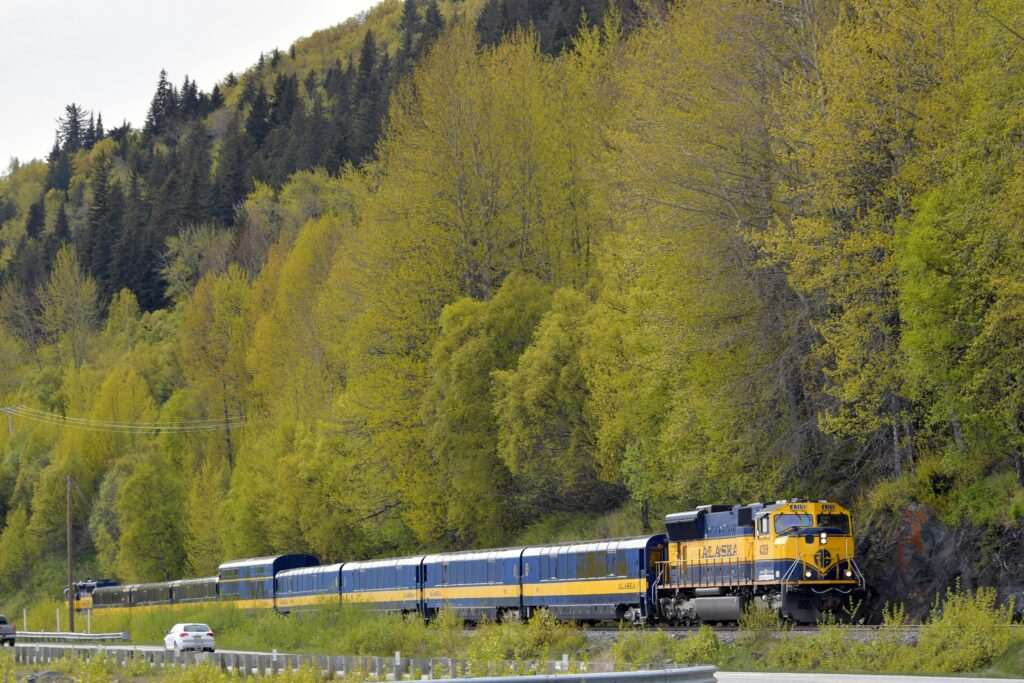
The Alaska Railroad is one of the last working wilderness railroads in North America — not a heritage tourist attraction, but a functioning public railroad that moves freight, serves remote communities, and carries passengers across terrain that no road reaches. From its Anchorage depot, routes fan out to Seward on the coast, north to Denali and Fairbanks, and west toward Whittier on Prince William Sound. For visitors using Anchorage as a base, the railroad offers a genuinely different way to see Alaska’s interior: at lower altitude, through the trees rather than above them, at a pace that allows sustained wildlife watching rather than roadside glances. This guide covers every route, the service classes, how to book, and how to integrate rail into a larger Alaska itinerary.
The Alaska Railroad: An Overview
The Alaska Railroad was built between 1914 and 1923 by the federal government to connect ice-free Cook Inlet ports with the Interior’s coal and gold mining districts. Today it is owned by the State of Alaska and operates year-round, though summer service is significantly expanded with additional trains and excursion routes. The railroad runs 470 miles of main line between Seward (its southern terminus) and Fairbanks (its northern), passing through Anchorage, Wasilla, Talkeetna, and Denali along the way.
One feature unique to the Alaska Railroad is its flag-stop service in the Susitna Valley — a section of the route with no parallel road access where the train stops on demand to drop off and pick up residents of remote cabins, homesteads, and fishing camps. These communities depend on the train for mail, supplies, and access to town. Watching the train slow for a flag stop at a hand-built dock on a river bank, and a family emerge from the treeline to board, is a quietly remarkable experience that no other railroad in the United States offers.
Anchorage Depot: Location and Logistics
The Alaska Railroad Depot sits at 411 West 1st Avenue in downtown Anchorage, a short walk from Ship Creek, where visitors can sometimes observe king salmon running in summer and urban anglers lining the banks. The depot is well-signed from downtown and has parking, baggage check, and a waiting area. Most summer trains depart in the morning — check current schedules on the railroad’s website as times vary by route and date.
The Visit Anchorage Log Cabin Visitor Center on 4th Avenue, a few blocks from the depot, is a useful pre-trip stop for maps, current conditions, and questions about combining the railroad with other activities in the region.
Coastal Classic: Anchorage to Seward
The Coastal Classic runs 114 miles from Anchorage to Seward along one of the most scenic rail corridors in North America. The route follows Turnagain Arm south from Anchorage — the same fjord visible from the Seward Highway, but from the water’s edge rather than the clifftop — then climbs through the Kenai Mountains before descending to tidewater at Resurrection Bay in Seward.
The train runs daily in summer (typically May through September), departing Anchorage in the morning and arriving in Seward in time for lunch. Return service departs Seward in the afternoon. Wildlife viewing along the route includes beluga whales in Turnagain Arm, Dall sheep on cliffs above the track, eagles, and bear — the rail perspective gives different sightlines than the parallel highway and frequently produces wildlife encounters that roadside observers miss.
The Coastal Classic is the Alaska Railroad’s most popular excursion route and is operated in partnership with Princess Cruises, which runs its own dome cars on the service. Independent passengers book Adventure Class or GoldStar seats directly through the railroad. The Alaska Wildlife Conservation Center, located along the Seward Highway corridor near the rail route, makes a natural add-on if you’re driving one direction and training the other.
Combining the Coastal Classic with a Kenai Fjords Boat Tour
The most popular day-trip combination from Anchorage is: train to Seward in the morning, a half-day Kenai Fjords boat tour out of the harbor in the afternoon, then return by either train or private vehicle. The boat tours visit the outer fjords of Kenai Fjords National Park — calving glaciers, sea otter colonies, humpback whales, and seabird rookeries. This combination is frequently described by visitors as the single best Alaska day trip accessible from Anchorage, and booking both components in advance is essential in July and August.
Denali Star: Anchorage to Denali (and Fairbanks)
The Denali Star operates daily in summer between Anchorage and Fairbanks, covering 356 miles in approximately 12 hours. Most passengers ride the partial route — Anchorage to Denali Park (8 hours) or Anchorage to Talkeetna (4 hours) — rather than completing the full journey to Fairbanks.
The Denali Star departs Anchorage in the morning and arrives at Denali Park station in the afternoon, giving passengers time to enter the park on arrival day. The Talkeetna stop, at the 4-hour mark, allows the shortest reasonable sample of the route without committing to a full day. Talkeetna is the most atmospheric small town on the railroad — the base for Denali climbing expeditions and the departure point for glacier flights over the Alaska Range. Disembarking here for an afternoon, then returning the next day, is a natural overnight stop for rail-focused itineraries.
Northbound, the landscape transitions from Chugach foothills to the broad Susitna Valley, then into boreal forest interspersed with muskegs and wetlands before the Alaska Range appears on the western horizon near Broad Pass. Moose are the most commonly observed large mammal along this corridor; bears, wolves, and caribou are seen regularly but not reliably. Wildlife observation is an active pursuit on this train — experienced passengers position themselves on the observation deck or at window seats on the westward side (the Range side) between Talkeetna and the park.
Glacier Discovery: Anchorage to Whittier and Spencer Glacier
The Glacier Discovery route runs from Anchorage to Whittier (the Prince William Sound embarkation port) and a Spencer Glacier stop in the Chugach National Forest. The route passes through the Portage Valley corridor — the same area served by Portage Glacier boat tours — and crosses the Anton Anderson Memorial Tunnel into Whittier.
Spencer Glacier is the highlight of this route: an active glacier accessible only by train, where passengers can disembark and hike on or around the glacier with a guide. The combination of a rail journey through a roadless valley and a glacier walk makes this one of the railroad’s most distinctive offerings. The Spencer Glacier Whistle Stop is an unmanned flag stop; the train slows, passengers disembark, and a return train picks them up later. Kayak and glacier walk tour packages are operated in partnership with the railroad at the Spencer stop.
From Whittier, Prince William Sound Glacier Tours depart for the sound’s fjords and tidewater glaciers — a natural extension of the Glacier Discovery train for visitors who want both a rail journey and a marine one in a single day or two-day itinerary.
Aurora Winter Train
From September through May, the Alaska Railroad runs its Aurora Winter Train on select weekends — a slower, local-service train that stops on demand at communities along the Susitna Valley where there is no road access. This is the flag-stop service in its purest form, the working railroad that residents depend on. Winter passengers are a mix of lodge owners, cabin residents, backcountry skiers, and visitors seeking an off-season rail experience.
The Aurora Train runs between Anchorage and Fairbanks over two days in winter, with overnight stays at lodge accommodations along the route. It is the most authentic Alaska Railroad experience available — no dome cars, no cruise partnerships, just the train moving through a snowbound landscape at 40 miles per hour while moose stand in the right-of-way.
Adventure Class vs. GoldStar Dome Service
All Alaska Railroad excursion trains offer two service levels. Adventure Class provides standard reclining seats in open coaches with large windows, a dining car selling food and beverages, and access to outdoor viewing platforms between cars. It is a comfortable, no-frills way to experience the route and is significantly less expensive than GoldStar.
GoldStar Dome Service operates double-decker dome cars — panoramic upper-level seating under a full-glass roof, plus a private lower-level dining room with table service and a fixed menu meal included in the fare. GoldStar cars on Princess Cruises’ fleet use the same dome format under the “Wilderness Railcar” branding. The dome elevation provides a materially better view of overhead terrain, mountain peaks, and wildlife on the car roof — particularly relevant on the Denali Star when the Alaska Range is in view. GoldStar costs roughly twice Adventure Class; whether it’s worth the premium depends primarily on how much of your experience you want to be the train itself versus simply getting to the destination.
Family Travel on the Railroad
The Alaska Railroad is one of the best family Alaska experiences for several reasons: the train is difficult for children to get lost on, the wildlife viewing gives a purpose to looking out the window for sustained periods, and the dining car provides food and distraction on demand. Children under 12 receive discounted fares. The outdoor viewing platforms between cars are popular with kids; they require supervision as the platforms are open-air at speed.
On the Coastal Classic and Denali Star, railroad staff make wildlife announcements over the PA system when notable animals are visible from the train — moose, bears, eagles. This keeps the experience actively engaging rather than passively scenic.
Booking Tips
Summer routes on the Coastal Classic and Denali Star sell out weeks in advance, particularly in July. GoldStar dome seats go first. Book as early as possible for peak summer travel — the Alaska Railroad’s website opens reservations several months ahead. Adventure Class seats have more availability than GoldStar but can also sell out on popular summer weekends.
Shoulder season (May and September) offers significant capacity advantages: trains run, fares are lower, GoldStar seats are more available, and Seward and Talkeetna are less crowded. May on the Coastal Classic means snow still on the high passes. September offers fall color in the birches from the Denali Star window. Both months are genuinely worthwhile without summer’s booking competition.
Alaska’s Finest Tours handles combination packages that incorporate Alaska Railroad segments with other guided experiences — useful for visitors who want rail as one component of a multi-day itinerary without managing each booking individually.


No comments yet.