
Wine Tasting and Wine Bars in Anchorage: A 2026 Guide
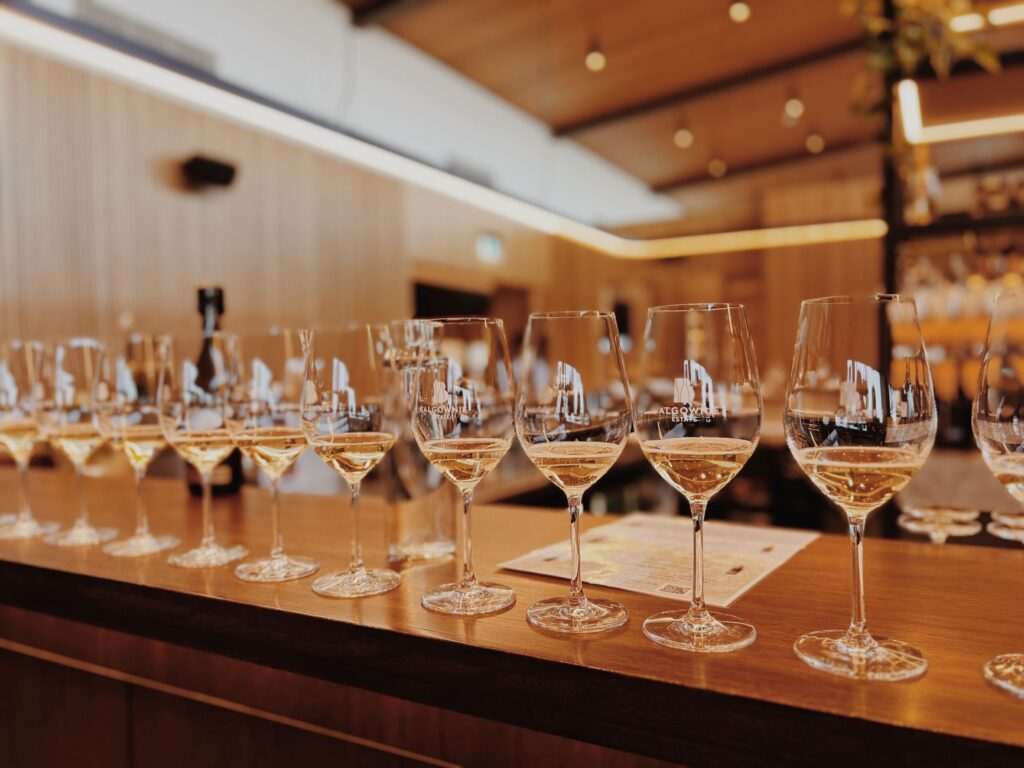
Wine culture in Anchorage is more developed than most visitors expect. Alaska doesn’t produce wine — the climate rules out commercial viticulture — but the state imports aggressively, and Anchorage has developed a restaurant and bar scene sophisticated enough to support serious wine programs, Wine Spectator recognition, and the kind of wine bar experience you’d find in cities twice its size. Whether you’re looking for a curated wine list over dinner, a glass of something exceptional at a proper wine bar, or guidance on what to drink in Alaska, here’s where the scene stands in 2026.
Pearl: Anchorage’s Champagne and Oyster Bar
The most wine-specific bar experience in Anchorage is Pearl, a champagne and oyster bar on D Street downtown. The format is deliberately focused: a candlelit room, a selection of fresh oysters, and a wine and champagne list curated around what pairs with them. The mood is intimate and unhurried — Pearl works as a date night destination specifically because the format removes the need to choose; a glass of champagne, a half-dozen oysters, and the room do most of the work.
The wine selection leans toward sparkling wines and whites, which makes sense given the menu anchor. Champagne, Cava, and Crémant d’Alsace feature alongside Burgundy and Loire Valley whites. If you’re specifically looking for a red-focused list, Pearl is the wrong venue — but for bubbles and bivalves, nothing in Anchorage matches it. Reserve ahead for weekend evenings; the room is small and fills.
Crush Bistro: Wine Bar Culture on G Street
A block away in the downtown hotel corridor, Crush Bistro delivers the broader wine bar experience — food-focused, wine-driven, comfortable enough to spend two hours without feeling rushed. The name is a nod to the grape harvest process, and the wine list reflects a bistro sensibility: approachable selections from Burgundy, the Rhône, northern Italy, and the Pacific Northwest, with enough depth to reward a more curious drinker without overwhelming someone who just wants a good glass of something red.
The kitchen produces bistro-caliber food — charcuterie, small plates, and more substantial options — designed to pair with the wine list rather than compete with it. Crush is a reliable choice for a wine-forward evening that doesn’t require driving to Girdwood or committing to a fine dining budget. The G Street location is walkable from most downtown hotels and from the Ship Creek area.
Southside Bistro: Wine Spectator’s Anchorage Pick
For a formal wine experience benchmarked against national standards, Southside Bistro in South Anchorage stands alone. The restaurant has earned the Wine Spectator Award of Excellence for 28 consecutive years — a run that signals not just a broad list but a consistently curated one, maintained by ownership that takes the program seriously. The Award of Excellence requires a minimum of 90 distinct selections; Southside Bistro’s list has historically run deeper than that, with particular strength in California Cabernet and Burgundy.
The restaurant’s format is upscale without being stiff — South Anchorage has a loyal local following that makes the dining room feel genuinely lived-in rather than performatively formal. The kitchen focuses on contemporary American with Alaska sourcing, which creates food-and-wine pairing opportunities that feel regionally grounded: wild-caught halibut with a Chablis premier cru, or wild game with a Côtes du Rhône, rather than generic global pairings. If you’re visiting Anchorage and want to have the best glass of wine the city can offer, Southside Bistro is the place to go.
Seven Glaciers and Jack Sprat: The Girdwood Wine Destinations
An hour south of Anchorage in the mountain resort town of Girdwood, two restaurants offer wine experiences worth the drive on their own merits.
Seven Glaciers Restaurant at Alyeska Resort sits at 2,300 feet on Mount Alyeska, accessible only by aerial tram. The AAA Four Diamond dining room looks out over the seven glaciers the restaurant is named for — the view is part of the experience, and the wine list is calibrated to match the setting. Seven Glaciers is a destination dinner rather than a casual option: the tram ride, the elevation, and the room combine to make it feel like an event. The wine program draws from France, Italy, and the Pacific Northwest, with a list long enough to support a wine-driven dinner approach. Book well in advance.
Jack Sprat Restaurant, also in Girdwood, has been the culinary benchmark for the mountain community since 2001. The approach here is more eclectic than Seven Glaciers — a globally-sourced menu with a wine list that emphasizes natural and minimal-intervention producers alongside more conventional selections. Jack Sprat has long been a destination for Anchorage residents who want something genuinely different, and the wine program reflects that sensibility. Girdwood as a day trip — scenic drive down the Seward Highway, dinner at Jack Sprat or Seven Glaciers, return to Anchorage in the evening — is a well-established Anchorage ritual for wine-focused visitors.
Alaska Wine: What You’ll Actually Find in Your Glass
Alaska has no commercial wine-producing vineyards. The climate — combined with a short growing season and minimal agricultural infrastructure — rules out viticulture of the type practiced in Washington, Oregon, or California. What Alaska does have is an enthusiastic import market and a population that drinks wine at higher per-capita rates than many Lower 48 states, driven partly by the income demographics of the oil, military, and healthcare sectors.
In practice, Alaska wine bars and restaurants source broadly from the Pacific Northwest (Washington and Oregon Pinot Noir feature prominently), France, and Italy, with California represented across price points. A few Alaska-based producers make wines from imported grapes or juice — technically Alaskan in production but not in sourcing. The more interesting regional product to seek out is honey wine (mead) and fruit wines made from Alaska berries — crowberry, highbush cranberry, and wild blueberry meads and wines show up occasionally at specialty retailers and are worth trying as a genuine regional product with no equivalent elsewhere.
Wine Events and Tasting Opportunities in Anchorage
Formal wine tasting classes and events in Anchorage are less systematically available than in wine regions, but several options recur throughout the year. The Anchorage restaurant community occasionally runs wine dinners — multi-course paired meals with winemaker or distributor representatives — which are the best structured tasting experience the city offers. These are typically announced through restaurant social media and mailing lists rather than through a centralized events calendar; following Southside Bistro, Pearl, and Crush Bistro on social media is the most reliable way to catch them when scheduled.
Wine retail with in-store tasting is available at several Anchorage specialty liquor shops, which periodically run Saturday afternoon tastings of new arrivals or featured producers. Total Beverage and Brown Jug — Anchorage’s largest wine retailers — are the most reliable sources for broad selection and occasional tastings. Alaska Distributors occasionally presents new portfolio items at retail locations with staff pouring; these aren’t formal classes but they’re the closest thing to a walk-in wine education opportunity the city reliably provides.
Food and Wine Pairing in Alaska
Alaska’s distinctive food culture creates pairing opportunities specific to the region. A few principles that work reliably in this context:
- Wild Alaska salmon: The fat content and ocean-forward flavor of wild king salmon pairs exceptionally well with white Burgundy (Chardonnay from Meursault or Puligny-Montrachet) or with a full-bodied domestic Chardonnay. Lighter preparations — poached or smoked — work with a Grüner Veltliner or unoaked white. Pinot Noir from Oregon is a classic red pairing that holds up to the salmon’s richness without overwhelming the fish.
- Halibut: Alaska halibut’s clean, mild flavor is the most versatile pairing target on the menu. Chablis, Muscadet, dry Riesling, or a lighter Bordeaux blanc all work. Richer preparations with cream or butter sauce support a Burgundy white.
- Wild game (moose, caribou, bison): The leaner, earthier profile of Alaska wild game suits the same European reds that pair with venison — Burgundy and northern Rhône Syrah in particular. California Cabernet Sauvignon works with farmed bison but can overwhelm wilder-flavored meat.
- Dungeness and king crab: Sparkling wine is the natural pairing — Champagne, Cava, or Crémant — with Alsatian Pinot Gris as a still alternative. The salt and sweetness of the crab benefits from a wine with enough acidity to cut through both.
Tips for Wine Visitors to Anchorage
- Reserve for Girdwood restaurants in advance. Seven Glaciers and Jack Sprat are popular on weekends. A day trip to Girdwood built around dinner requires a reservation, not a walk-in strategy.
- Ask about the wine list before the menu. At Southside Bistro and Crush Bistro, the staff know their lists and can guide you toward something that works with what you’re considering ordering.
- Wine prices in Alaska run higher than average. Shipping costs and Alaska’s markup structure on alcohol add to the retail and by-the-glass price at most venues. Budget roughly 20–30% above what you’d expect for equivalent quality in a wine-producing region.
- Look for Alaska berry meads at specialty retailers. They’re a genuinely regional product worth taking home as an edible souvenir, and they perform well on a cheese board or with Alaska smoked salmon.

No comments yet.