
Alaska Float Plane & Scenic Flight Tours from Anchorage 2026
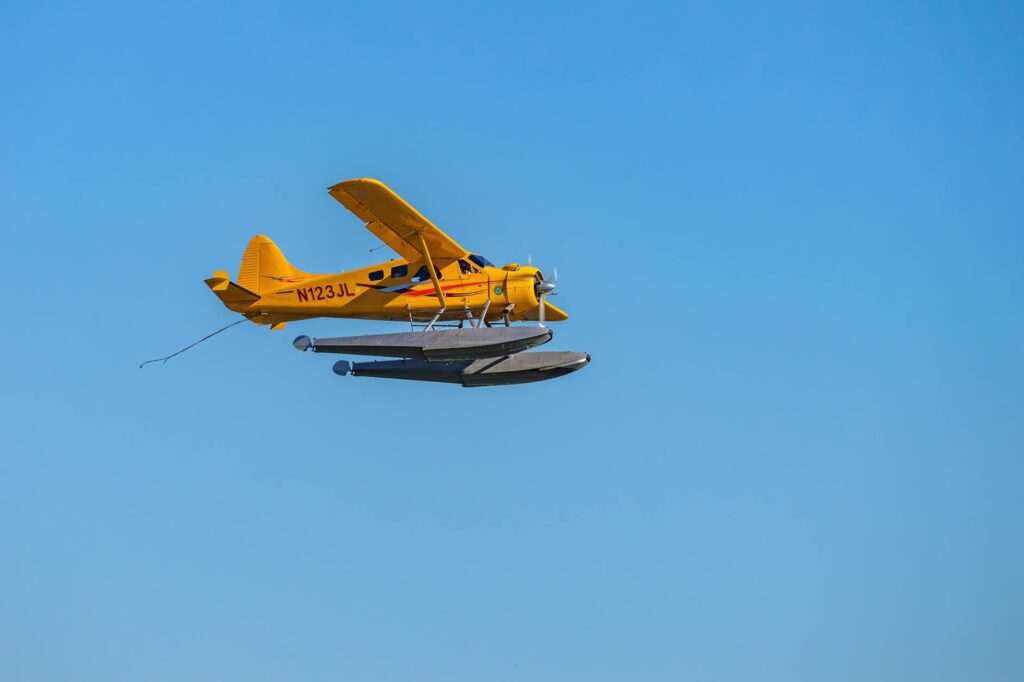
Alaska has more registered pilots per capita than any other state in the country, and more floatplanes than most nations. In a place where roads end abruptly and wilderness extends for millions of acres beyond them, the small plane is infrastructure — the way people get to fishing camps, hunting grounds, remote lodges, and communities with no road access at all. For visitors, a floatplane or scenic flight tour transforms that same access into something extraordinary: the Alaska Range from 500 feet, a glacier landing you walk onto, or a lake so remote you watch bears fishing from shore while the pilot makes coffee on a camp stove. There’s no comparable experience.
Lake Hood Seaplane Base — Where It All Begins
Adjacent to Ted Stevens Anchorage International Airport, Lake Hood Seaplane Base is the world’s largest and busiest floatplane base — more than 800 floatplanes based here, with takeoffs and landings running from early morning to late evening in summer. Watching the traffic from the public viewing area on a clear summer day — planes arriving and departing across a lake backed by the Alaska Range — is itself a worthwhile stop before your own flight. Most floatplane tour operators depart from or stage through Lake Hood.
The Alaska Aviation Heritage Museum on Lake Hood’s shore documents the history of bush flying in Alaska — a genuinely fascinating story of pilots who opened the state, including the early mail carriers and explorers who flew before reliable maps existed. Worth a visit for context on what you’re about to experience.
Rust’s Flying Service — The Flagship Operator
Rust’s Flying Service has operated from Lake Hood since 1963 and remains Anchorage’s best-known floatplane tour company. Their Denali flightseeing circuit — flying north from Lake Hood, crossing the Alaska Range, circling Denali at close range, and returning through the mountain passes — is the signature flight. On a clear day it delivers an understanding of the mountain’s scale that no road-based view can replicate. The 20,310-foot summit rises thousands of feet above surrounding peaks that would individually be remarkable landmarks anywhere else.
Rust’s also offers remote lake landings — flying to backcountry lakes in the Chugach or beyond, landing on glassy water surrounded by wilderness, and spending time on shore before the return flight. These trips run 2–3 hours and cost $350–$550 per person depending on destination and group size. Denali circuit flights run $475–$600 per person. Charter options for custom routes are available.
FlyAKAir — Bear Viewing from the Air
FlyAKAir Bear Viewing Tours combines floatplane access with guided brown bear viewing at Katmai National Park (Brooks Falls) and Lake Clark National Park’s Silver Salmon Creek. The flight from Anchorage delivers you to bear viewing locations that aren’t reachable by road — no connecting commercial flights, no multiple-leg logistics. Full-day programs run $600–$900 per person all-in and include guide service at the viewing location. July at Brooks Falls (peak salmon run) and May–June at Lake Clark (coastal sedge grazing) are the prime windows.
Alpine Air Alaska & Trail Ridge Air
Alpine Air Alaska operates glacier and mountain flightseeing from Girdwood and the Matanuska-Susitna Valley, with routes that cover the Chugach Mountains and the glacier systems feeding Prince William Sound. The Girdwood departure puts you above Alyeska’s ski terrain within minutes and extends across glaciated peaks that road travelers see only from below. A different perspective on terrain most Anchorage visitors experience from highway level.
Trail Ridge Air runs charter flights and flightseeing out of Talkeetna — the base camp community for Denali climbing expeditions. Departing from Talkeetna positions you 90 miles closer to the mountain than Anchorage-based departures, and Talkeetna operators land on glacier surfaces for the full glacier-landing experience. K2 Aviation and Talkeetna Air Taxi (both based in Talkeetna, 2.5 hours north of Anchorage) are the primary operators for glacier landings on Ruth Glacier and the Don Sheldon Amphitheater.
Alaska Helicopter Tours
Alaska Helicopter Tours offers a different aerial perspective — hovering capability allows landing in terrain where fixed-wing aircraft can’t safely stop, including mountain ridgelines and glacier surfaces accessible only to helicopters. Glacier landings via helicopter typically run $300–$450 per person for a 45–90 minute experience. The vertical-takeoff capability and the sound and feel of helicopter flight are genuinely different from a floatplane, and some visitors find the closer-to-treetop flight profile more dramatic.
What to Expect: Logistics & Practical Notes
Weight limits: Most floatplane operators enforce per-passenger weight limits, typically 250–300 pounds including gear. Larger passengers may need to purchase adjacent seats. Disclose your weight honestly at booking — it affects aircraft loading calculations and the limit exists for safety.
Luggage: Soft-sided bags only; hard-shell rolling luggage won’t fit in small aircraft. Pack for the day: camera, layers, rain gear, snacks. Checked storage is usually available at the terminal.
Weather cancellations: Alaska floatplane tours cancel or reschedule when conditions are below minimums. Build buffer days into your itinerary if this flight is a priority — operators are experienced at rescheduling and will work with you. Don’t book a floatplane tour for your last day before a departing flight.
Best season: June through August delivers the longest flying days, the best mountain visibility, and peak wildlife activity at bear viewing destinations. July offers maximum daylight and active bear behavior. September brings fall color on the tundra and thinner crowds, though bear viewing flights wind down as operators move to fall schedules.
Photography Tips from the Air
Floatplane windows scratch easily and vibrate constantly — shoot through a clean section and use a fast shutter speed (1/1000 or faster) to counter vibration blur. Turn image stabilization off when shooting from a vibrating aircraft; stabilization systems can be confused by constant mechanical movement and produce worse results than without it. Polarizing filters reduce glare on glaciers and water. Window seats are obvious priorities — book early and ask which side of the aircraft faces the primary scenery on your route. On a Denali circuit, the pilot will bank to give all passengers views, but window seat placement still matters for the majority of the flight.


No comments yet.