
Crow Pass Crossing 2026: Girdwood to Eagle River Trail Guide
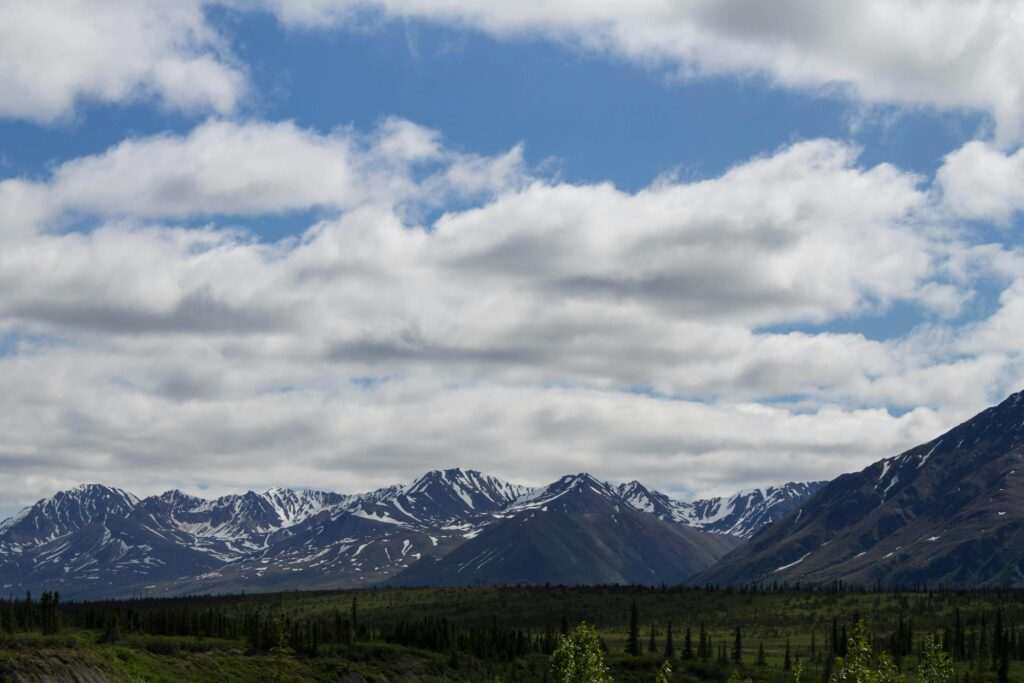
The Crow Pass Crossing is one of Alaska’s most celebrated backcountry routes: a 26-mile point-to-point trail through Chugach State Park connecting the Girdwood valley to the Eagle River Nature Center. It crosses an active glacier, an alpine pass at 3,500 feet, a river ford that demands respect, and miles of tundra and canyon terrain that have no equivalent near any major U.S. city. Experienced hikers looking for a legitimate backcountry challenge within reach of Anchorage need to put this one on their list.
Route Overview
The crossing begins at the Crow Pass Trailhead in Girdwood, roughly an hour’s drive from Anchorage via the Seward Highway. From the trailhead the route climbs steeply through forest and then open alpine terrain, gaining approximately 2,000 feet over the first 3 miles to Crow Pass at 3,500 feet. The descent on the north side drops into the Eagle River drainage, where hikers follow the river canyon for the remaining miles before finishing at the Eagle River Nature Center. Most parties cover the route in two to three days, with camping in the upper valley or along Eagle River.
Key Waypoints
Raven Gorge
Roughly 8 miles north of Crow Pass, the Eagle River cuts through Raven Gorge — a narrow, steep-walled canyon where the trail hugs the cliff edge. This section requires attention and isn’t suitable for those uncomfortable with exposure. In wet conditions it becomes significantly more demanding. It’s one of the most dramatic stretches of trail in the entire Chugach.
Crow Glacier
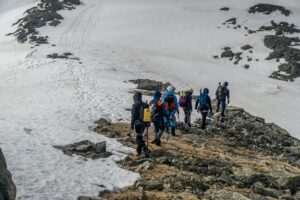
Below the pass on the south side, the trail crosses Crow Glacier. The glacier has receded considerably over recent decades but remains an active ice field. Crampons and an ice axe are recommended outside of midsummer; in July and early August, most parties cross without technical gear but should travel carefully and assess conditions on arrival. The glacier runoff feeds the creek below and peaks mid-afternoon from glacial melt.
Eagle River Ford
The Eagle River crossing is the most significant safety consideration on the route. There’s no bridge; hikers ford the river, which can run knee- to thigh-deep in midsummer depending on recent weather and temperature. Glacial melt peaks between noon and 4 p.m., making early morning crossings significantly safer and shallower. Unbuckle your pack before crossing, use trekking poles for stability, and never attempt the ford at high water alone. Most experienced parties choose campsites on the approach side of the ford and cross first thing in the morning.
Camping on Route
The most popular campsite on the Crow Pass Crossing is the broad upper valley just below the pass, where the terrain flattens briefly above the glacier. This site offers views of the glacier and surrounding peaks, good drainage, and access to meltwater — filter it before use. A second established camping area sits lower in the Eagle River drainage, past Raven Gorge, on flatter ground closer to the finish. Both sites are above treeline; bear canisters are the only viable food storage option here. Camping is free with no permit system — first come, first served. Pack out everything. The upper valley site can be exposed to wind; stake your tent well and bring extra guy lines if the forecast shows any weather.
Logistics
Car Shuttle
The crossing is point-to-point, requiring a car shuttle between Girdwood and the Eagle River Nature Center — about 50 miles by road. Common approaches include leaving a vehicle at each end before starting, or arranging pickup at the Eagle River Nature Center when you finish. If you’re traveling solo or without a second vehicle, ride-share services operate in both areas, though cell coverage is absent on the trail itself. Confirm your pickup plan before you leave.
Permits and Fees
No backcountry permit is currently required for the Crow Pass Crossing. Day use and parking at the Eagle River Nature Center carries a small fee. Leave No Trace principles apply throughout; campfires are prohibited above treeline. Bears are active throughout the drainage — a bear canister is strongly recommended and may be required under current Chugach State Park regulations.
Best Window
Mid-July through mid-August is the optimal window for most parties. By mid-July the glacier is typically at its most stable, snow has cleared from the upper route, and the river ford, while substantial, is usually manageable with good timing. Earlier in summer, significant snow coverage on the pass and glacier makes navigation harder and increases avalanche risk. Later in August, daylight begins to shorten and weather becomes more unpredictable. Avoid attempting the crossing in poor visibility — the upper glacier section is unmarked and requires clear sightlines. For the best conditions, plan to start early each day: morning glacier crossings and morning river fords are consistently safer and more manageable than afternoon attempts when melt peaks.
Gear Highlights
- Footwear: Waterproof boots rated for stream crossings; trail runners only for experienced, fast parties
- Trekking poles: Essential for the ford and for stability on the glacier
- Bear canister: Required equipment; hang or canister storage only in the drainage
- Navigation: Offline maps and compass — cell service is absent for most of the route
- Layers: Alpine conditions change rapidly; insulation and waterproofing required regardless of forecast
- Crampons / ice axe: Before mid-July or after significant late-season snowfall
The Crow Pass Crossing Race
Each July, the Crow Pass Crossing hosts its namesake trail race — one of Alaska’s most storied running events. Competitors cover the full 26 miles in times that seem impossible for the terrain: course records are under 3 hours. The race draws a dedicated local field and has been run annually for decades. It’s a useful data point for how relentlessly demanding the route is, and a humbling reminder that Alaska’s trail running community is built differently.
Related Chugach Trails
If the Crow Pass Crossing is more than you’re ready for, Wolverine Peak offers a strenuous day hike into the same Chugach range, and the Glen Alps Trailhead provides access to the Flattop Mountain area and the Chugach plateau — both excellent preparation routes for the bigger crossing.

No comments yet.