
Fairbanks, Alaska 2026 — Aurora Capital & Midnight Sun City Guide
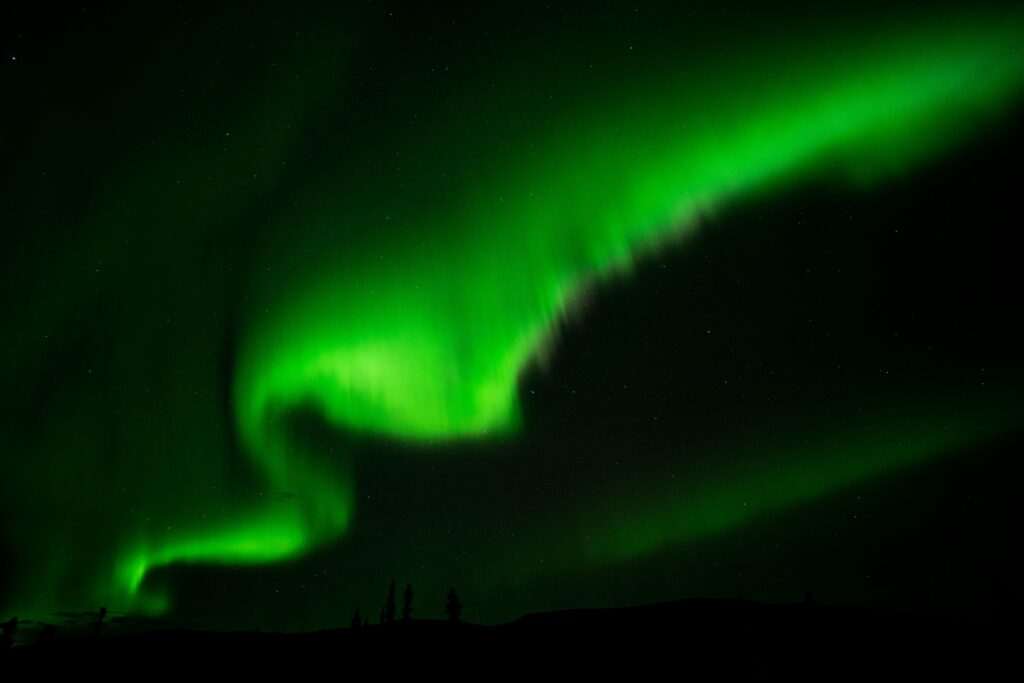
Fairbanks sits at latitude 64.8° North, directly beneath the auroral oval — the ring-shaped zone where charged particles from the sun collide with earth’s atmosphere and produce the northern lights. No other city in the United States offers comparable aurora viewing conditions, and no other Alaska city offers the combination of aurora in winter and perpetual daylight in summer that makes Fairbanks a destination for two of the most extraordinary natural phenomena on earth. Alaska’s second-largest city at around 100,000 people in the greater metro area, Fairbanks functions as the hub of Alaska’s interior and the gateway to everything north of the Alaska Range.
Aurora Borealis: The Main Event
The northern lights are visible in Fairbanks roughly 243 nights per year when skies are clear — a frequency that no Scandinavian or Canadian competitor can reliably match. The peak aurora season runs September through March, when the long, dark nights provide viewing windows of up to twenty hours. The optimal months are February and March, when darkness is still abundant but temperatures have moderated from the January extremes that regularly push below -40°F. That said, September and October offer aurora alongside the last of autumn color, and the contrast of green curtains over golden birch is one of the more striking Alaska sights available.
Viewing locations matter. Light pollution from downtown Fairbanks competes with weaker aurora displays, so most serious viewers drive 10–30 miles from the city center to darker skies. Chena Hot Springs Road heading east, the Murphy Dome area to the northwest, and the hills above the University of Alaska Fairbanks campus are all reliable dark-sky spots within easy reach. Commercial aurora tours operating from Fairbanks provide heated viewing stations, hot drinks, and knowledgeable guides who know which conditions produce the best shows — worthwhile for first-time visitors who want the experience structured. Several lodges on the outskirts of town specifically market aurora viewing packages with large windows or outdoor viewing decks.
The University of Alaska Fairbanks Geophysical Institute produces a daily aurora forecast at gi.alaska.edu that predicts activity levels for the coming days. Watching this forecast and planning your evenings around high-activity predictions dramatically increases your odds of a memorable show. A Kp index of 3 or higher typically produces visible aurora from Fairbanks; values of 5 or higher can fill the entire sky.
Midnight Sun: Summer’s Other Phenomenon
Flip the calendar to June and Fairbanks transforms. At the summer solstice, the sun does not set — it dips toward the northern horizon around midnight, hovers, and rises again without ever disappearing. This produces a quality of light unique to the sub-Arctic: a long, golden dusk that persists for hours, turning the Tanana Valley a warm amber and making it nearly impossible to keep a normal sleep schedule without blackout curtains.
The Midnight Sun Baseball Game, played every June 21st since 1906, captures Fairbanks’s relationship with its summer light perfectly. The Alaska Goldpanners host the game starting at 10:30 PM, playing without artificial lighting as the sky never fully darkens. The game has become a Fairbanks institution and an international curiosity — visitors from around the world come specifically for this single event, and the community celebration around it extends well beyond the game itself. Attendance is free or low-cost; check the Alaska Goldpanners schedule for the current year’s details.
Things to Do Year-Round
Museum of the North at the University of Alaska Fairbanks campus is the most significant natural history museum in Alaska and one of the best in the American West. The collection spans Alaska’s paleontology (including a full Bison priscus skeleton and the famous Effie the mammoth), human history from the earliest Beringian migrations through modern Alaska Native cultures, and fine art from Alaska artists. The Aurora Gallery includes a multimedia aurora simulator — useful for understanding the phenomenon you came to see, and an impressive presentation in its own right. The museum is open year-round and is worth three to four hours.
Pioneer Park is a free outdoor museum in central Fairbanks that preserves gold rush-era structures from the city’s early history. The centerpiece is the sternwheeler Nenana, a National Historic Landmark that once carried passengers and freight on the Yukon River. Gold rush-era cabins, a Native village exhibit, and a small-gauge railroad running through the grounds make Pioneer Park an accessible half-day stop that works for all ages.
Riverboat Discovery offers a three-hour narrated cruise on the Chena and Tanana Rivers that passes a floatplane demonstration, a working fish wheel for catching salmon, and the homestead of sled dog racing legend Susan Butcher, four-time Iditarod champion. The cruise provides genuine context on interior Alaska subsistence culture and river life that most Fairbanks visits miss entirely. It runs daily in summer.
Gold Dredge 8, a National Historic Landmark, is a five-deck gold mining dredge that operated in the Fairbanks goldfields from 1928 to 1959, processing more than seven million ounces of gold in its lifetime. Tours of the dredge itself are thorough and well-guided; the tour includes gold panning in an authentic gold-bearing sluice, and visitors typically keep whatever they find. It is one of the few places in Alaska where you leave with literal Alaska gold.
Santa Claus House in North Pole — a Fairbanks suburb that has legally required Christmas-themed street names since its founding — is a year-round Christmas store and attraction that has been operating since 1952. It is cheerfully absurd, genuinely popular, and the correct stop for visitors with children or anyone who appreciates enthusiastic regional character. North Pole is about 15 miles southeast of downtown Fairbanks.
Chena Hot Springs
Chena Hot Springs Resort, 60 miles east of Fairbanks on Chena Hot Springs Road, is the most popular day trip and overnight destination from the city. The geothermal springs feed natural hot pools and an indoor pool complex that operates year-round — soaking in 106°F water while watching aurora overhead is one of the more memorable Alaska experiences available. The resort also maintains an ice museum (open year-round in a permanently refrigerated space) carved from ice harvested from the springs’ pond, and offers aurora tours, aurora alert services that wake sleeping guests when the lights appear, and dog mushing experiences in winter. The 60-mile drive on Chena Hot Springs Road passes excellent moose habitat, and sightings on the road are common.
Getting There and When to Go
Fairbanks International Airport is served by Alaska Airlines, Ravn Alaska, and several smaller carriers with regular flights from Anchorage taking approximately one hour. Flying is the practical choice for most visitors. Driving from Anchorage takes five to six hours via the Parks Highway — a scenic route that passes through the Matanuska-Susitna Valley, Talkeetna, and Denali Park Road access — and is worthwhile if you are combining Fairbanks with a Denali visit or want the flexibility of a vehicle in the interior.
The two primary visit windows serve entirely different purposes. September through March offers aurora viewing, the World Ice Art Championships (February/March), and Yukon Quest International Sled Dog Race (February) — winter activities that require cold-weather preparation but deliver experiences unavailable anywhere closer to Anchorage. June through August offers the midnight sun, hiking in Chena River State Recreation Area, river trips, and Fairbanks’s full outdoor calendar. For aurora seekers, February and March are the sweet spot: dark enough for extended viewing, warm enough to be bearable, and aligned with the peak of the outdoor winter event calendar.



No comments yet.