
Dog Mushing Alaska 2026: Iditarod & Sled Dog Tours
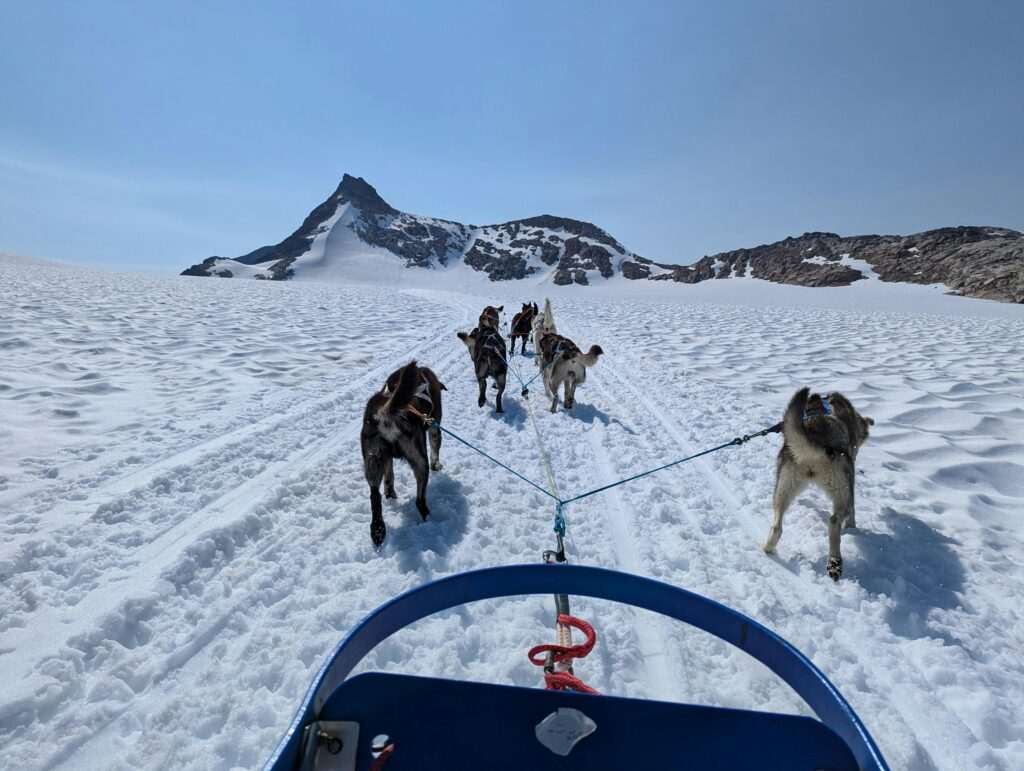
Dog mushing is Alaska’s official state sport — not a designation that arrived by default or historical accident, but one that reflects how deeply the practice is woven into the state’s identity. For thousands of years, Indigenous peoples of Alaska used sled dogs for transportation, hunting, and survival in terrain that no other technology could cross in winter. The gold rush brought mushing into the broader American consciousness. The 1925 serum run to Nome — a relay of mushers and dogs that carried diphtheria antitoxin to an isolated city facing epidemic — produced national heroes. The Iditarod Trail Sled Dog Race, first run in 1973, formalized that heritage into an annual event that the world now watches. For visitors to Anchorage, the opportunity to experience this tradition — whether as a spectator at the Iditarod’s ceremonial start or as a participant on a guided mushing tour — is one of the most distinctly Alaskan things the state offers.
The Iditarod: Alaska’s Last Great Race
The Iditarod Trail Sled Dog Race covers roughly 1,000 miles from Anchorage to Nome across some of the most remote terrain in North America — tundra, mountain ranges, frozen rivers, and coastal ice. It runs every year in March, launched from Anchorage in a ceremonial start and officially restarted from Willow, 55 miles north of the city, one day later. The fastest finishers complete the trail in just over eight days; most teams take ten to fifteen days. The race has produced legends: Susan Butcher won four times and transformed the Iditarod into an international event in the 1980s; Lance Mackey won four consecutive times from 2007 to 2010; Dallas Seavey has won more times than any other musher. The competitive field draws teams from across Alaska and from around the world — Norway, Sweden, France, and Germany have produced Iditarod contenders.
Watching the Iditarod Ceremonial Start in Anchorage
The Iditarod ceremonial start takes place on the first Saturday of March on 4th Avenue in downtown Anchorage, and it is one of the great free public spectacles Alaska produces. Teams launch from the start chute at intervals beginning around 10 AM, running through downtown streets lined with spectators before heading south through the city’s trail system. Each team — musher, dog team, sled — passes within arm’s reach of the crowd, giving spectators a close view of the dogs’ energy and the musher’s focus that television coverage can’t replicate. The dogs are extraordinary athletes, and the moment a team launches from the chute — sixteen huskies at full extension, the sled accelerating instantly — is something that doesn’t require prior knowledge of dog mushing to appreciate.
The ceremonial start is a festival as much as a race: vendors, food stalls, live music, and the general atmosphere of a city celebrating one of its defining traditions. Arrive by 9 AM for a good viewing position near the start chute. The Mayor’s Midnight Sun Marathon is the other major free Anchorage public event of comparable civic energy; the Iditarod start has a different character — less athletic, more cultural — but the same quality of being something that happens here and nowhere else.
The Restart at Willow
The official Iditarod timing begins at Willow, 55 miles north of Anchorage on the Parks Highway, where teams restart on the Sunday following the Anchorage ceremonial start. The Willow restart has a different atmosphere than downtown Anchorage — more focused, more local, more about the race itself than the spectacle. Teams launch at two-minute intervals into the Susitna River corridor, and the crowd at the restart is smaller and more knowledgeable than the downtown audience. For visitors who want to see the race as competitors and serious fans experience it, Willow is the better viewing location. The drive from Anchorage takes about an hour; arrive early for parking.
Iditarod Headquarters in Wasilla
The Iditarod Trail Committee maintains its headquarters in Wasilla, in the Mat-Su Valley about 40 miles north of Anchorage, and the facility is open to visitors year-round. The visitor center explains the race’s history, the trail route, and the role of sled dogs through exhibits and archival material. Kennel tours are available and allow visitors to meet actual Iditarod sled dogs — athletes whose working lives are spent training for a race that demands endurance comparable to running a marathon every day for two weeks. The dogs are sociable and accustomed to visitors; the kennel staff explains training regimens, nutrition, and the veterinary care that keeps a race team competitive. For families and visitors interested in the Iditarod beyond the race itself, the headquarters provides the most complete context available in a single stop.
Sled Dog Experiences Year-Round
You do not need to visit in March to experience dog mushing firsthand. Several kennels in the Anchorage and Mat-Su Valley area operate visitor programs year-round. In summer, wheeled sleds — rigs with bicycle-style wheels that substitute for snow — allow guided tours on dirt and gravel trails with full dog teams. The experience of being pulled by a dog team on a wheeled rig is different from snow mushing but demonstrates the dogs’ power and enthusiasm in a way that surprises most visitors: these dogs want to run, and their eagerness at hitch-up time is audible from a considerable distance.
In winter, guided mushing experiences range from ride-along trips where visitors ride in the sled basket while a guide drives the team, to hands-on lessons where participants learn to stand on the runners, manage the snow hook, and give basic commands. A guided mushing lesson in the Mat-Su Valley — launching from a cleared trail head into boreal forest, with the dogs finding their rhythm and the trees closing in on both sides — is the kind of experience that produces a specific, difficult-to-communicate feeling that visitors consistently describe as one of the best things they did in Alaska. For guided adventure experiences that incorporate mushing alongside other Anchorage-area winter activities, operators like Adventures by True North offer multi-activity itineraries.
What to Expect and What to Wear
Winter mushing tours operate in temperatures that can range from 15°F to -20°F depending on the time of year and the weather. Dress in full cold-weather layers — base layer, insulating mid-layer, wind-blocking outer shell — and bring insulated waterproof boots rated for serious cold. Most operators provide outer layers and boots if needed, but personal gear rated for the conditions is preferable for a half-day or full-day excursion. The ride-along experience in a sled basket is passive and therefore cold; hands-on driving keeps you warmer. Mittens over liner gloves are the hand-warmth solution at temperatures below 15°F. A balaclava or neck gaiter covers the face against wind chill on moving sleds.
Summer wheeled sled tours operate in much more forgiving conditions — light outdoor clothing appropriate for the temperature, with a jacket for the breeze created by moving through open terrain. The dogs don’t care what season it is; their enthusiasm is the same in July as in January.
Planning Your Visit
March is the peak month for Iditarod viewing and the most culturally concentrated time for dog mushing in Alaska. The ceremonial start, the Willow restart, and the finish in Nome (accessible by air) all occur within two weeks. January and February bring local sled dog races throughout the Mat-Su Valley — the Alaska Dog Mushers Association organizes competitive events throughout winter that are open to public viewing and give a sense of the sport at the competitive level below the Iditarod. Summer is the right time for wheeled sled tours if winter travel isn’t in your plans.
The Alaska Native Heritage Center in Anchorage provides historical and cultural context for dog mushing’s Indigenous roots — the center’s exhibits on traditional transportation and subsistence practices trace the lineage that led to the Iditarod and to the sled dogs working at Mat-Su kennels today. A visit to both the heritage center and a working mushing kennel covers the full span of the tradition: its origins and its living practice.
No comments yet.