
Hatcher Pass & Independence Mine 2026: Anchorage’s Alpine Escape
Most visitors to Anchorage don’t make it to Hatcher Pass. That’s a mistake worth correcting. About 90 minutes north of the city, the road climbs out of the Matanuska-Susitna Valley into an entirely different environment: open alpine tundra, granite peaks, and sky in every direction. The drive alone is worth the trip. What’s waiting at the top makes it one of the best day excursions in Southcentral Alaska.
Getting There: The Palmer-Fishhook Road
From Anchorage, take the Parks Highway north to Palmer, then follow the Palmer-Fishhook Road northeast toward the pass. The road climbs steadily through farmland, birch forest, and eventually above treeline into the alpine zone. The transition is gradual and beautiful — you watch the valley floor drop away behind you as the mountains close in.
The last several miles before the pass are unpaved and follow a narrow road through classic subalpine terrain. Standard passenger cars handle it fine in summer. The road through the pass is seasonal — it closes in late fall when snow makes it impassable and reopens in late spring. In summer (June through September), you’ll find the road fully open and visitor facilities operating.
Independence Mine State Historical Park
The Independence Mine State Historical Park is the primary destination for most Hatcher Pass visitors — and deservedly so. The mine complex operated as a hard rock gold mining operation from the 1930s into the 1940s, reaching peak production during World War II before the government halted non-essential mining operations in 1943. When the workers left, much of the infrastructure stayed.
Today, the buildings are preserved in remarkable condition for their age and remoteness: the mill, the assay office, the bunkhouses, the mine manager’s house. Walking among them against the backdrop of the Talkeetna Mountains gives the site a quality that’s difficult to describe — industrial archaeology at elevation, with the ruins of working-class Alaska life on display.
Self-guided tours with interpretive signage are available throughout the property. Guided tours run during summer and are worth taking for the historical context they provide — the labor conditions, the ore processing, the isolation of winter in the camps at elevation. Allow 2–3 hours to do the site justice.
Wildflower Season
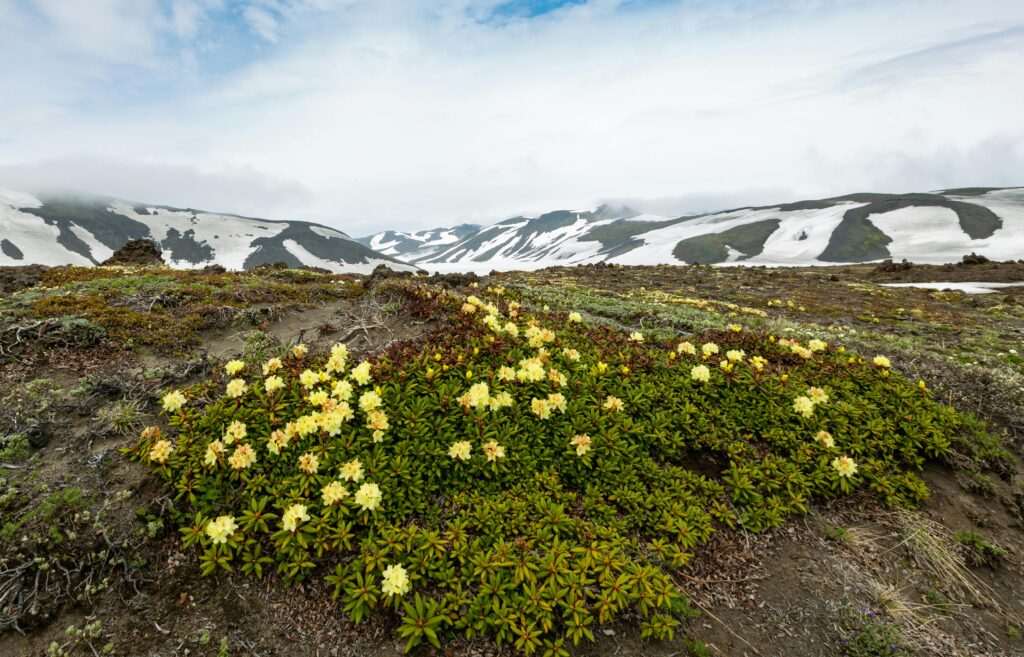
Peak wildflower season at Hatcher Pass runs through late June and July. The tundra above treeline fills with lupine — vast purple fields that look almost implausible — alongside fireweed, yellow arnica, and dozens of other alpine species. The combination of open terrain and elevation means the flowers are visible across hillsides rather than hidden in undergrowth.
This is when Hatcher Pass is at its most visually spectacular. The light at this latitude in summer stays golden and low on the horizon for hours, and the wildflowers catch it in a way that rewards any camera or simply standing still and looking. Bring layers — alpine temperatures run 10–20 degrees cooler than Anchorage even in July, and wind is common.
Hiking: The Gold Mint Trail and Beyond
The Gold Mint Trail is one of the finest valley hikes in the Anchorage-area trail network. The trailhead is near the Motherlode Lodge area at the base of the pass, and the trail follows the Little Susitna River upstream through a broad glacial valley for about 8 miles to the Mint Glacier. The terrain is open tundra — you can see the full length of the valley and the peaks closing it off at the far end from most of the route. Wildflowers, moose, and Dall sheep are common sightings.
The full round trip is about 16 miles, but the valley is beautiful enough that turning around at any point makes for a satisfying hike. The first 2–3 miles offer excellent views with minimal elevation gain; the terrain steepens in the upper valley as you approach the glacier.
Shorter hikes around the Independence Mine complex itself access open tundra above the buildings quickly. The terrain is easy to navigate above treeline — there are informal use trails across the hillsides, and the views in all directions reward any amount of climbing.
Spring Snow Season
Hatcher Pass is one of the few places in Southcentral Alaska where significant snow persists well into spring and early summer. The south-facing bowls above the pass hold snow through May and into June, making it a popular destination for backcountry skiing and snowshoeing when the lowlands are already in spring conditions.
This seasonality means Hatcher Pass offers something unusual: you can leave Anchorage in late May with the birch trees leafing out and arrive at the pass to find slopes still covered in consolidated snow — ideal for skiing laps without lift infrastructure. The avalanche danger subsides as the snowpack consolidates in late spring, but conditions vary year to year and local knowledge matters if you’re venturing onto steep terrain.
Palmer Hay Flats State Game Refuge
On the drive to Hatcher Pass from Anchorage, the route passes near the Palmer Hay Flats State Game Refuge — a large wetland complex along the Matanuska and Knik Rivers that’s one of the best birding spots in Southcentral Alaska. Sandhill cranes concentrate here during migration, and the flats support moose, trumpeter swans, and a wide variety of waterfowl. If you’re combining the Hatcher Pass trip with wildlife watching, a stop at the flats in early morning is worth building into your schedule.
Practical Information
Season: The main Hatcher Pass road (Fishhook-Willow Road through the pass) is open roughly mid-June through October, depending on snowfall. The section to Independence Mine on the eastern side is open earlier in the season. Check current conditions with Alaska DNR before visiting.
Admission: There’s a day-use parking fee at Independence Mine State Historical Park. Have cash or a card ready.
Food and supplies: Bring everything you need from Anchorage or Palmer. Services at the pass are minimal outside of the lodge operations. Water is available from streams but should be treated.
Wildlife: Black bears and grizzlies are present in the area. Bear spray is worth carrying on the Gold Mint Trail and other longer routes.
Hatcher Pass earns its reputation as one of the most rewarding day trips from Anchorage. The combination of accessible alpine terrain, preserved gold rush history, exceptional hiking, and wildflower fields puts it in the top tier of Alaska destinations that most visitors to the state never reach.

No comments yet.