
Alaska Backcountry Ski Touring 2026: Beyond the Resort — Chugach, Hatcher Pass & More
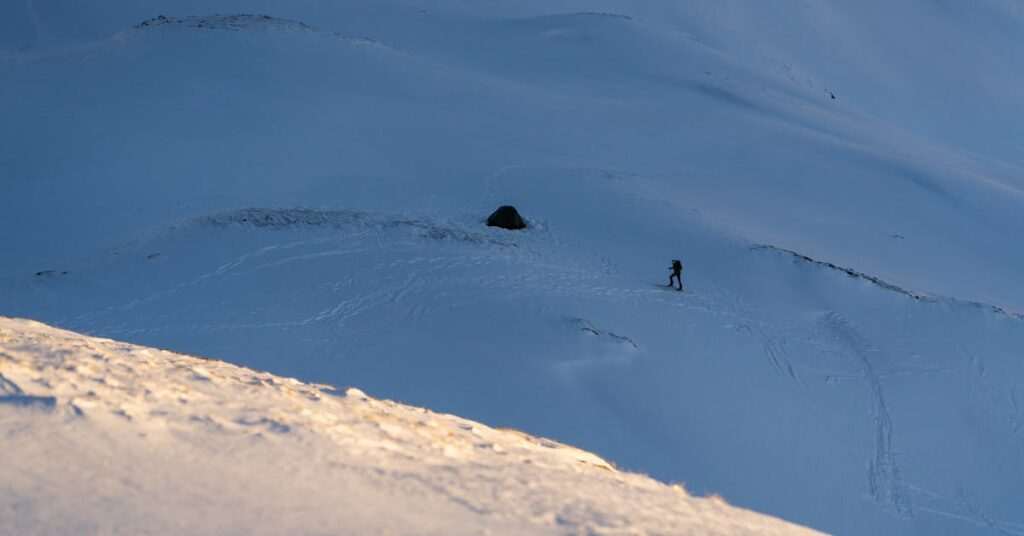
Alaska’s ski culture has two entirely separate chapters. The first is Alyeska Ski Resort in Girdwood — a legitimate world-class mountain with consistent deep powder, a 2,500-foot vertical, and the infrastructure to support it. The second chapter starts when you click into skins at the bottom of a slope no lift has ever touched. Alaska’s backcountry terrain — the Chugach Mountains, Hatcher Pass, Turnagain Pass, and the Valdez area — is among the most abundant and consequential powder skiing terrain on earth. Getting there requires different equipment, different skills, and a fundamentally different relationship with the mountains than resort skiing does. But for skiers ready to make that transition, Alaska delivers something that can’t be found at any lift-served mountain.
How Ski Touring Differs from Resort Skiing
Ski touring (also called backcountry skiing or ski mountaineering depending on the terrain) uses specialized equipment that allows skiers to ascend as well as descend. “Skins” — strips of synthetic material that adhere to the ski base and grip the snow on the way up — allow uphill travel on most grades. Bindings pivot at the toe for climbing and lock down for descents. The entire system is lighter than resort gear and tuned for efficiency over distance.
The practical demands are significant: a full touring day in the Chugach burns 2,000–4,000 calories and requires navigating terrain without marked runs or patrol coverage. Route-finding, weather reading, and group decision-making all become part of the skill set. First-time tourers consistently find that the uphill demands humbling — even strong resort skiers may struggle on the first few ascents. The reward is proportional: untracked powder on slopes you chose, in terrain you reached under your own power.
Best Season Window
February through April is the optimal backcountry window near Anchorage. January can produce extreme cold snaps and unstable early-season snowpack. February brings increasing daylight while maintaining excellent snow conditions. March and April deliver the sweet spot — stable consolidated snowpack from the season’s accumulation, 10–14 hours of daylight that allows full-day tours without headlamps, and temperatures that are cold enough to keep the snow dry but warm enough to make exposure manageable. By late April, solar warming begins to destabilize afternoon snowpack at lower elevations, narrowing the safe touring window to early mornings.
Top Backcountry Zones Near Anchorage
Hatcher Pass
Located about 70 miles north of Anchorage near Palmer, Hatcher Pass is the most accessible introduction to Alaska backcountry skiing. The summer road through the pass becomes a snowmobile and ski touring corridor in winter, and the open alpine terrain above the treeline provides a wide variety of slope aspects and gradients suitable for skiers from intermediate touring level upward. The Independence Mine area offers short, accessible objectives for first-time tourers; longer ridgelines and bowls beyond the mine provide more committing terrain for experienced parties. The pass receives significant snowfall but also significant wind, which can create highly variable conditions from dense wind slab to breakable crust within the same slope — check the Alaska Avalanche Center forecast before every trip.
Turnagain Pass
Turnagain Pass, about an hour south of Anchorage on the Seward Highway, is the most popular backcountry ski area in Southcentral Alaska and the closest thing the region has to a formal backcountry skiing hub. The pass sits at 988 feet elevation with slopes rising to 3,000+ feet on both sides of the highway, accessible via snowmobile trail network and established ski touring routes. The variety of terrain — from gentle valley floor tours suitable for beginners to steep north-facing couloirs and ridgelines requiring technical ski mountaineering skills — makes Turnagain the most-visited backcountry zone near Anchorage for good reason. Weekends bring significant crowds by Alaska backcountry standards; midweek tours offer more solitude.
Chugach Mountains Front Range
The front range of the Chugach — visible from Anchorage’s east side — holds some of the most consequential ski mountaineering terrain in North America. Routes like Pyramid Peak, the Pioneer Ridge, and various technical couloirs above the city require avalanche safety competency, ski mountaineering fitness, and the ability to navigate serious Alaska mountain terrain. These are not destinations for developing tourers. For expert-level skiers who can move efficiently in steep terrain and make sound avalanche decisions independently, the front range offers extraordinary descents within view of the city skyline.
Valdez
Valdez is the heli-ski capital of Alaska and a pilgrimage destination for serious ski mountaineers worldwide. Positioned at the head of a fjord and surrounded by the Chugach Mountains, Valdez receives some of the heaviest snowfall in the world — Thompson Pass averages over 500 inches annually — and the resulting deep, stable powder on thousands of feet of terrain is what draws professional skiers and film crews every season. Heli-ski operators based in Valdez offer everything from guided group days to multi-day private charter packages. The logistical commitment is significant: plan a dedicated 3–5 day Valdez trip to justify the drive (5 hours from Anchorage) and allow for weather days when helicopters can’t fly.
Avalanche Safety: Non-Negotiable
Alaska’s backcountry terrain is avalanche terrain. Every slope steeper than about 30 degrees can avalanche under the right conditions, and the Chugach snowpack — characterized by persistent weak layers from temperature fluctuations — is historically more hazardous than many Continental snowpacks. Three pieces of equipment are mandatory for every backcountry tour, with no exceptions: an avalanche beacon (transceiver), a probe pole, and a collapsible shovel. These items exist to find and unbury partners after a burial; without them, avalanche survival depends on luck alone.
The Alaska Avalanche Center publishes daily forecasts for Turnagain Pass and Hatcher Pass zones throughout the winter season — check it before every outing, even when conditions appear stable. Avalanche conditions can change within hours following wind events or temperature swings, and the forecast is the fastest way to understand current hazard levels without being on the slope yourself.
Avalanche education is the underlying foundation. The American Institute for Avalanche Research and Education (AIARE) offers Level 1 courses that provide the decision-making framework for recreational backcountry travel; several Anchorage-based guides run these courses locally in November and December before the season begins. Taking an avalanche course before your first Alaska backcountry tour is not optional — it’s the minimum standard for operating responsibly in this terrain.
Guided Tours and Instruction
For skiers new to backcountry travel, guided tours are the appropriate starting point. A guide provides route selection, avalanche hazard assessment, and emergency response capability that independent novice parties lack. Chugach Adventures runs guided ski touring and winter mountain experiences in the Chugach terrain, providing the professional oversight that makes first backcountry experiences both safer and more productive. Lifetime Adventures offers multi-day backcountry packages for skiers ready to commit to a more extended Alaska winter experience. Both operators provide gear orientation for clients new to touring equipment.
The first guided day is the most valuable investment in backcountry skiing an intermediate resort skier can make — far more so than any gear upgrade. The skills and habits developed under a professional guide’s direction — reading terrain, assessing group exposure, and ingraining efficient uphill technique — take years to build independently and rarely emerge without structured field instruction.
Photo: Adrien casse / Pexels


No comments yet.