
Wrangell-St. Elias National Park 2026: Alaska’s Largest Park from Anchorage
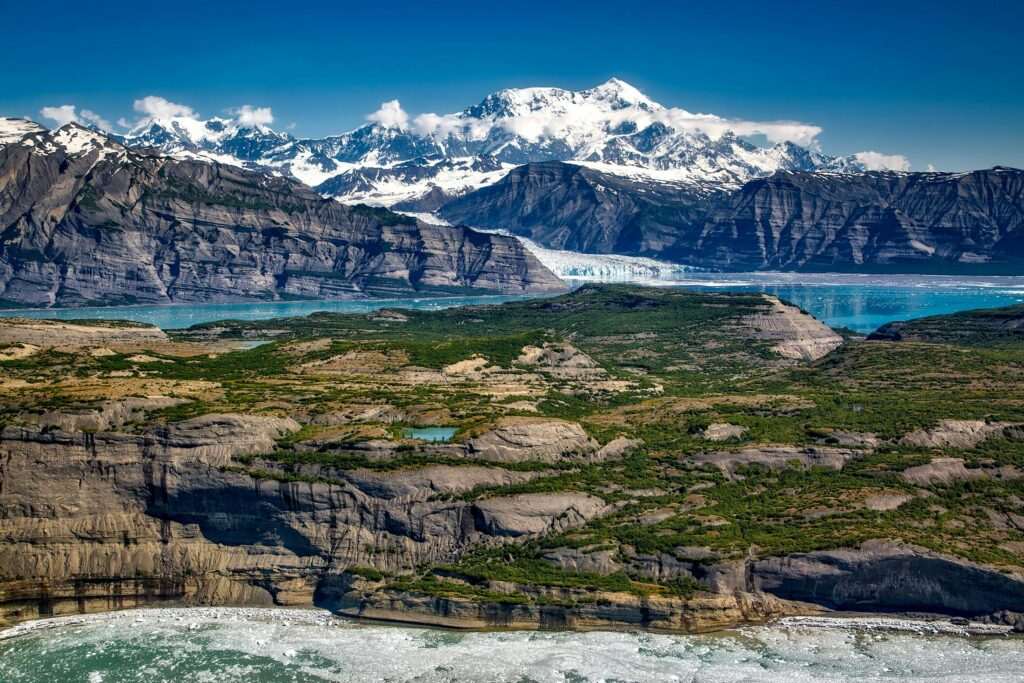
Wrangell-St. Elias National Park and Preserve contains 13.2 million acres of wilderness — an area larger than Switzerland. It holds nine of the sixteen highest peaks in the United States, including Mount St. Elias at 18,008 feet, the second-tallest peak in North America. Its glaciers cover more than a quarter of the park, and the Bagley Icefield — the largest subpolar icefield in North America — sprawls across the park’s southern interior. The scale here operates on a different register than almost anywhere else you can visit by road in the country.
From Anchorage, the park’s gateway communities are 4.5 to 5 hours away by car — a long day’s drive, but a manageable one that passes through some of Alaska’s most dramatic landscapes along the way. Most visitors do the trip as a two or three-day minimum, overnighting in McCarthy or Kennicott to allow time for the activities that make Wrangell-St. Elias worth the drive.
The Drive from Anchorage
The most common route from Anchorage to the Wrangell-St. Elias gateway town of Chitina follows the Glenn Highway northeast through the Matanuska Valley, passing Wasilla and Palmer before climbing into the Alaska Range and dropping into the copper-rich landscape of the Copper River Basin. At Glennallen — about 185 miles from Anchorage, roughly 3 hours — you’ll hit the junction with the Richardson Highway and the last reliable fuel stop before McCarthy. Fill up here.
From Glennallen, the route continues south on the Richardson Highway to Chitina (about 35 miles), then turns onto the McCarthy Road — a 60-mile gravel road following the old Copper River and Northwestern Railway bed to the Kennicott River. The McCarthy Road is passable in a standard vehicle in summer but can be rough after rain. Flat tires are not uncommon; carry a spare and know how to change it. The road ends at the Kennicott River, where a footbridge crosses to the town of McCarthy (no vehicles cross).
Gateway Towns: Chitina, McCarthy, and Kennicott
Chitina is a small historic town at the confluence of the Chitina and Copper Rivers, with a handful of services — a gas station, a small store, and the Spirit Mountain Artworks gallery. It’s a logical lunch or fuel stop before the McCarthy Road.
McCarthy is a living outpost of pre-road-era Alaska: a few dozen year-round residents, several lodges and restaurants, a saloon, and the general air of a place that has survived on its own terms for a century. After crossing the footbridge from the McCarthy Road terminus, you’re in town. Most services — lodging, meals, gear, guide bookings — are here. There’s no reliable cell service and no ATM; bring cash and download offline maps.
Kennicott sits five miles up the valley from McCarthy, accessible by foot (a pleasant 1.5-hour walk through the boreal forest on an unpaved road), by bike rental, or by shuttle. This is where the historic mill buildings are, where the Root Glacier begins, and where the Kennicott Glacier Lodge sits above the moraine. Kennicott is the base for most of the park’s primary activities.
Kennecott Mines: A UNESCO World Heritage Site on a Glacier
The Kennecott Mines National Historic Landmark is one of the most extraordinary industrial heritage sites in the United States. From 1903 to 1938, the Kennecott Copper Corporation extracted an estimated $200 million worth of copper ore from the Bonanza, Jumbo, Erie, and Mother Lode mines — ore so rich that veins contained up to 70% pure copper. The operation built a railroad across 200 miles of wilderness, suspended aerial tramlines across glaciers, and constructed an entire company town on the lateral moraine of the Kennicott Glacier.
Today, the fourteen-story red mill building dominates the landscape above the moraine, visible from miles away. The National Park Service has preserved and partially restored the site, and ranger-led tours of the mill building run daily in summer. Walking the town independently — the powerhouse, the hospital, the bunkhouses, the ice house built into the glacier — takes a half day. For anyone interested in American industrial history or in the sheer audacity of building something this large in this location, the Kennecott Historic Site is worth the drive from Anchorage on its own.
Top Activities
Root Glacier Hike
The Root Glacier trail begins at the Kennicott townsite and leads about 2 miles out to the edge of the Root Glacier — a relatively accessible arm of the vast Kennicott Glacier system. From the trail, you can see the glacier’s lateral moraine, the blue ice of the glacier’s surface, and the surrounding Wrangell peaks. Most visitors walk to the glacier’s edge on their own; guided glacier walks with crampons and ice tools, venturing onto the ice itself, can be booked through outfitters in McCarthy. The Root Glacier tour is one of the most accessible glacier-on-foot experiences in Alaska.
Flightseeing over the Bagley Icefield
No ground-based visit to Wrangell-St. Elias fully conveys what the park contains. The interior — the Bagley Icefield, the St. Elias Range, the untracked valleys extending toward the Yukon border — is only accessible by air. Flightseeing operators based in McCarthy and Chitina offer 1–2 hour flights over the icefield, with views of glacier systems that rival Greenland in extent and Alaska Range peaks rising above the clouds. Glacier landings on the Bagley or the upper Kennicott Glacier are available through some operators. This is the highest-cost activity in the park and, for many visitors, the most memorable. Book well in advance for summer departures. Adventure operators from Anchorage such as Adventures by True North can help coordinate multi-day park itineraries.
Mountain Biking the McCarthy Road
The 60-mile McCarthy Road — built on the flat, well-graded former railroad bed — is one of Alaska’s best unpaved bicycle routes. The road follows the Chitina River valley with constant mountain views, passes through old railway tunnels, and traverses terrain that a standard road bike can handle in dry conditions. Several visitors bike the road one way and arrange a vehicle shuttle back. Bike rentals are available in McCarthy for day trips in the immediate area. Day tours and guided outings from Anchorage through operators like Get Up and Go Tours can also reach the McCarthy corridor for activity-focused trips.
Backcountry Hiking and Camping
Wrangell-St. Elias has no backcountry permit system and no designated backcountry campsites — the wilderness is open for travel without registration. The tradeoff is that trails, in the conventional sense, barely exist outside of the Kennicott area. Most backcountry travel here involves route-finding across glacier moraines, river gravel bars, and open tundra. This is genuine remote wilderness travel: navigation skills, bear awareness, and self-rescue capability are prerequisites. The park service provides wilderness travel information at the Visitor Center in Copper Center (about 10 miles south of Glennallen), which is worth a stop on the drive in.
Lodging and Camping
Kennicott Glacier Lodge is the highest-end option in the park — a historic inn perched above the glacier moraine with views of the mill building and the mountains. It operates on a meal-included plan and books out months in advance for peak summer.
Ma Johnson’s Hotel in McCarthy is the most atmospheric lodging option in town: a renovated historic hotel with small rooms and a saloon downstairs. Books out early for July and August.
Camping is available at the Kennicott River Campground at the McCarthy Road terminus and at several sites in and around the McCarthy area. Backcountry camping in the park is free and unrestricted, though site selection requires awareness of bear country protocol. Black bears and grizzlies are both present throughout the park.
Best Time to Visit
The McCarthy Road is typically accessible to standard vehicles from late May or early June through September. Snow can linger on the road into early June some years; check current conditions with the park service before your trip. Peak season is July and August, when days are longest, wildflowers are at their peak in the valley, and all services are operational. Late June offers slightly fewer crowds and competitive pricing on lodging. September brings early fall color in the birch and cottonwood, shorter days, and the beginning of the shoulder season wind-down — some lodges and outfitters close after Labor Day.
Planning for a Minimal-Services Environment
Wrangell-St. Elias is genuinely remote. Plan accordingly:
- Fuel: Fill in Glennallen. There’s no reliable fuel on the McCarthy Road or in McCarthy itself.
- Cash: No ATMs in McCarthy or Kennicott. Most businesses accept credit cards but reception can be unreliable.
- Cell service: Non-existent from Chitina through McCarthy. Download offline maps (Gaia GPS, CalTopo) before you leave Glennallen.
- Reservations: Book lodging, guided glacier tours, and flightseeing at least 4–6 weeks ahead for July and August. Popular options fill months out.
- Spare tire: The McCarthy Road’s gravel surface punctures tires at a higher rate than paved roads. Know how to change a flat.
- Bear awareness: Store food properly. The park provides bear box infrastructure at campgrounds; carry canisters for backcountry travel.
For visitors planning their first Alaska national park experience, Wrangell-St. Elias requires more logistical preparation than Denali or Kenai Fjords — but rewards that preparation with a sense of wildness and scale that few places on earth can match. If you have time for one multi-day road trip from Anchorage, this is the one to take.
No comments yet.