
Wakeboarding & Water Skiing Near Anchorage 2026 — Eklutna Lake & Knik Arm Guide
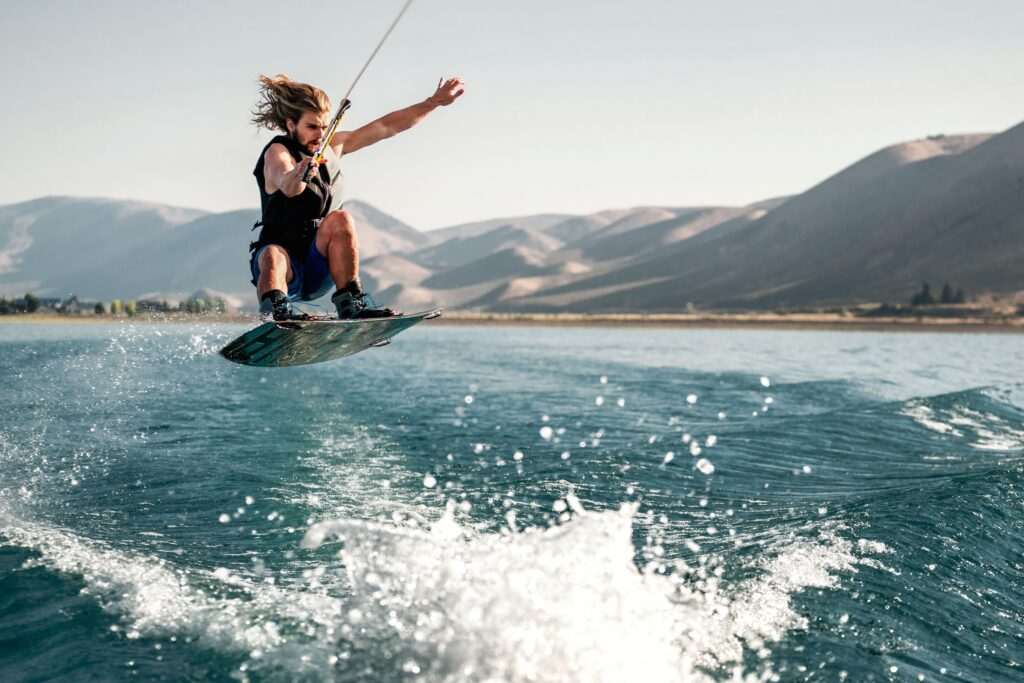
Alaska is not the first place that comes to mind for watersports, but anyone who has spent a July afternoon on Eklutna Lake understands why it should be. The water is glacially cold and startlingly blue, the mountains rise directly above the shoreline, and on a calm summer day the surface is flat enough for a beginner’s first run behind a boat. Wakeboarding and water skiing occupy a small but genuine niche in Anchorage’s outdoor activity scene, concentrated primarily on Eklutna Lake in the Chugach foothills and, to a lesser extent, on the upper reaches of the Knik Arm and the lower Matanuska River. This is the practical guide to getting on the water for tow sports near Anchorage in 2026.
Eklutna Lake — The Primary Destination
Eklutna Lake sits about 26 miles northeast of downtown Anchorage at the end of Eklutna Lake Road, off the Glenn Highway. At roughly 7 miles long and up to a mile wide, it is the largest lake in the Chugach State Park area and the primary freshwater recreation destination accessible by road from Anchorage. The lake provides Anchorage’s municipal water supply, which shapes how water activities are managed — no gasoline-powered motors are permitted on the lake, a regulation that has significant implications for wakeboarding and water skiing.
This restriction rules out conventional inboard or outboard motorboat tow setups. However, electric wake boats have been explicitly permitted at Eklutna Lake, and their use for watersports has grown steadily as the technology has improved. Electric wake boats — purpose-built vessels using lithium battery-powered drivetrains — produce the same deep, shapeable wake as conventional wake boats without combustion engines. Operators running electric boat watersports on Eklutna Lake have emerged in recent years, offering guided sessions for beginners and equipment rental for experienced riders with their own gear.
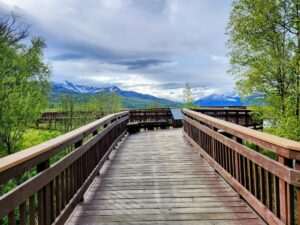
The lake’s orientation and mountain shelter mean morning conditions are typically the calmest — glassy water in the early hours before valley breezes develop. Afternoon sessions are still rideable but expect some chop by mid-afternoon on warmer days. The visual setting is extraordinary: the Eklutna Glacier is visible at the lake’s eastern end, and the surrounding Chugach peaks create a backdrop that makes any photo from the water look like it was staged.
Water Temperature and Gear Requirements
Eklutna Lake is glacier-fed. Surface water temperatures in June hover around 48–52°F; by late July and August, upper-layer temperatures can reach 58–62°F on warm years. This is cold by conventional watersport standards — cold enough that a wetsuit is not optional but mandatory for any extended time in the water, including the inevitable falls.
A 3mm full wetsuit provides adequate thermal protection for July and August sessions of 60–90 minutes. A 5mm wetsuit extends comfortable time in the water and is the better choice for June sessions when water temperatures are at their lowest. Neoprene boots and gloves are worthwhile if you expect multiple falls or long sessions. A drysuit provides maximum protection but restricts movement significantly — most wakeboarders opt for a thick wetsuit rather than a drysuit for active tow sports.
Helmet and impact vest are standard safety gear for wakeboarding regardless of location. A Coast Guard-approved life jacket is required by law in Alaska waters. If renting gear from a local outfitter, confirm what protective equipment is included in the rental package.
Knik Arm and Matanuska River Options
The upper Knik Arm — the northeastern extension of Cook Inlet that runs along the Mat-Su Valley floor — and the lower Matanuska River near Palmer both support conventional gasoline-powered boat operation, making traditional water skiing and wakeboarding viable without the electric-motor restriction that applies to Eklutna Lake. Several boat owners and small charter operators in the Palmer and Wasilla area run tow-sport sessions on these waters, primarily serving local recreational boaters.
The Knik Arm environment is more complex than a freshwater lake. Tidal fluctuations are significant — the arm experiences tidal swings of 25–35 feet — and the shallow mudflats that emerge at low tide restrict navigable channels. Boat traffic, including commercial vessels and float planes operating out of Wasilla and Palmer, adds a navigation dimension that requires an experienced boat operator. This is not beginner territory; it suits experienced riders working with a knowledgeable local guide or operator who knows the tides and channels.
The Matanuska River near its mouth at Knik Arm provides some wakeable water during low-to-mid tide windows when the current is manageable. River wakeboarding is niche even among Alaska’s water sports community, but the right conditions — incoming tide, minimal current, calm wind — produce workable sessions in the broader river bends.
Guided Lessons and Equipment Rental
Wakeboarding and water skiing instruction is available at Eklutna Lake through electric boat operators who offer beginner packages. A typical beginner session runs 60–90 minutes and covers water starts (the most technically difficult part of learning to wakeboard), body position, and basic edge control. Instructors familiar with cold-water conditions can advise on wetsuit fit and thermal management, which affects performance more than most beginners anticipate.
Equipment rental varies by operator. Electric wake boat outfitters at Eklutna typically provide board, bindings, tow rope, and impact vest as part of session pricing. Life jackets are always provided. Riders who own their own equipment can sometimes arrange boat-only rental, though availability is limited given the small number of permitted electric boat operators.
For water skiing specifically — a discipline that requires more setup flexibility in boat speed and rope length — working directly with a Palmer or Wasilla-based boat owner through local boating clubs or social media groups is the most practical approach. There is no commercial water ski school operating near Anchorage as of 2026, so self-organized access through the local boating community is the standard route.
Best Season and Conditions
June through August is the practical season for tow sports near Anchorage. June is technically rideable but water temperatures are at their coldest and conditions are less reliably settled. July and August represent the sweet spot: temperatures are warmest, daylight is nearly unlimited (Anchorage gets 19+ hours of sunlight near the solstice), and calm morning windows are longer and more predictable.
The best Eklutna Lake conditions occur on warm, wind-free mornings after a period of settled high pressure. Check mountain weather forecasts rather than city forecasts — the lake sits at a higher elevation and in a different microclimate than downtown Anchorage. Afternoon thunderstorms building off the Chugach ridgelines can develop quickly in August; morning sessions avoid this entirely.
Getting to Eklutna Lake
From Anchorage, take the Glenn Highway northeast approximately 26 miles to the Eklutna exit, then follow Eklutna Lake Road seven miles to the Eklutna Lake Recreation Area day-use area and boat launch. The drive is about 35–40 minutes from central Anchorage. The Chugach State Park manages the Eklutna Lake Recreation Area; a day-use parking fee applies at the trailhead lot. The boat launch is at the western end of the lake.
The same Glenn Highway corridor provides access to the Eagle River Nature Center, located about 12 miles from Anchorage before the Eklutna exit. For groups combining a watersport session at Eklutna Lake with other outdoor activities, a morning stop at the Nature Center for a riverside walk before heading up to the lake makes a natural full-day itinerary. The Nature Center also has current trail and lake-area conditions information that is useful for planning.
Combining Watersports with Other Anchorage Activities
Tow-sport sessions at Eklutna Lake typically run two to three hours. Pairing them with other water-based activities closer to Anchorage creates a well-rounded outdoor day. The Westchester Lagoon near downtown offers paddleboarding and kayak rentals that suit all ages and fitness levels — a good low-intensity complement to a morning of wakeboarding for groups with mixed ability levels. The lagoon’s calm tidal water is a different environment than the mountain lake, but both connect visitors to Anchorage’s water-centric outdoor culture.
Frequently Asked Questions
Can I use a gas-powered boat on Eklutna Lake? No. Gasoline-powered motors are prohibited on Eklutna Lake due to its role as Anchorage’s municipal water supply. Electric motors and human-powered craft are permitted. Electric wake boats operate legally on the lake and are the standard platform for tow sports there.
Do I need a wetsuit to wakeboard at Eklutna Lake? Yes. Water temperatures range from approximately 48°F in June to 62°F in late summer. A 3–5mm full wetsuit is necessary for any session; thicker neoprene is advisable in June and for longer sessions in July. Falls are inevitable when learning, making thermal protection non-negotiable.
Are there wakeboard lessons available near Anchorage? Guided beginner sessions are available through electric boat operators at Eklutna Lake during peak season. Contact outfitters directly to confirm current availability and pricing for 2026. Water ski instruction through a dedicated school is not available near Anchorage; local boating clubs are the best resource for water ski access.
What is the best time of day to wakeboard at Eklutna Lake? Early morning offers the calmest conditions — glassy water before valley winds develop, typically between 7 a.m. and noon. Afternoon chop is common on warm days. Morning sessions also avoid the afternoon thunderstorm risk that can develop off the Chugach ridgelines in August.
Can beginners learn to wakeboard at Eklutna Lake? Yes. The lake’s calm morning conditions and experienced local instructors make it a viable learning environment. Cold water makes falls less comfortable than in warm-water settings, but proper wetsuit gear addresses this. Most first-timers can get up on a board within a 90-minute guided session.
No comments yet.