
Unalaska & Dutch Harbor 2026: Alaska’s Most Remote City & the Deadliest Catch Capital
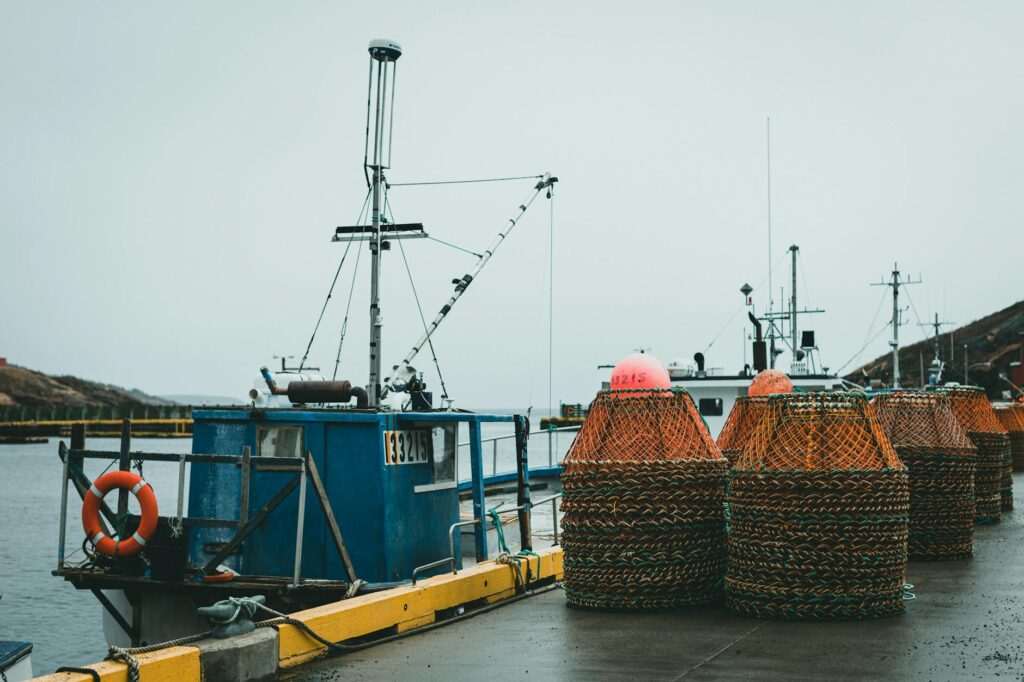
The plane banks through a mountain pass — walls of volcanic rock close enough to touch, it seems, cloud layers above and below — and suddenly Dutch Harbor appears: a maze of industrial docks, massive processing ships, a bay jammed with crab boats and factory trawlers, and bald eagles sitting on dumpsters like pigeons. Welcome to Unalaska and Dutch Harbor, the most valuable fishing port in the United States, the setting for Deadliest Catch, and one of the most genuinely remote cities in the world. It’s not an easy place to reach, and it doesn’t care. That’s the point.
Getting There: The Approach Says Everything
Alaska Airlines operates scheduled service between Anchorage and Dutch Harbor, roughly 2.5 hours each way over the Alaska Peninsula and out into the Aleutian Chain. The approach into Dutch Harbor is one of the most dramatic in commercial aviation — passes through volcanic mountains, often low clouds, water on three sides as the runway comes into view. Pilots who fly this route need Aleutian-specific training, and passengers with window seats often go quiet for the last 20 minutes of the flight.
There’s no road in or out. No ferry to the continental highway system. You fly in, or you’re on a fishing boat. That inaccessibility is what keeps Unalaska genuinely itself — a working industrial city of about 4,500 people, most of them connected in some way to fishing, fish processing, or the logistics of feeding the world’s appetite for Alaskan seafood.
Dutch Harbor: The World’s Most Valuable Fishing Port
Dutch Harbor has been the top-ranked US fishing port by dollar value for years — handling more pollock, Pacific cod, and king crab than any other port in the country. The waterfront is a working industrial complex: processing plants, cold-storage facilities, boat yards, and the constant movement of vessels that range from small crabbers to massive factory trawlers. If you’ve watched Deadliest Catch, you’ve seen this harbor — the show is filmed here, and the real thing is as intense as the TV version, if less dramatically edited.
Visitors are welcome to walk the public areas of the harbor and watch the fleet. Crab boats come and go on schedules tied to seasons and quotas. Ask around at the boat docks — people here tend to be straightforward, and many fishermen are happy to talk about the work if you approach with genuine curiosity rather than tourist detachment.
WWII: The Forgotten Aleutian Campaign
In June 1942, Japanese forces bombed Dutch Harbor in one of the only attacks on American soil during World War II. What followed — the Aleutian Campaign — was a brutal, fog-bound, miserable military operation across some of the worst weather on earth. Japanese forces occupied Kiska and Attu islands; American and Canadian forces fought for over a year to reclaim them, suffering thousands of casualties from combat, cold, and disease.
The physical evidence of this campaign is still visible in Unalaska. Fort Schwatka, built on Ballyhoo Mountain above the harbor, has gun emplacements, bunkers, and defensive positions still intact. Japanese bombing craters remain visible on the landscape. The Museum of the Aleutians in Unalaska covers both the WWII history and the 10,000-year history of the Unangan (Aleut) people who lived here long before any military interest in the islands. The museum is small but excellent — don’t skip it.
For broader context on Alaska’s extraordinary WWII aviation and military history — the P-40 fighters, the Lend-Lease route, the battles — the Anchorage Museum at Rasmuson Center in Anchorage is the best resource in the state, with extensive coverage of the Aleutian Campaign including artifacts, photographs, and historical interpretation. The Fort Richardson Military Heritage site in Anchorage provides additional context on Alaska’s wartime role and is worth a visit before or after your Unalaska trip.
The Church of the Holy Ascension
Standing above the town, the Russian Orthodox Church of the Holy Ascension (built in 1896, a National Historic Landmark) is one of the oldest churches in Alaska and a visible reminder of the Russian colonial period that preceded American ownership. The church is still an active congregation and is considered one of the finest examples of Russian Orthodox church architecture in North America. Tours are available at certain times — check locally for the schedule. The sight of an 1896 Russian Orthodox cathedral above one of the world’s busiest fishing harbors is a genuinely surreal piece of American history.
Hiking Unalaska Island
The hiking on Unalaska Island is spectacular and almost entirely off-trail — the Aleutians are a place of tundra ridges, volcanic peaks, and dramatic coast, with no maintained trail system to speak of. Pyramid Peak and Ballyhoo Mountain (with its WWII fortifications) are the most accessible climbs from town, both offering panoramic views of the harbor, the surrounding islands, and on clear days (rare but unforgettable) the volcanic peaks of the Aleutian Chain stretching southwest toward Asia.
Weather in Dutch Harbor is legendarily variable — foggy, rainy, and gusty much of the year, occasionally astonishing when the sun breaks through and the volcanic landscape comes into full color. Dress in waterproof layers for any outdoor activity, and be flexible about timing. Waiting out a weather window and then getting a crystal-clear afternoon in the Aleutians is a reward that few Alaska visitors ever experience.
Wildlife: Eagles, Otters, and Everything Else
Bald eagles in Dutch Harbor are what squirrels are in most American cities. They’re on dumpsters, rooftops, dock posts, and power lines. There are so many that locals barely notice them. For visitors, the density is remarkable — these are not the rare sighting you’d celebrate elsewhere in the country. Sea otters float in the harbor entrance and along the shoreline. Foxes (descended from introduced populations) wander the tundra. Dall sheep move through the higher terrain. The marine mammals and seabirds of the Bering Sea are in evidence constantly — Steller sea lions hauled out on rocks, thick-billed murres and puffins in the surrounding waters, northern fur seals in the outer bays.
Practical Notes for Visitors
Unalaska is not set up for mass tourism. The handful of hotels are often full with fishing industry workers and contractors; book weeks ahead. Dining options are limited but include a few restaurants serving the fishing community. The Grand Aleutian Hotel is the primary visitor-oriented lodging, with reasonable rooms and a restaurant that serves the best meal in town.
The summer months (June–August) offer the best weather windows and the most active harbor, with pollock and cod processing running at full speed. King crab season runs in fall and early winter — if watching the crab fleet depart is on your list, that’s the time to go, with the understanding that fall weather in the Aleutians is genuinely challenging.
Most visitors who make the effort to reach Unalaska describe it as one of the most memorable places they’ve ever been. Not because of what it offers tourists — it offers very little, deliberately — but because of what it is: an authentic, hard-working, historically layered, ecologically extraordinary place at the edge of the world, operating entirely on its own terms.
Fishing remains central to life in the Aleutians; for guided Alaska fishing charters, Adventures by True North offers options for visiting anglers.

No comments yet.