
Northern Lights in Anchorage 2026: Aurora Viewing Guide
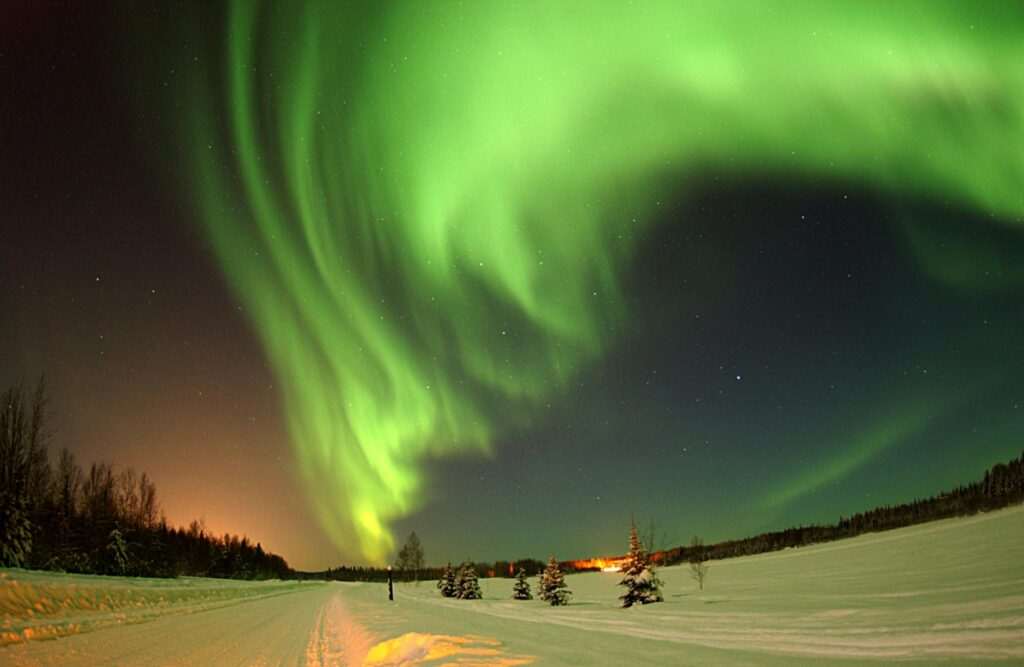
The aurora borealis is one of the most searched reasons to visit Alaska — and one of the most misunderstood. If your plan is to watch the northern lights from your hotel room in downtown Anchorage, you’ll likely be disappointed. The city has real light pollution, and on most nights the glow of streetlights drowns out everything but the strongest displays. But drive 30 minutes in the right direction, and you enter a different world entirely. Anchorage is one of the best-positioned gateway cities in North America for aurora viewing — close enough to multiple dark-sky locations that a spontaneous evening chase is genuinely possible when conditions line up. Here’s everything you need to know to see the aurora in 2026.
When to Go
Aurora viewing near Anchorage is possible from September through March, with the peak window running October through February. This is when nights are long enough and dark enough for sustained viewing. The equinox periods (late September and mid-March) tend to produce elevated geomagnetic activity, making them reliable targets for dedicated aurora chasers.
Summer is a complete write-off. From late May through late July, Anchorage experiences near-continuous daylight (the famous midnight sun), and the sky simply never gets dark enough for aurora to be visible. If aurora is your primary goal, book your trip for autumn or winter without compromise.
Best Viewing Spots Near Anchorage
Hatcher Pass
About 90 minutes north of Anchorage, Hatcher Pass is the go-to destination for serious aurora hunters. At elevation, well away from city lights, and surrounded by open snow-covered terrain, it offers ideal conditions: dark horizons, minimal obstructions, and beautiful foreground elements for photography. The road to the pass can be challenging in deep winter, so check road conditions and go with a vehicle equipped for snow. On a clear night with a KP ≥3, this is as good as aurora viewing gets within reach of Anchorage.
Eklutna Flats
About 30 minutes north on the Glenn Highway, Eklutna Flats sits in an open river valley that gives you wide-open sky with very little light pollution. It’s one of the easiest quick-escape options from downtown — accessible, flat, and with enough room to set up a tripod and wait. This is a particularly good choice for first-timers who want to test the waters without committing to a full mountain drive.
Chugach State Park — Eagle River Area
The back roads and trailheads of Chugach State Park offer multiple dark-sky pockets within 20–30 minutes of downtown. The Eagle River area in particular has pullouts and open terrain where the city glow drops off quickly. In winter, the snow-covered peaks provide a dramatic backdrop. Bring warm layers — temperatures at these elevations can be significantly colder than in the city.
Potter Marsh and Turnagain Arm Pullouts
Heading south on the Seward Highway, the pullouts along Turnagain Arm — including the area near Potter Marsh — offer open western-sky views across the water. On a clear night, the combination of aurora overhead and mountain reflections in the arm can be spectacular. The trade-off: this corridor runs close enough to Anchorage that some glow from the city is visible to the north, and strong displays work better here than faint ones.
Understanding Aurora Conditions
The aurora isn’t a calendar event — it’s driven by solar activity. Two things you need to track:
- KP index: This is the global geomagnetic activity scale, running from 0 to 9. At Anchorage’s latitude (~61°N), a KP of 3 or above is enough for aurora to appear. KP ≥5 produces vivid, dynamic displays that often extend toward the southern horizon. You can track real-time forecasts on SpaceWeatherLive or the NOAA Space Weather Prediction Center.
- Clear sky: Even a KP of 8 produces nothing through cloud cover. Cloud forecasts — especially the Clear Outside app — are as important as the aurora forecast itself. A perfectly clear night with a KP of 3 beats a cloudy night with a KP of 7 every time.
Moon phase matters too. A full moon drowns out faint aurora the same way a streetlight does. Plan around the new moon if you want the darkest possible sky.
Photography Settings
You don’t need a professional camera to photograph the aurora, but smartphone cameras struggle in low light. If you have a DSLR or mirrorless camera, use these settings as a starting point:
- Mode: Full manual (M)
- Aperture: f/2.8 or wider — you want maximum light gathering
- ISO: 1600–3200 (go higher for faint aurora, lower for intense displays)
- Shutter speed: 10–25 seconds (shorter for fast-moving aurora to preserve structure)
- Focus: Manual focus set to infinity — autofocus won’t work in the dark
- Tripod: Non-negotiable. Any camera movement during a long exposure destroys the shot.
Dress warmer than you think you need to. Standing still in sub-zero temperatures for an hour while watching the sky is very different from hiking. Hand warmers for your camera battery are a good idea — cold kills battery life quickly.
Guided Aurora Tours
If you’d rather not self-organize, Aurora Tours Anchorage – Greatland Adventures runs dedicated northern lights tours that handle transportation to the best dark-sky locations, monitor conditions throughout the evening, and offer photography guidance on-site. This is an excellent option if you’re visiting solo, don’t have a winter-capable vehicle, or want to maximize your chances without the research overhead.
Realistic Expectations
The honest truth: aurora is unpredictable. Even with perfect KP and a clear sky, the display might last five minutes or three hours. It might appear as a faint green smudge on the horizon or as ribbons of colour that fill the entire sky. First-time visitors who plan a single night and expect a guaranteed show will sometimes go home disappointed.
The smartest approach is to budget at least three clear nights for aurora viewing. With that runway, your odds of catching a meaningful display are high. Book flexible accommodation, keep an eye on the forecast throughout your trip, and be ready to drive out on short notice when the KP ticks up and the clouds clear. That flexibility is what separates people who see the aurora from people who almost do.


No comments yet.