
Kenai Fjords Without a Boat 2026: Exit Glacier & the Harding Icefield on Foot
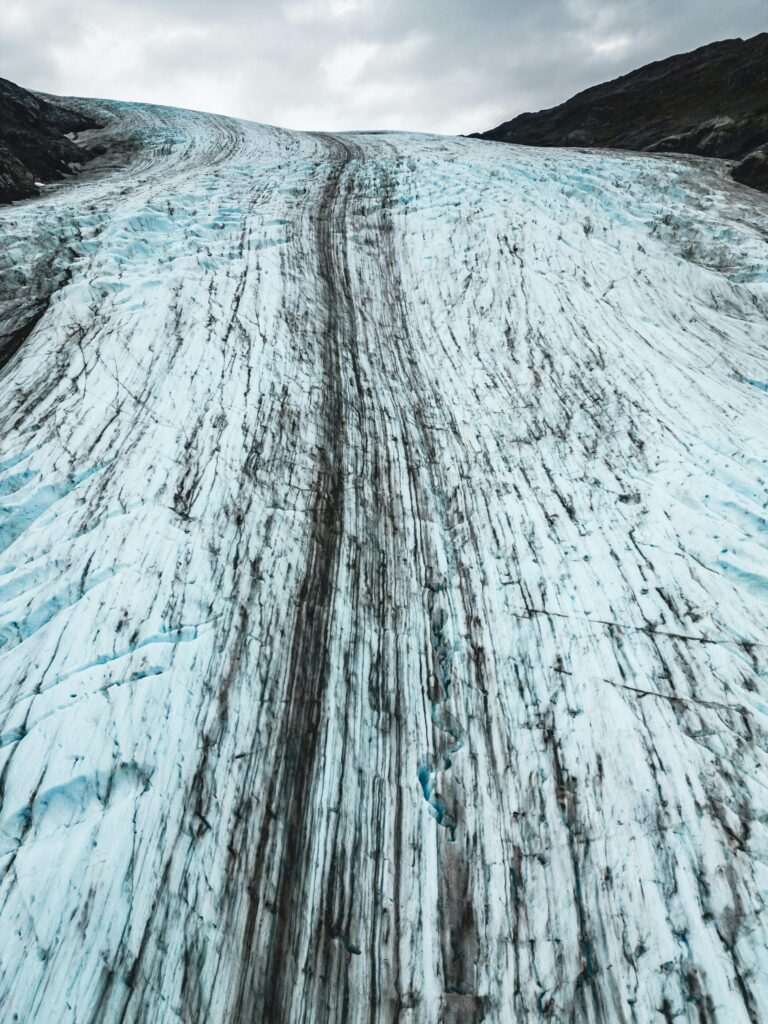
When most people think of Kenai Fjords National Park, they think of boat tours — and for good reason. The fjord boat tours departing from Seward are exceptional, offering tidewater glaciers, puffins, orcas, and wildlife that’s only accessible from the water. But there’s another way to experience the park that most visitors overlook: on foot, at the only road-accessible part of Kenai Fjords. Exit Glacier and the Harding Icefield Trail offer direct, unmediated contact with glacial ice, vast icefield views, and some of the most striking evidence of climate change anywhere in the country — all for free, all reachable by car. You don’t need a boat to have one of the great Alaska experiences.
Getting to Exit Glacier
Exit Glacier sits 12 miles northwest of Seward, at the end of a paved spur road off the Seward Highway. The drive from Anchorage takes about 2.5 hours; the Seward Highway Scenic Drive is beautiful in itself, with Turnagain Arm, beluga whale habitat, and Chugach mountain views along the way. From the Exit Glacier Nature Center parking area, the glacier is visible immediately — a blue-white tongue of ice descending from the Harding Icefield above.
There’s no entry fee to Exit Glacier, no reservation system for the basic trails, and parking is generally available (come early in peak season to guarantee a spot without a wait). The National Park Service operates the Exit Glacier Nature Center from Memorial Day through Labor Day, with exhibits on glaciology, climate change, and the park’s ecology, plus ranger programs that run throughout the day in summer.
The Nature Trail: Glacier Retreat in Real Time
The Exit Glacier nature trail loops through the floodplain below the glacier on a paved and gravel path, passing a series of historical markers that document where the glacier’s edge stood in different years — 1815, 1850, 1900, 1950, 1980, 2005, and more recent dates. The markers are placed where you walk, which means you’re physically moving through the glacier’s retreat over 200 years: what was under hundreds of feet of ice in the early 1800s is now a gravel flat where alder and willowherb are colonizing the bare ground. It’s one of the most viscerally clear demonstrations of climate change you can experience anywhere in the world, and it requires nothing more than walking.
Closer viewing platforms near the glacier’s current edge put you within a few hundred feet of the ice face. The glacier makes noise — cracking, creaking, occasional calving of small ice blocks. The cold air coming off the ice is immediate and palpable even on warm summer days. Rangers in summer can answer questions about glacier dynamics and what the retreat markers mean for the park’s future.
The Harding Icefield Trail: One of Alaska’s Great Day Hikes
If you have the fitness, the time, and a clear weather forecast, the Harding Icefield Trail is one of the most rewarding day hikes in Alaska. The trail climbs approximately 3,000 feet in about 4 miles (8 miles round trip), gaining elevation through forest, then subalpine meadow, then rocky tundra, before emerging onto a high point overlooking the 700-square-mile Harding Icefield — the largest icefield entirely within the United States.
From the high point, Exit Glacier is visible below you as one of many glaciers draining off the icefield — and the scale of the ice above becomes comprehensible in a way it simply isn’t from the valley floor. The Harding Icefield stretches to the horizon in multiple directions, a white expanse punctuated only by “nunataks” — mountaintop rock outcrops poking through the ice. On a clear day (and this hike is only worth doing in clear weather), it’s a view that stays with you.
Practical notes for the Harding Icefield Trail: start early (by 8 AM is ideal to avoid afternoon weather), bring layers for the summit (wind and cold even in July), carry 2–3 liters of water (no reliable water sources on the upper trail), and wear sturdy boots. The trail is steep but not technical. Mountain goats are frequently visible on the cliffs above the glacier — look up from the trail. The descent is knee-intensive; hiking poles are worth their weight.
Wildlife Around Exit Glacier
The Exit Glacier area hosts a concentration of wildlife that rewards patient watching:
- Mountain goats: Year-round residents on the cliffs and rocky faces above the glacier. Most visible from the upper Harding Icefield Trail or through binoculars from the nature trail. They’re adapted to terrain that looks impossibly steep — watching them navigate vertical cliff faces is worth 10 minutes of standing still.
- Black bears: Common in the vegetated flats below the glacier, especially in late summer during berry season. Give them wide berth and make noise on the trail — surprising a bear at close range isn’t advisable for anyone involved.
- Moose: The willow thickets along the access road and in the lower valley are prime moose habitat. Early morning and evening are the best viewing times. Cows with calves in spring require extra distance.
- Marmots and pikas: The rocky areas above treeline on the Harding Icefield Trail are full of both. Pikas in particular make a distinctive “eek” alarm call that carries surprisingly far.
Winter at Exit Glacier
The Exit Glacier access road closes to vehicles in winter, but the road itself — and the trails — remain open for non-motorized use. Skiers and snowshoers make the 12-mile round trip from the highway to the glacier on groomed tracks and packed snow, experiencing a version of the glacier landscape that summer visitors never see. The lower nature trail in winter puts you on snow that fills the same floodplain where alder grows in summer; the silence and compression of a winter glacier visit is extraordinary. The National Park Service permits winter use; check current conditions before heading out, as avalanche terrain exists on the upper trail in winter.
Combining Land and Water for the Full Experience
Exit Glacier and the Harding Icefield Trail give you Kenai Fjords from the inside out — the source of the glaciers, the icefield they drain, the retreat visible on the ground. The boat tours from Seward show you the other end: where the glaciers meet the ocean, where wildlife congregates at the fjord margins, where tidewater ice calves into the sea. They’re genuinely complementary experiences.
Seward Ocean Excursions offers wildlife and glacier boat tours departing from Seward, as does Major Marine Tours. If your schedule allows a full Seward day — Harding Icefield Trail in the morning, boat tour in the afternoon — you’ll see the park from two completely different perspectives and understand both in ways that a single mode of access can’t provide.
But if the boat tour isn’t possible this trip: don’t skip Kenai Fjords. Exit Glacier and the Harding Icefield Trail are extraordinary on their own terms, accessible to any visitor who can walk, and represent one of the most powerful and free outdoor experiences Alaska offers. The icefield will be there, vast and cold and indifferent to your schedule — make the drive.
Photo by Tomáš Malík via Pexels

No comments yet.