
Ice Fishing in Southcentral Alaska 2026: Lakes, Tips & What to Know Near Anchorage
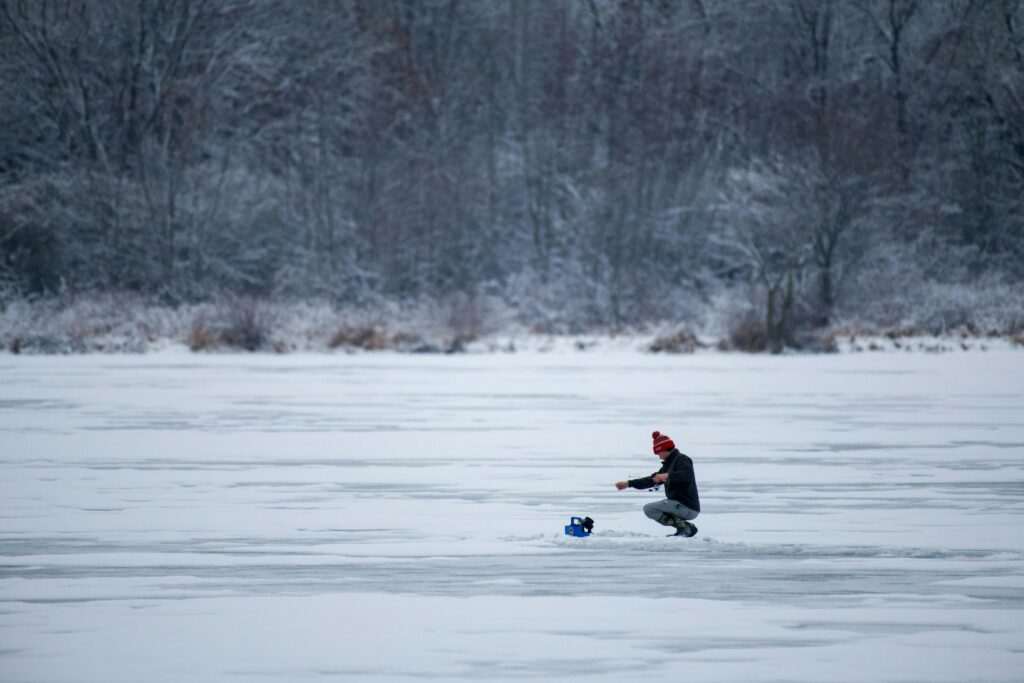
Ice fishing near Anchorage is less exotic than it sounds to visitors from warmer climates — it’s a routine winter activity for tens of thousands of Southcentral Alaska residents, and the infrastructure around it is correspondingly practical. Frozen lakes within city limits, a well-developed gear and guide market, and target species that include rainbow trout, northern pike, and burbot make the Anchorage-to-Matanuska-Susitna corridor one of the most accessible ice fishing regions in Alaska. This guide covers the lakes, the logistics, and what you actually need to get on the ice in 2026.
Ice Fishing Season in Southcentral Alaska
The ice fishing season in the Anchorage area typically runs from late November or early December through mid-March, depending on annual temperatures. Lakes freeze from the top down and reach usable thickness — generally 4 to 6 inches for foot traffic — by mid-December in most years. The Mat-Su Valley lakes to the north of Anchorage freeze more reliably and earlier than the city lakes, which are influenced by urban heat. The deepest and most reliable ice fishing is typically in February and early March before warming accelerates the thaw. Ice conditions vary significantly year to year; checking with local sporting goods shops or the Alaska Department of Fish and Game for current conditions is a standard practice before heading out.
Lakes Within Anchorage: Westchester Lagoon and Cheney Lake
Westchester Lagoon in Midtown Anchorage is one of the most convenient ice fishing spots in the city — accessible by bicycle or foot from downtown, the lagoon is a managed area that receives regular fish stocking and supports a consistent rainbow trout population through winter. It’s a genuinely urban ice fishing experience: the city skyline is visible, and you’ll share the ice with dog walkers, Nordic skiers, and families using it as a skating rink. The convenience factor is high, and for visitors who want to try ice fishing without committing to a Mat-Su Valley day trip, Westchester Lagoon is the right starting point.
Cheney Lake in North Anchorage is a neighborhood lake that sees consistent winter fishing pressure for rainbow trout, with a more residential atmosphere than Westchester Lagoon. Parking is available at the lake’s south end, and the walk to productive fishing holes is short. Neither Westchester Lagoon nor Cheney Lake are considered trophy fisheries — they’re accessible urban options well-suited for beginners or families fishing with younger children.
Jewel Lake and Campbell Lake: South Anchorage Options
Jewel Lake in Southwest Anchorage sits within a neighborhood park and provides another accessible in-city option for winter trout fishing. The lake is stocked with rainbow trout and receives moderate fishing pressure in winter. Access from the surrounding neighborhood is straightforward, and the setting is quieter than Westchester Lagoon. Campbell Lake, adjacent to the Campbell Creek Trail system in South Anchorage, is another neighborhood option with similar stocked trout fishery characteristics. The Campbell Creek Trail corridor connects several of these south Anchorage fishing areas and is accessible by foot or ski in winter.
Mat-Su Valley Lakes: Alexander, Finger, and Byer Lake
The Matanuska-Susitna Borough north of Anchorage — accessible via the Parks Highway, roughly an hour’s drive from the city — hosts the best ice fishing in the Southcentral region. The valley’s larger, colder lakes produce better trophy fish, more reliable ice conditions, and more diverse species than the city lakes. Alexander Lake near Willow is known for burbot, a freshwater cod species that is almost exclusively caught ice fishing and is considered excellent table fare. Finger Lake in the Palmer area receives stocked rainbow trout and sees consistent pressure from Mat-Su residents. Byer Lake near Wasilla is a smaller option good for winter pike fishing.
Lake Lucille and Big Lake
Lake Lucille in Wasilla and Big Lake in the Big Lake community are two of the most popular Mat-Su Valley ice fishing destinations. Lake Lucille, adjacent to Wasilla’s commercial corridor, supports a resident northern pike population and receives convenient access from the surrounding community. Big Lake — a larger body with more open water character — supports pike, rainbow trout, and in deeper sections, lake trout. Big Lake’s ice fishing community has developed snowmobile trails and informal access points that make it a destination for visitors with their own equipment as well as locals. The Hatcher Pass corridor to the north of the Mat-Su Valley adds winter scenic driving and mountain access to a day that starts at the valley lakes.
Target Species: What You’re Fishing For
Rainbow trout are the most commonly targeted species at Anchorage-area city lakes and stocked Mat-Su lakes. They’re active feeders in cold water and respond well to small jigging presentations. Northern pike are the primary sport fish in many Mat-Su lakes — they’re aggressive predators year-round and are one of the few freshwater species that actively attacks larger lures even in mid-winter. Burbot, also called lush or eelpout, are a deep cold-water species caught almost exclusively in winter and are considered exceptional eating — firm white flesh with a mild flavor often compared to lobster when properly prepared. Lake trout are present in the deeper Mat-Su lakes and require heavier jigging tackle and knowledge of the depth contours. Arctic grayling appear in some of the creek and river systems adjacent to the lakes and provide excellent light-tackle ice fishing when accessible.
Alaska Fishing License Requirements
All anglers 16 and older must carry a valid Alaska fishing license while ice fishing. Non-resident licenses run $25 for a one-day license up to $145 for an annual license; resident annual licenses are $29. Licenses are available online through the Alaska Department of Fish and Game website, at REI Anchorage, sporting goods retailers, and through license agents including Walmart, Fred Meyer, and Carrs. The Alaska ADF&G app also supports digital license display, which is accepted in the field. Check the current Sport Fishing Regulations booklet for specific lake rules — some waters have special gear restrictions or reduced bag limits that apply in winter.
Ice Safety Standards
Ice thickness determines what weight the surface can support, and the Alaska standard safety guidelines apply throughout Southcentral. A minimum of 4 inches of clear blue ice supports a single person on foot; 5-7 inches handles small groups; 8-12 inches is required for a snowmobile or ATV. New ice of the same thickness is stronger than older, weathered ice — white or opaque ice has air pockets that reduce load capacity. Ice that has been thawed and refrozen is structurally weaker than ice that formed in a single freeze cycle.
Always test ice thickness with an ice chisel or auger as you move across a lake, particularly on edges, near inflows and outflows, and in areas that receive sun exposure. Carry ice picks — hand-held steel spikes worn around the neck — that allow self-rescue if you fall through. A throw rope and knowing how to use it are basic safety requirements for anyone fishing with a group. City lake ice in Anchorage typically receives safety inspection by municipal parks staff before and during fishing season, but inspection status does not substitute for personal assessment.
Gear Essentials for Alaska Ice Fishing
The minimum gear for a productive ice fishing session in Southcentral Alaska: an ice auger (hand auger handles most city lakes; a power auger is preferable for multiple holes or deeper Mat-Su lakes), jigging rod and reel or tip-up rigs, appropriate terminal tackle for target species, and a method for keeping warm while stationary. An insulated shelter or flip-over tent extends fishing time significantly on cold days and is standard equipment for anyone spending a full day on Mat-Su Valley lakes. A portable propane heater rated for enclosed spaces keeps shelter temperature manageable even in temperatures well below zero.
Alaska Outdoor Gear Rental and REI Anchorage both carry ice fishing equipment and can advise on current conditions and appropriate gear for the target lakes. REI’s Alaska-specific staff tend to have direct fishing experience and are worth consulting for current conditions before any trip to unfamiliar water.
Bait and Lure Recommendations
For rainbow trout through the ice, small jigging spoons in chartreuse or pink (1/16 to 1/8 oz), Rapala jigging raps in size 3-5, and custom-tied Alaska patterns work consistently in stocked lakes. Salmon eggs and PowerBait are popular with beginners for their ease of use. For pike, larger jigging spoons in silver or gold, blade baits, and tip-up rigs baited with live or dead smelt or whitefish produce results — pike will follow vibration and flash in low-light winter conditions. Burbot respond to cut bait (fish flesh) fished near bottom in deep holes, typically at depths of 20-40 feet. Jigging aggressively before pausing triggers reaction strikes from burbot feeding in cold water.
Guided Ice Fishing Tours Near Anchorage
Alaska Fishing Adventures operates guided fishing experiences in the Southcentral region and can provide ice fishing guide services with transportation, equipment, and local knowledge of productive lakes. Guided trips typically cover the Mat-Su Valley lakes and include all gear — an efficient option for visitors who don’t want to acquire or transport ice fishing equipment for a single trip. Chugach Adventures runs multi-activity winter experiences that sometimes include ice fishing components; check their current seasonal schedule for winter offerings. Guided trips are particularly valuable for first-time ice fishing visitors who want species-specific instruction rather than generalizing from open-water fishing experience.
What to Do with Your Catch
Alaska freshwater fish caught in the Anchorage area and Mat-Su Valley are generally safe to eat, with some consumption advisories on pike in specific lakes — check the current ADF&G advisory table for the specific lake before retaining pike for consumption. Rainbow trout from stocked city lakes are clean table fish that clean well and cook simply — pan-fried in butter with garlic is the standard preparation that works consistently. Burbot, which surprises most anglers with its quality, is best prepared by removing the skin (which is tough) and baking or pan-frying the firm white flesh; the flavor genuinely resembles lobster when the fish is fresh and properly handled. Pike bones require knowing the Y-bone removal technique before filleting — a skill worth learning before the trip via video rather than figuring out at the cleaning station in the cold.
Featured photo by Andrew Patrick Photo on Pexels.

No comments yet.