
Best Salmon Fishing Spots in Anchorage for Summer 2026
If you’re planning a trip to Anchorage this summer, you’ve timed it perfectly. The city’s got some of the most accessible salmon fishing in all of Alaska, and you don’t need a boat or a backcountry permit to land a trophy fish. From urban creeks running right through downtown to guided charters out of Turnagain Arm, Anchorage punches way above its weight as a salmon destination.
Here’s your complete guide to fishing salmon in Anchorage for summer 2026 — where to go, when to show up, what to bring, and how to stay legal.
When Do Anchorage Salmon Run?
Anchorage’s salmon season unfolds in two main waves, and knowing which species you’re after changes everything about your timing.
King salmon (Chinook) hit first. The Anchorage-area king run typically peaks from mid-June through late July. Kings are the largest and most prized of the Pacific salmon — mature fish commonly run 25 to 50-plus pounds, and there’s nothing like pulling one out of Ship Creek with the Chugach Mountains rising behind you. It’s genuinely one of Alaska’s most unique fishing experiences.
Silver salmon (Coho) follow in late summer. Coho runs peak from late August through September, and they’re some of the feistiest fighters you’ll find in freshwater. For many anglers, the silver run is the highlight of the Anchorage season — fish are plentiful, the weather’s still gorgeous, and the crowds thin out compared to the king frenzy.
Pink salmon (humpies) also make a strong showing in even-numbered years, and 2026 is an even year. Expect healthy pink runs throughout July and August across most Anchorage-area streams. They’re smaller than kings or silvers, but they’re great for kids or anyone who wants fast action without the pressure of the trophy hunt.
Top Salmon Fishing Spots Near Anchorage
1. Ship Creek — Right in Downtown
You can’t talk about salmon fishing in Anchorage without starting at Ship Creek. It flows right through downtown, within walking distance of hotels, restaurants, and the Alaska Railroad depot. During the June king run, it’s not unusual to see dozens of anglers lined up bank-to-bank under the train bridge, all casting for Chinook.
There’s a dedicated fishing area with paved paths and nearby gear rentals, and guided trips are available for first-timers. The combination of an urban setting and legitimate trophy fishing is something you won’t find almost anywhere else. That said, the fishery is actively managed by the Alaska Department of Fish & Game (ADF&G) — bag limits and emergency orders can shift week to week based on run strength. Check ADF&G’s current regulations at adfg.alaska.gov before every outing.
2. Bird Creek — South Anchorage’s Silver Hotspot
Drive about 25 miles south on the Seward Highway and you’ll reach Bird Creek, one of the most reliable coho producers in Southcentral Alaska. The creek flows into Turnagain Arm, and when the August silver run hits, it gets productive fast.
There’s a state recreation area with parking, restrooms, and easy creek access — it’s beginner-friendly even if it feels more remote than Ship Creek. Bird Creek fishes best on an incoming tide, when silvers stack at the mouth before pushing upstream. Time your visit around the tides and check tidesandcurrents.noaa.gov for Turnagain Arm data.
3. Campbell Creek — Midtown Pink Salmon Action
Campbell Creek meanders through Midtown Anchorage, cutting through parks and the Chester Creek greenbelt. It’s not the spot for trophy kings, but for pink salmon in an even year like 2026, it’s hard to beat for convenience. Accessible from multiple trailheads, it’s ideal for an early-morning session before a full day of exploring the city — and it’s perfect for kids getting their first taste of Alaska fishing.
4. Guided Charters on Cook Inlet and Turnagain Arm
If you’re serious about chasing trophy kings, a guided charter trip is the most reliable path to success. Cook Inlet holds massive Chinook runs, and experienced captains know the tides, the holding water, and the regulations better than anyone. Charter trips typically include rods, bait, and fish processing — you show up, you fish, and you go home with cooler-ready fillets.
Currents in Cook Inlet aren’t something to underestimate, so if you’re new to Alaska’s tidal waters, hiring a guide is the safer and smarter call. Big Time Alaskan Fishing Adventures is one of Anchorage’s most established charter operators, with Captain Barry bringing over 40 years of experience fishing Cook Inlet and Prince William Sound.
Licensing: Don’t Skip This Step
You’ll need a valid Alaska sport fishing license before you cast a single line. Non-resident licenses are available online at adfg.alaska.gov, or at REI, Cabela’s, Fred Meyer, and most sporting goods stores around Anchorage.
For king salmon specifically, you’ll also need a king salmon stamp — it’s a separate purchase on top of your base license. ADF&G enforcement officers actively check licenses at the popular spots during peak season, and it’s not optional. Emergency orders can restrict bag limits or close specific waters with as little as 24 hours’ notice. Check adfg.alaska.gov the morning of every fishing trip.
Gear Tips: Creek Fishing vs. Charter Trips
For urban creek fishing at Ship Creek, Bird Creek, or Campbell Creek, you’ll want:
- A 9–10 foot medium-heavy spinning rod (steelhead-style rods work well)
- 15–20 lb monofilament or braided line
- Chest waders (hip waders work at Campbell and Bird during low water)
- Polarized sunglasses to spot fish in the current
- Your license on your person at all times
For guided charter trips, bring almost nothing — your captain supplies rods, reels, tackle, and bait. You’ll want warm, waterproof layers regardless of the forecast (Turnagain Arm creates its own weather), rubber-soled boots, and seasickness medication if you’re prone to it. Cook Inlet chops up fast.
When to Go: Peak Timing at a Glance
| Species | Peak Window | Best Locations |
|---|---|---|
| King (Chinook) | Mid-June – late July | Ship Creek, Cook Inlet charters |
| Pink (Humpy) | July – August | Campbell Creek, Bird Creek |
| Silver (Coho) | Late August – September | Bird Creek, Ship Creek |
Summer 2026 is shaping up to be a strong season. ADF&G pre-season forecasts have been cautiously optimistic for Southcentral runs, and that’s good news for every Anchorage-area creek.
When you’re not on the water, there’s plenty to explore nearby. The Gasline Trail is a family-friendly multi-use path through Anchorage’s midtown greenbelt — perfect for a rest day between fishing sessions — and the South Fork Eagle River Trail offers stunning alpine scenery in the Chugach just east of the city.
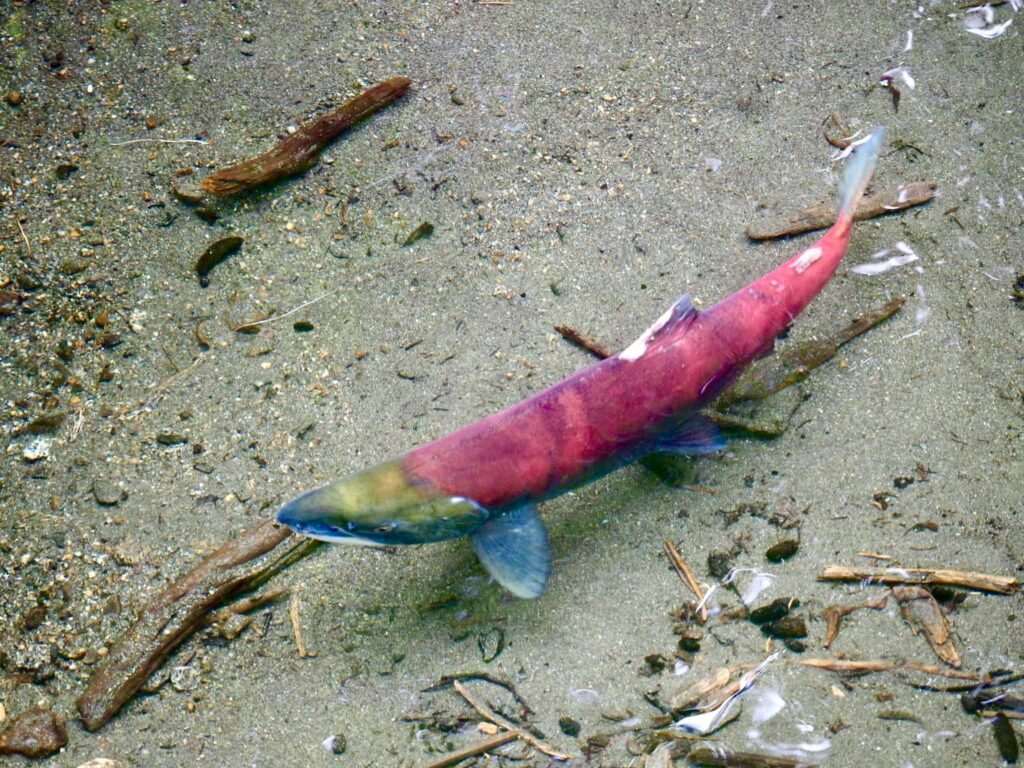
Featured photo: Sockeye salmon in an Alaskan river. Photo via Pexels.


No comments yet.