
Backcountry Skiing & Splitboarding Near Anchorage Alaska 2026
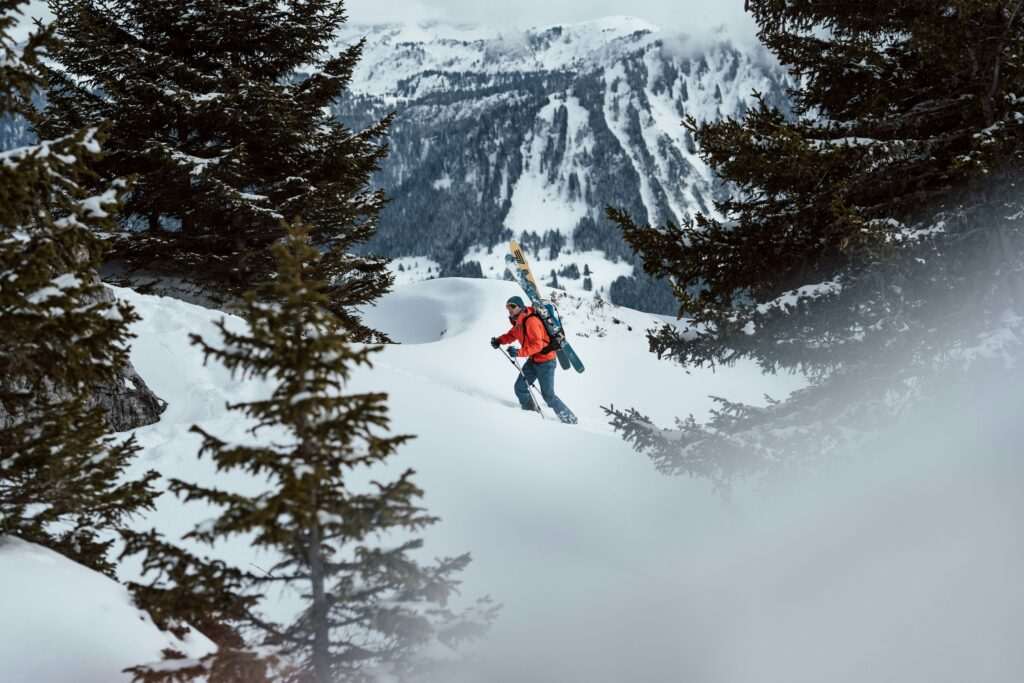
Anchorage’s position at the edge of the Chugach Mountains gives backcountry skiers and splitboarders access to exceptional terrain without long drives to reach it. Within two hours of downtown, Hatcher Pass delivers high alpine bowls and couloirs that draw serious backcountry travelers from across the state. Turnagain Pass, visible from the Seward Highway on the approach to Girdwood, offers some of the most accessible sidecountry and touring terrain in Southcentral Alaska. The Eklutna Glacier corridor and the Chugach Range’s hillside approach routes add more options for those willing to earn vertical. What all of these share: real avalanche terrain, real Alaska consequences, and the need for proper preparation before you go. This guide covers the best zones, the gear requirements, avalanche safety resources, and how to access guided experiences if you’re new to Alaska’s backcountry.
Hatcher Pass — The Primary Backcountry Destination
Hatcher Pass, about 60 miles north of Anchorage in the Talkeetna Mountains, is the dominant backcountry skiing and splitboarding destination accessible from Anchorage. The upper pass sits above 3,000 feet with open alpine bowls, sustained ridgelines, and steep north-facing aspects that hold cold, dry snow well into April. The terrain ranges from low-angle powder fields suitable for beginners earning their first backcountry turns, to sustained 35–45 degree couloirs and ridgeline runs that demand advanced avalanche awareness and technical skiing ability.
The Gold Mint Trailhead and Independence Mine area provide the primary access points. The road to the upper pass is closed by gate in winter, making the lower parking areas the starting point — and adding several miles of travel each way depending on how high the gate sits. Splitboarders and ski tourers skin from the lower areas into the upper bowls, which opens the terrain to anyone with touring gear and the fitness to earn the elevation. The extra effort filters out casual traffic and keeps the upper zones quieter than comparable terrain elsewhere in the region.
Avalanche terrain is pervasive at Hatcher Pass. The steep bowls and corniced ridgelines that make the skiing excellent are the same features that load and release during and after storm cycles. Checking the Alaska Avalanche Center forecast before any Hatcher Pass tour is non-negotiable — the center publishes danger ratings for the Hatcher Pass zone specifically, alongside terrain-specific guidance for the features most likely to be active on a given day.
Turnagain Pass — Accessible Sidecountry and Touring
Turnagain Pass on the Seward Highway, about 60 miles southeast of Anchorage near the junction with the Hope Highway, is Alaska’s most heavily used backcountry skiing zone — and for good reason. The pass sits at approximately 1,000 feet and is surrounded by terrain that rises quickly to 3,000–4,000 feet, with open alpine bowls, treed glades, and sustained ridgelines accessible in a day tour from roadside parking. The combination of easy road access and diverse terrain makes Turnagain the introductory zone for many Anchorage backcountry skiers.
The Tin Can Common area (also called Tin Can Ridge) is the most popular zone at Turnagain Pass, offering everything from low-angle powder meadows to steep sustained lines off the upper ridge. Avalanche terrain is present throughout, particularly on the steeper aspects, and the pass sees significant snowpack variability due to its position at the convergence of storm tracks from the Gulf of Alaska. The Alaska Avalanche Center’s Turnagain forecast zone covers this area specifically.
Alyeska Resort in Girdwood, about 40 miles from Anchorage, provides another approach to Turnagain sidecountry for skiers who want resort infrastructure with backcountry access. The resort’s boundaries open onto backcountry terrain in several directions, and the aerial tram provides uphill access that reduces the touring distance to reach quality terrain. Touring out-of-bounds from a resort requires understanding that resort ski patrol coverage does not extend beyond the boundary markers — all backcountry protocols apply the moment you exit the gate.
Eklutna Glacier and Chugach Hillside Routes
The Eklutna Glacier approach through Chugach State Park north of Anchorage provides a more committing multi-day or long-day objective for experienced backcountry travelers. The terrain in this corridor is bigger and more remote than Hatcher Pass or Turnagain Pass, with glaciated approaches and exposed ridgelines that require glacier travel skills and crevasse rescue competency in addition to standard avalanche gear. This is appropriate terrain for skiers and splitboarders with multiple seasons of Alaska backcountry experience.
The Chugach Range’s hillside directly above Anchorage — accessed from trailheads at Glen Alps, Prospect Heights, and along Upper Huffman Road — offers shorter day-tour objectives on terrain that begins just minutes from the city. The lower sections are relatively low-angle and avalanche-safe; the upper couloirs and bowls above treeline involve real exposure. Many Anchorage backcountry skiers use these hillside routes as training terrain and conditioning objectives in the early season before committing to Hatcher Pass or Turnagain.
Required Gear: No Exceptions
Backcountry skiing and splitboarding in Alaska requires a specific gear set that is not optional. The three non-negotiables for anyone entering avalanche terrain are an avalanche transceiver (beacon), a collapsible probe, and a collapsible shovel — all carried on your person, not in your pack. Burying these items defeats their purpose. Every member of a group must carry all three, and every member must know how to use them before entering avalanche terrain. Partner rescue is only possible if the whole group is equipped and practiced.
Beyond the avalanche safety triad: a touring or splitboard setup with climbing skins is required for uphill travel. Splitboards allow splitboarders to tour uphill in ski mode and descend in snowboard mode — the most practical solution for boarders in technical backcountry terrain. Ski mountaineering (skimo) setups and touring bindings are the ski equivalent. Standard alpine or resort rental setups are not appropriate for backcountry travel.
Additional gear: navigation (map, compass, and GPS — cell service is unreliable in most of these zones), emergency bivy or space blanket, headlamp, first aid kit, high-calorie food and water, and sun protection. Alaska’s high-altitude snowfields in spring generate intense UV exposure even on overcast days.
Avalanche Safety and the Alaska Avalanche Center
The Alaska Avalanche Center (alaskasnow.org) publishes daily danger forecasts for multiple zones across Southcentral Alaska, including Hatcher Pass and Turnagain Pass. The forecasts include danger rating (Low through Extreme on the five-tier North American scale), likely avalanche problems (wind slab, storm slab, persistent weak layer, wet, cornices), and terrain recommendations for the day. Reading the forecast before every tour is a minimum standard, not an optional step.
Beyond forecasts, avalanche education courses provide the skills to read terrain, assess snowpack, and make go/no-go decisions in the field. The American Institute for Avalanche Research and Education (AIARE) Level 1 course is the foundational credential for recreational backcountry travelers. Several Anchorage-based guides and outdoor programs offer AIARE courses through the winter season. Completing a Level 1 before your first serious backcountry day in Alaska is strongly recommended — the terrain doesn’t grade on a learning curve.
Guided Backcountry Options
For skiers and splitboarders new to Alaska’s backcountry, guided tours provide an essential introduction to local terrain, snowpack patterns, and decision-making protocols. Guides familiar with Hatcher Pass and Turnagain Pass have multi-season experience with specific slopes, aspect exposures, and the persistent weak layer problems that recur in Alaska’s snowpack year after year. That institutional knowledge is not something a guidebook or forecast can fully replace.
Alaska Outdoor Adventures and other Anchorage-based guide services offer backcountry skiing and splitboard touring packages, from introductory single-day tours in lower-angle terrain to multi-day objectives for experienced groups. Guided days are particularly valuable in years with complex persistent weak layer problems — conditions when even experienced backcountry travelers benefit from local guide expertise about which zones have manageable snowpack and which should be avoided entirely.
Season and Timing
The core backcountry season near Anchorage runs from January through April. Early season (November–December) can have lean snowpack and unstable early-season weak layers that make backcountry travel hazardous; most local backcountry skiers wait for a stable consolidated base before committing to steeper terrain. January through March is the heart of the season, with cold temperatures preserving dry snow quality and longer daylight building through the period. By late February, day length at 61°N increases noticeably — by April, tours can run well into the evening under extended daylight.
March and April are underrated months for Anchorage backcountry. The snowpack is typically more consolidated and easier to assess than midwinter, corn snow conditions develop on south-facing aspects on warm spring days, and the extended light allows early starts and long days in the mountains. The main hazard shift in spring is wet avalanche activity — warm temperatures trigger natural wet slides, typically in the afternoon, which drives a “ski before noon on south aspects” rule that experienced Alaska backcountry travelers follow in April and May.
Where is the best backcountry skiing near Anchorage?
Hatcher Pass, about 60 miles north of Anchorage, is the primary destination — high alpine bowls, sustained ridgelines, and terrain for all ability levels with a long season into April. Turnagain Pass on the Seward Highway, 60 miles southeast, is more easily accessible and draws the largest crowds, with excellent terrain from low-angle powder meadows to sustained steep lines. Both require avalanche gear and awareness of current snowpack conditions.
What gear do I need for backcountry skiing near Anchorage?
The non-negotiables are an avalanche beacon, probe, and shovel — all carried on your person, with every group member equipped and practiced. You also need a touring or splitboard setup with climbing skins for uphill travel, navigation tools, emergency shelter, and appropriate layering for Alaska winter conditions. Standard resort rental gear is not appropriate for backcountry terrain.
Is backcountry skiing safe near Anchorage?
It can be — with proper preparation. Avalanche terrain is present at all major zones near Anchorage. Check the Alaska Avalanche Center forecast (alaskasnow.org) before every tour, carry and know how to use avalanche rescue gear, and take an AIARE avalanche course before entering serious terrain. Guided tours with local professionals are strongly recommended for skiers new to Alaska’s backcountry snowpack.
When is backcountry ski season near Anchorage?
January through April is the primary season. January–March offers the core winter conditions with cold temperatures and stable consolidated snowpack in good years. March and April extend the season with longer daylight and, in spring, corn snow conditions on south-facing aspects. Some years see skiable terrain into May at higher elevations on Hatcher Pass.
Backcountry skiing and splitboarding near Anchorage delivers terrain that rivals destination resorts — without leaving the road system. Hatcher Pass in February on a low-avalanche-danger day, fresh snow in the upper bowls, no lift lines, no crowds: this is what people come to Alaska for. Earn the elevation, respect the snowpack, carry the gear, and go when the forecast says go. The mountains will be there all winter.
Featured photo by Jack Atkinson on Pexels.

No comments yet.