
Alaska Zoo Anchorage 2026 — Alaska’s Only Zoo & What to Expect
The Alaska Zoo occupies a singular position in the state’s tourism landscape: it is the only zoo in Alaska, and unlike most zoos, it was built around a coherent mission rather than accumulated through decades of acquisition. Every animal at the Alaska Zoo lives here because it belongs in cold climates — the zoo’s collection is restricted to species from Alaska and other subarctic and arctic regions of the world. What that means in practice is that a visit to the Alaska Zoo doubles as a field guide to the animals you might actually encounter in Alaska’s wilderness, plus a handful of extraordinary cold-climate species from Russia, Mongolia, and the Arctic that you are unlikely to see anywhere else in the lower 48 states. For families, wildlife photographers, and visitors who want to calibrate their expectations before heading into Chugach or Denali, the Alaska Zoo is worth two to three hours of your Anchorage time.
Background and Location
The zoo opened in 1969 and sits on 25 acres at 4731 O’Malley Road in south Anchorage, approximately 15 minutes by car from downtown. The campus is not reachable on foot from most hotels or the downtown visitor corridor, so a rental car, rideshare, or organized tour connection is necessary. Parking on-site is free. The zoo is open daily, with summer hours typically running 9 AM to 6 PM and shorter winter hours that vary — verify current schedules at alaskazoo.org before visiting, as hours shift seasonally.
Admission is priced for families: approximately $20 for adults, $15 for seniors, $14 for youth ages 3 to 17, and free for children under 3, at recent rates. Pricing is subject to change; check the zoo’s website for current rates. The grounds are compact enough that the full collection is accessible in two to three hours at a comfortable pace. Picnic areas are available if you want to bring your own food; the zoo also has a café on-site for hot days when you need a break mid-visit.
The Flagship Animals: Polar Bears
The polar bears are the Alaska Zoo’s most iconic residents and the first stop for most visitors. The zoo typically maintains two to four polar bears, and their large enclosure with pools, rocky terrain, and climbing structures gives them room to exhibit natural behaviors. What surprises many visitors is how active polar bears are in cold weather — these are animals that evolved for conditions that would send most zoo visitors indoors, and on Alaska winter days when temperatures drop below freezing, the bears come alive in ways they simply do not in warmer months.
The Alaska Zoo’s polar bear program has a conservation dimension that distinguishes it from purely display-oriented zoo collections. Several of the zoo’s bears came to the facility as orphaned cubs that could not survive in the wild — rehabilitation cases from the Arctic that became permanent residents rather than being euthanized. Understanding that backstory changes how you experience watching the bears. These are not captive-born animals cycling through exhibit rotations; they are specific individuals with known histories, and the keeper staff knows them as such.
The best viewing windows for polar bears are morning, when they tend to be most active, and in cooler weather. Summer afternoons when Anchorage reaches the 60s and 70s are the least optimal time — the bears will often rest in shaded areas. If your visit falls in winter or early spring and you have the flexibility to go on a cold day, the polar bear exhibit in those conditions is among the most memorable wildlife experiences available anywhere in Alaska.
Alaska Native Wildlife
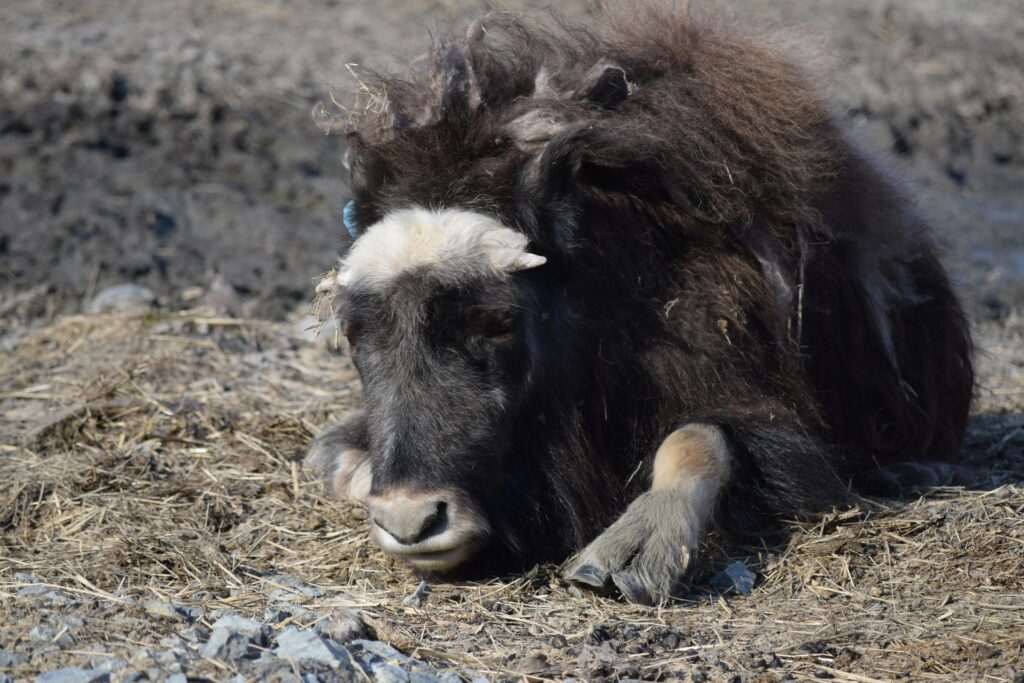
Musk ox are among the zoo’s most visually striking residents. These prehistoric-looking animals — massive, heavily mounded, and draped in the long guard hairs that cover their dense underwool — look like something out of the Pleistocene, which is essentially accurate: musk ox are one of the few large mammals from that era that survived into the modern world. In Alaska, wild musk ox herds exist on the Seward Peninsula and Nunivak Island, but they are not animals that casual visitors encounter. At the Alaska Zoo, you get prolonged close-up views of animals that embody arctic adaptation in its most dramatic visible form. Their qiviut underwool, shed and collected seasonally, is used in Alaska Native craft traditions and produces one of the warmest and softest natural fibers in the world.
Gray wolves are resident in a spacious forested enclosure that allows the pack to move, interact, and display the social behaviors that make wolves so fascinating. In the wild, wolves are rarely seen except at a distance — Denali National Park offers some of the best wolf-viewing opportunities in the world, but a sighting there is never guaranteed. At the Alaska Zoo, you can watch wolves for as long as you want and observe their communication, hierarchy, and movement patterns in detail that no backcountry encounter would allow.
Brown bears and black bears occupy large naturalistic enclosures that prioritize animal welfare over maximum visitor proximity. Both species are present in the Anchorage area — brown bears inhabit the Chugach Mountains just east of the city — but zoo viewing allows for behavioral observation at close range without the safety protocols that govern all wildlife viewing in the wild. For visitors who plan to hike in bear country, watching bear behavior at the zoo provides useful context for understanding the animal you might encounter on the trail.
Lynx and wolverine are among the most rewarding animals at the zoo for the simple reason that they are almost never seen in the wild. Both species are present across Alaska’s interior and boreal forests, but their elusive behavior and low-density populations mean that even experienced Alaska outdoorspeople rarely encounter them. The zoo’s wolverine exhibit in particular attracts visitors who have spent years in Alaska without ever seeing one. Watching a wolverine move — its unusual loping gait, its surprising size and musculature — is genuinely memorable.
Bald and golden eagles are kept in the raptor exhibit as non-releasable birds — individuals that came to the zoo through injury or human imprinting and cannot survive independently in the wild. Both species are common in Alaska, but zoo proximity allows you to appreciate their scale in a way that a distant tree perch or overhead thermal soar does not. The raptor exhibit also houses snowy owls and great horned owls, which similarly benefit from close viewing.
Steller sea lions and harbor seals inhabit a water-centered exhibit that is popular with younger visitors. Both species are common in Alaska’s coastal waters, but seeing them from a boat or beach provides a very different experience from watching them underwater through viewing panels or at platform level during feeding sessions.
International Cold-Climate Species
The Alaska Zoo’s mission of cold-climate focus extends beyond Alaska-native species to include remarkable animals from subarctic regions worldwide. The Amur leopard and Amur tiger are among the rarest animals at the zoo by conservation status — both species inhabit the Russian Far East and are considered critically endangered, with wild populations estimated in the low hundreds. Seeing an Amur leopard at the Alaska Zoo is, practically speaking, one of the few opportunities most people will ever have to see one at all.
Bactrian camels, yaks, and Siberian reindeer round out the central Asian and Siberian cold-climate ungulate collection. These animals share evolutionary strategies with Alaska’s caribou and musk ox — heavy insulation, efficient metabolisms, adaptations for extreme cold — and seeing them together on the same grounds reinforces the zoo’s coherent theme of life in cold places. For children especially, the variety of ungulates from different world regions provides an unusual comparative perspective that a geographically scattered zoo would not deliver.
Special Programs
Twilight Tours, offered on summer evenings, are guided experiences timed for dusk when nocturnal and crepuscular animals shift into active periods. The tours run on a scheduled basis and need to be booked in advance; check the zoo’s calendar. For visitors staying multiple days in Anchorage, the Twilight Tour makes for an evening activity that uses the extraordinary late-summer daylight productively.
Animal keeper talks are scheduled throughout the day during peak season and take place at individual enclosures. The keepers know their animals individually and bring specific behavioral observations and conservation context that exhibit signage cannot provide. Arriving at the zoo with the day’s talk schedule in hand — available at the entrance or on the website — and planning your walk around the talks will significantly enrich your visit.
Winter visits deserve special mention. The Alaska Zoo is open year-round, and many of the zoo’s species are genuinely more active in cold weather. Polar bears in snow, wolves moving through a frosted enclosure, and musk ox in winter coats are different experiences from summer visits. Anchorage locals often cite the zoo in winter as underappreciated, and the significantly reduced crowds are an additional benefit.
Combining the Zoo with Other South Anchorage Stops
The Alaska Zoo’s location on O’Malley Road in south Anchorage places it near several complementary stops. The Glen Alps trailhead for Chugach State Park is approximately 10 minutes away and provides access to the Flattop Mountain trail — Anchorage’s most-climbed mountain — and the Powerline Pass trail system. A morning at the zoo followed by an afternoon hike in Chugach makes for one of the better full-day itineraries available in the Anchorage area. The Dimond Center mall, also in south Anchorage, is a practical stop for gear or provisions if needed.
For visitors with children, the zoo pairs naturally with a subsequent afternoon at Kincaid Park‘s playground and beach area or at the Anchorage Museum‘s Discovery Center downtown. The zoo is timed well for morning visits when animals are most active; afternoon museum visits take advantage of the indoor setting during the warmer part of the day.
The Alaska Zoo delivers something genuinely uncommon: a concentrated encounter with the animals that define Alaska’s wilderness, on their terms, in a setting designed around their comfort in cold climates. For visitors who spend their Alaska trip hoping for a wild grizzly sighting or a distant wolf howl, the zoo provides the close-up context that makes the wilderness experience more meaningful when it comes.


No comments yet.