
Alaska Winter Driving Guide 2026: Roads, Conditions & What Every Visitor Must Know
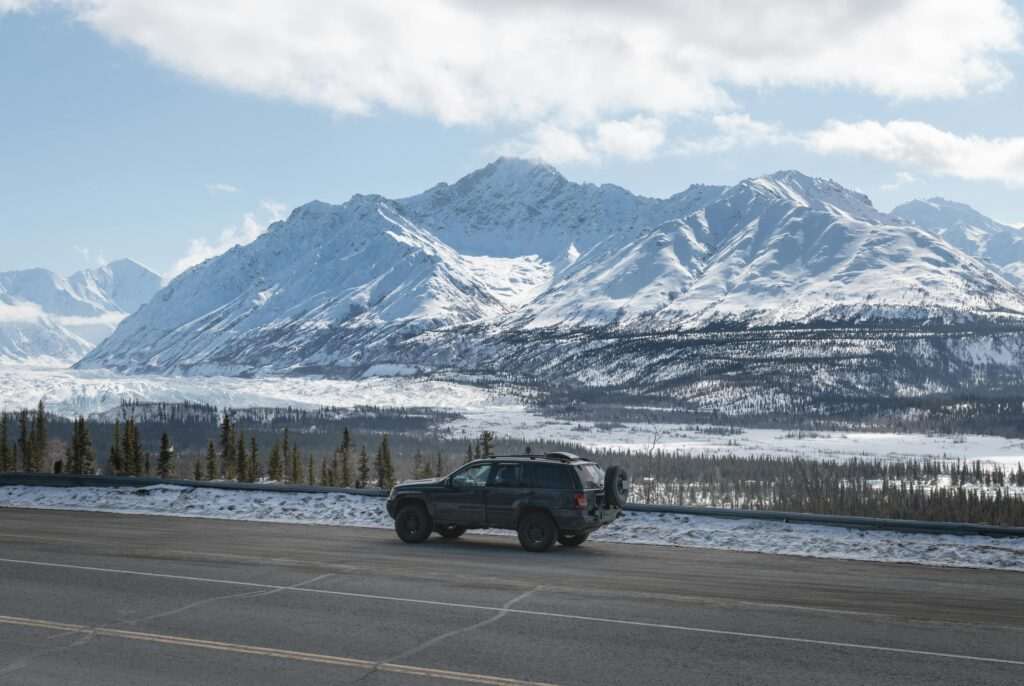
Alaska in winter is beautiful, remote, and genuinely dangerous if you’re behind the wheel of a rental car with out-of-state experience and no preparation. The state’s highway system covers enormous distances between services, temperatures routinely drop below zero, and road conditions can go from cleared pavement to sheet ice within a mile. Visitors who treat Alaska’s winter roads like winter roads anywhere else in the United States sometimes don’t make it to where they were going.
This guide covers what you need to know before you drive in Alaska between October and April. Read it, then drive carefully.
The High-Risk Corridors
Seward Highway
The Seward Highway connects Anchorage to the Kenai Peninsula, running 127 miles through some of Alaska’s most dramatic and most treacherous winter terrain. It is consistently ranked among the most dangerous roads in Alaska, and in winter, that ranking is earned.
The most hazardous section runs along Turnagain Arm — the narrow tidal inlet south of Anchorage where the road is cut into a cliff face with the arm on one side and mountain walls on the other. Avalanche chutes cross the road at multiple points. Winds can be severe enough to push vehicles. Black ice forms on the shaded sections without warning. And Dall sheep, moose, and other wildlife step onto the road at any hour, particularly at dawn and dusk.
The Seward Highway also passes through the Portage Valley, one of the most avalanche-active areas in Alaska. Highway closures due to avalanche control or slide activity are common in winter — sometimes for hours, occasionally longer. Always check conditions before driving this route.
Glenn Highway
The Glenn Highway runs northeast from Anchorage toward Glennallen and the Richardson Highway, passing through the Matanuska-Susitna Valley and the Chugach Mountains. The section through Matanuska Glacier country involves significant elevation changes, multiple avalanche zones, and sections that ice heavily in cold weather. Less traveled than the Seward Highway but no less demanding in winter.
Studded Tires: The Most Important Decision You’ll Make
Alaska law permits studded tires from October 1 through April 30. They are not required — but on icy roads, the difference between studded and non-studded tires is the difference between stopping and not stopping.
Most rental car companies equip their fleets with all-season tires, not studded tires. Some offer studded tire upgrades for winter rentals; ask explicitly when booking, not when you pick up the vehicle. Major rental counters at Ted Stevens Anchorage International Airport may have limited studded inventory — pre-arrange or prepare to drive on all-seasons.
In practical terms: all-season tires are adequate on cleared, sanded pavement. On black ice or packed snow, they are not. If your itinerary takes you on the Seward Highway, the Glenn Highway, or into the interior in mid-winter, the upgrade to studded tires is worth every dollar.
The 511 Alaska Road Conditions System
Check it before every drive beyond Anchorage’s urban core. Dial 511 from any phone in Alaska, or use the 511 Alaska app (free, iOS and Android). The system provides real-time highway conditions, current closures, camera feeds at key points along major highways, and avalanche closure information.
Road conditions in Alaska can change rapidly — a clear highway at 8 a.m. can be treacherous by noon if temperatures drop and roads freeze before sanding crews respond. The 511 system is updated continuously. This is not optional preparatory reading; it is a tool you should use every time you leave Anchorage for a highway drive in winter.
Black Ice: The Invisible Hazard
Black ice forms when liquid water or refreezing slush creates a transparent layer of ice on pavement that looks identical to wet road. It appears without visual warning and offers almost no traction. Drivers who have never encountered it frequently don’t realize what they’re on until they’ve already lost control.
Black ice is most common on shaded sections of road (where sunlight doesn’t reach to melt or dry the surface), on bridges and overpasses (which freeze from both above and below), on road sections where runoff crosses the pavement, and in early morning hours before temperatures rise. The Turnagain Arm section of the Seward Highway generates particularly severe black ice in cold weather due to its orientation and the moisture coming off the inlet.
If you feel the vehicle lose traction suddenly on a surface that didn’t look icy, ease off the accelerator without braking hard, steer gently in the direction you want to go, and slow gradually. Overcorrection and hard braking on black ice cause most spin-outs.
Avalanche Closures
Alaska DOT manages avalanche control on high-risk highway corridors, including artillery firing on avalanche chutes above the Seward Highway in the Portage area. Closures for control work or actual slide activity can last from one hour to most of a day. If you’re planning a same-day round trip to Seward in winter, build in significant time buffer for potential closure delays — or be prepared to wait it out in Girdwood or Portage.
The Richardson Highway between Valdez and Glennallen is another avalanche-affected corridor, particularly through Thompson Pass near Valdez — one of the snowiest places in Alaska, regularly recording over 500 inches of snowfall annually. Never attempt this section in deteriorating conditions without checking 511 first.
Driving in Darkness
In late November and December, Anchorage sees fewer than six hours of daylight. By mid-December, sunrise is after 10 a.m. and sunset is before 4 p.m. Any highway drive that involves any distance will include substantial time driving in full darkness, even at normal business hours.
Two practical implications: First, keep your headlights on at all times — not just for your own visibility, but so oncoming drivers on narrow roads can see you against dark mountain backgrounds. Second, wildlife-vehicle collisions peak at dawn and dusk, both of which may occur during normal commuting or travel hours in winter. Moose are the primary hazard — they’re large, dark, and invisible against dark treelines until your headlights hit them. Drive below the posted speed in areas with dense spruce forest or willow thickets flanking the road.
Your Emergency Kit: Non-Negotiable
A breakdown on the Seward Highway or the Glenn Highway in January at minus-twenty degrees is not an inconvenience. It is a life-threatening emergency. Cell coverage along many highway corridors is unreliable or nonexistent. Response times for highway assistance can be measured in hours.
Every vehicle driven in Alaska between October and April should carry:
- Jumper cables or a jump-starter pack — cold kills batteries, and a dead battery at a remote trailhead is common
- A shovel — for digging out of a ditch or snowbank
- Sand or kitty litter — for traction under spinning tires
- Wool blankets or a sleeping bag — hypothermia protection if you’re stranded
- Extra food and water — enough for 24 hours per person in the vehicle
- A flashlight with extra batteries or a headlamp
- Hand warmers — chemical warmers that activate without electricity
- A first-aid kit
- An ice scraper and brush — obvious but often not in rental vehicles
Rental cars almost never come stocked with any of this. Stop at a Fred Meyer or Walmart in Anchorage before leaving the city on a winter highway drive and spend thirty minutes and a modest amount of money assembling the kit. You will almost certainly not need it. The people who needed it and didn’t have it are the ones who became statistics.
Speed Limits Are Not Winter Minimums
Posted speed limits in Alaska reflect safe speeds under ideal conditions. In winter, the legally and morally correct speed is whatever speed allows you to stop safely given actual road conditions — which is routinely 20–30 mph below the posted limit on icy roads. Law enforcement and courts do not treat “I was doing the speed limit” as a defense in winter crashes; the standard is reasonable speed for conditions.
Leave significantly more following distance than you would in summer. Alaska DOT sanding trucks work continuously in winter, but coverage is uneven. Sections of highway that look dry can hide ice; sections that look icy can be dry. Treat unknown surfaces with caution until your tires tell you otherwise.
Chain Requirements and Rental Car Policies
Alaska does not routinely mandate tire chains the way some other states do in mountain passes, but individual highway closures or conditions can prompt chain requirements at the discretion of DOT. If chains are required, you’ll be stopped before the affected section.
More relevant for visitors: many rental car companies void their coverage — including collision damage waiver — for driving on unpaved roads, regardless of conditions. In winter, this matters because some access roads to popular trailheads, campgrounds, and recreation areas are gravel or unimproved, and may be in worse condition than paved highways. Read your rental agreement before you leave the lot, and call the company if you have any question about coverage on a specific route.
Alaska winters are not a deterrent. They’re part of the experience — dark, cold, dramatic, and navigable with preparation. Know the roads, check 511, build your kit, and drive to the conditions. The state has been worth the drive since long before anyone had GPS.

No comments yet.