
Alaska King Crab Dining Guide 2026: Where to Eat the Best Crab in the State
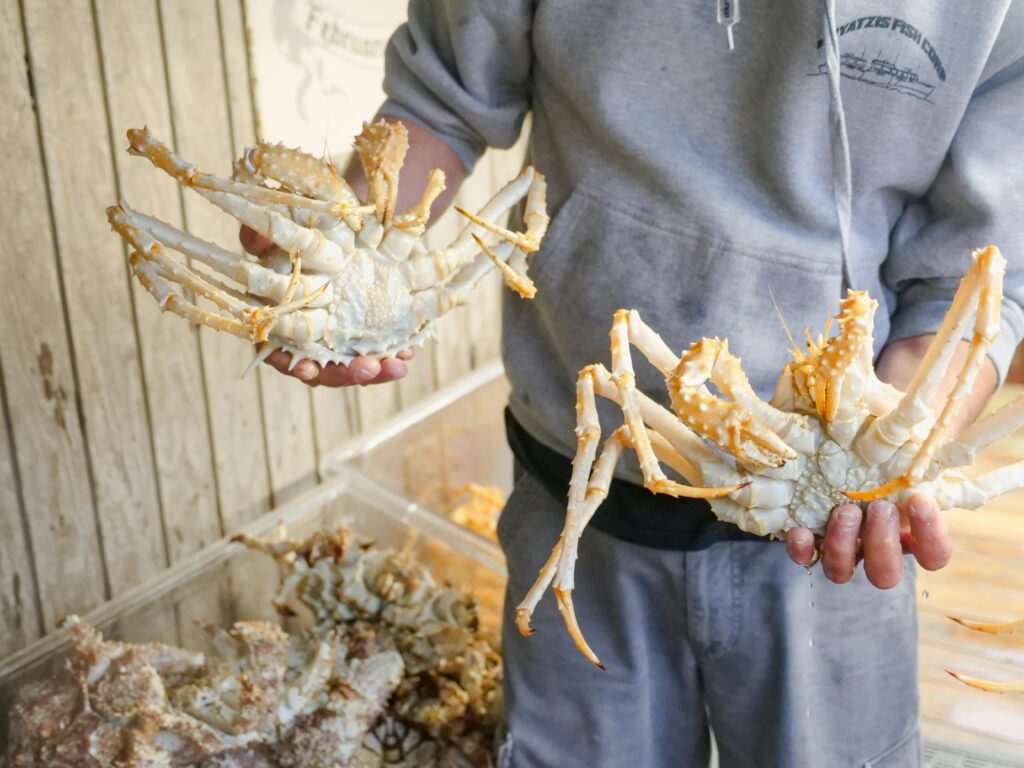
Alaska king crab is one of those ingredients so associated with its place of origin that eating it anywhere else amounts to a different food. The king crab served at upscale restaurants in New York or Tokyo arrived frozen, often more than once, and cooked from a state that strips much of what makes fresh Alaska crab exceptional. The legs that come out of a tank in Juneau, boiled the same afternoon the boat tied up, have a sweetness and texture that the frozen version can approximate but never replicate. One of the most compelling reasons to eat in Alaska — beyond the scenery and the experience — is that the seafood is simply better here, and king crab is the most dramatic illustration of that principle.
The Three Species
Three king crab species are commercially harvested in Alaska waters, and understanding the differences helps explain both the price variation and the seasonal availability.
Red king crab is the species most people picture when they think of Alaska king crab: large, meaty legs with sweet, firm white flesh and the characteristic red coloring that deepens when cooked. The Bering Sea red king crab fishery, centered around Bristol Bay, is the most valuable single-species crab fishery in the United States. Red king crab legs are the largest and most prized; they command the highest prices and represent the benchmark against which all other crab is measured.
Blue king crab is rarer and arguably superior in flavor — a distinction debated with genuine passion among Alaska crab enthusiasts. The blue king is harvested near the Pribilof Islands and in smaller quantities near Kodiak and Southeast Alaska. Its meat is slightly sweeter and more delicate than red king, with a finer texture. Because the harvest is smaller and distribution more limited, blue king crab is less commonly found on restaurant menus, but when it appears, it deserves the higher price.
Golden (brown) king crab is harvested across the Aleutian chain and in Southeast Alaska. It is smaller than red or blue king and has a milder, slightly briny flavor profile. Golden king is more affordable and more consistently available through the year. For visitors who want to eat king crab without the premium price of a full red king leg, golden king is an excellent and honest alternative.
Why Alaska Crab Tastes Different
The flavor difference between Alaska crab eaten in Alaska and frozen crab purchased elsewhere comes down to two variables: time and freezing cycles. Live king crab held in temperature-controlled seawater tanks goes from boat to boiling pot within hours of landing. Crab that will be shipped out of state is cooked, frozen at sea or dockside, stored, transported, and often thawed and refrozen in distribution. Each freeze-thaw cycle degrades the texture of the meat and reduces the sweetness that makes fresh king crab extraordinary. In Alaska, the chain from harvest to plate is as short as it gets, and the difference is not subtle.
The water temperature also matters. Alaska’s cold, nutrient-rich Pacific waters produce crab that feeds on an exceptionally rich diet, contributing to the flavor complexity that Alaska-harvested crab has always had. The combination of cold water, wild-caught diet, and near-zero transit time creates a product that is genuinely not the same as what you get at a mainland grocery counter.
Where to Eat King Crab by Region
Anchorage has the state’s widest selection of seafood restaurants with daily fresh crab deliveries from Kodiak and Bristol Bay. The Glacier Brewhouse in downtown Anchorage is among the city’s most celebrated restaurants and maintains Alaska king crab on its menu through the season, prepared simply in ways that let the quality show. Simon & Seafort’s Saloon & Grill has been the city’s canonical special-occasion seafood destination for decades, with a Cook Inlet view and a menu anchored in Alaska’s fishing tradition. Both restaurants price king crab honestly — by the leg or the pound, at rates that still represent a significant discount from what the same product costs in the lower 48.
Juneau has Tracy’s King Crab Shack on the waterfront, which has become arguably the most famous crab operation in Alaska among visitors. The shack operates steps from where commercial fishing boats unload, offers whole crab legs cooked to order in a casual outdoor setting, and has earned a reputation for freshness and simplicity that more formal restaurants rarely match. The line can be significant during peak cruise season; arriving early or late in the day helps. Eating a king crab leg at a picnic table on the Juneau waterfront while a float plane departs across the channel is an Alaska experience with few equivalents.
Homer is where the Kenai Peninsula’s commercial fishing fleet lands, and the Homer Spit in summer is one of the most productive places in Alaska to buy fresh crab directly from the boats. Several small stands and tanks operate on the spit selling live and freshly cooked crab. The dock area restaurants offer crab in a setting that is genuinely dock-adjacent — you can watch the boats come in while you eat. Homer also has the Salty Dawg Saloon tradition and a cluster of waterfront restaurants that take the local catch seriously.
Kodiak is the source. Kodiak Island’s commercial fishing economy is built around king crab and other shellfish, and eating crab in Kodiak means eating it at the landing point. The island has fewer tourist-facing restaurants than Juneau or Homer, but the crab you eat there traveled the shortest possible distance from the water to the plate. For visitors making the Kodiak ferry crossing or flying in for fishing, eating at the dockside restaurants is part of the trip’s purpose.
Buying Fresh Crab to Take Home
10th & M Seafoods in downtown Anchorage is one of Alaska’s best-known retail seafood markets, selling fresh and frozen king crab, halibut, salmon, and other Alaska species directly to the public. The shop ships product nationwide and is a standard stop for visitors who want to bring Alaska seafood home. Prices are considerably lower than what the same frozen product costs at mainland specialty retailers, and the quality documentation — species, harvest location, packing date — is reliable.
On the Homer Spit, buying live crab directly from the boats is possible during the summer season; the vendors there will pack your purchase for travel in a cooler that can be checked on the flight home. Alaska Airlines and other carriers serving Alaska allow live and fresh seafood in checked luggage within standard size and weight limits. The practical result is that crab purchased at 9 AM on the Homer Spit can be on your dinner table in Seattle or Denver the same evening.
Season, Availability, and Pricing
Red king crab season in the Bering Sea typically runs October through January, with specific dates set by the Alaska Department of Fish and Game based on annual stock assessments. The harvest is quota-managed to protect population sustainability, and recent years have seen significant quota reductions as the fishery management responds to climate-driven changes in crab abundance. Restaurant availability of fresh red king crab peaks in winter and spring; summer visitors will often find last season’s frozen product or the more readily available golden king.
Pricing is transparent but not cheap. In Alaska, expect to pay $60–$100 per pound for red king crab legs at restaurants, and $40–$70 per pound at retail fish markets for take-home frozen. These prices are 30–50% below what the same product commands at comparable restaurants in major U.S. cities — a genuine discount that reflects proximity to source. Blue king, when available, commands a premium over red; golden king typically runs $20–$40 less per pound.
Crab and the Alaska Resource Economy
Every Alaskan resident receives an annual Alaska Permanent Fund Dividend — a direct payment from the state’s resource royalty fund, built primarily from oil revenues but representative of a broader principle: Alaska’s natural resources belong to its residents, and the commercial harvest of those resources generates public wealth. The commercial crab fishery contributes to this framework through state landing taxes, license fees, and the broader economic activity it creates in fishing communities from Dutch Harbor to Kodiak. When an Alaska visitor pays $80 for a plate of king crab legs, a fraction of that transaction flows back into the economic system that keeps fishing communities operational and Alaska’s resource management funded. Eating king crab in Alaska is, in a small way, participating in the economy that makes the fishery possible.
Photo: Kindel Media / Pexels

No comments yet.