
Alaska Ice Fishing 2026: Best Lakes & Guided Trips Near Anchorage
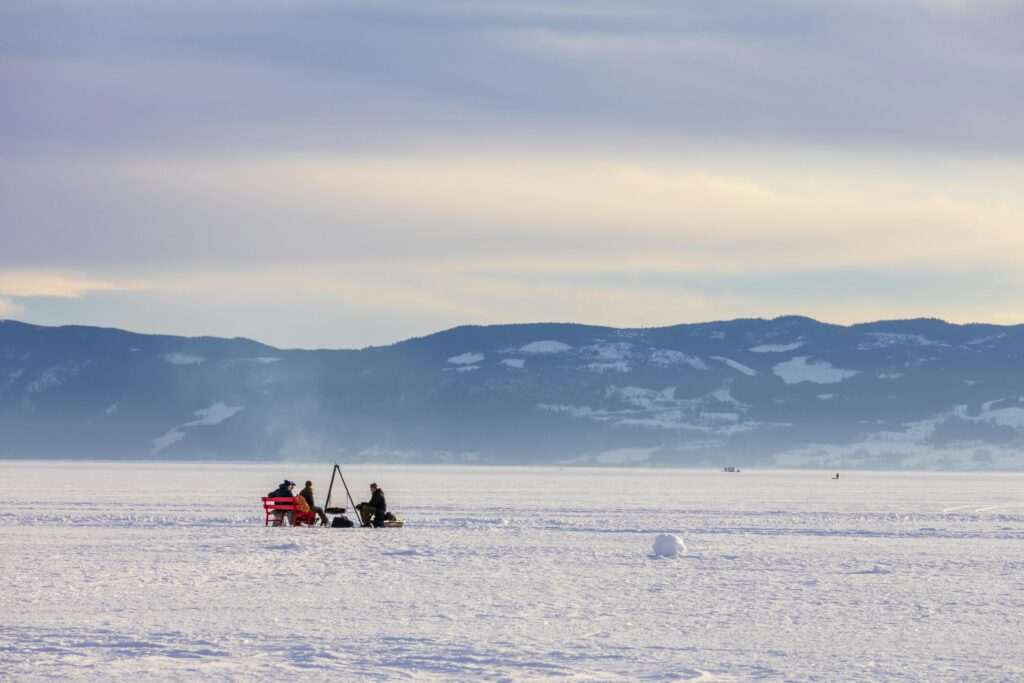
Anchorage freezes its lakes every winter, and Alaskans drill holes in them. Ice fishing is one of the state’s quieter winter traditions — less dramatic than dog mushing, less adrenaline-driven than backcountry skiing, but deeply embedded in the way Alaskans actually use the winter months. For visitors, it is also one of the most accessible winter activities available near the city: several productive lakes are within 15 minutes of downtown, gear can be rented or borrowed, and guided trips make the experience available to complete beginners. This guide covers the lakes, the fish, the season, and what you need to show up ready.
Top Ice Fishing Lakes Near Anchorage
Jewel Lake — Located in southwest Anchorage off Dimond Boulevard, Jewel Lake is the most popular urban ice fishing destination in the city. The lake is stocked annually with rainbow trout by the Alaska Department of Fish and Game, producing catches for anglers of all skill levels throughout the winter. A small parking area on the west side of the lake provides easy access; the ice fishing area is a short walk from the lot. Because it is in a residential neighborhood and heavily fished, Jewel Lake is ideal for first-timers: the lake is manageable in size, the fish are aggressive, and other anglers are usually present who can offer informal guidance on what is working.
Cheney Lake — A 16-acre lake in east Anchorage near the University of Alaska Anchorage campus, Cheney Lake offers good rainbow trout fishing in a park setting with maintained trails around the perimeter. The lake is regularly stocked and manages consistent catch rates. Access is via Tikishla Park, which has parking and restrooms open during winter months. Cheney Lake is shallower than Jewel Lake and warms up slightly faster in early spring, which affects ice thickness — always verify conditions before venturing out.
Mirror Lake — Located in the Chugiak area north of Anchorage, Mirror Lake Metro Park is a larger body of water that produces arctic char and rainbow trout through the ice season. The park has a developed boat launch and parking area. Because it is larger, Mirror Lake offers more space for multiple anglers without crowding, and the fish populations tend to run slightly larger than the urban lakes closer to the city center.
Eklutna Lake — Forty miles north of Anchorage in the Chugach State Park system, Eklutna is the largest lake in the area and requires more commitment — it is 12 miles long and accessed by road from the Parks Highway. The lake holds Dolly Varden, rainbow trout, and burbot. Burbot (also called lush fish) are unique to deep cold-water lakes and are caught almost exclusively in winter; Eklutna is one of the best accessible burbot fisheries in Southcentral Alaska. The ice can be extremely thick here — 2–3 feet in January and February — and a quality ice auger is essential.
Target Species
Rainbow trout are the primary target at the urban Anchorage lakes and the most beginner-friendly species. Stocked fish average 12–18 inches in the city lakes; wild fish in Eklutna run larger. They bite jigs, small spoons, and bait (salmon eggs, PowerBait) consistently through the ice season. Arctic char — closely related to Dolly Varden — inhabit the colder mountain lakes and fight hard for their size; they are especially active in low-light conditions and respond well to small bright jigs. Burbot, Alaska’s only freshwater cod species, are nocturnal bottom feeders best caught after dark with tip-up rigs and bait on the lake floor. They are exceptional table fare — mild, white, flaky — and underutilized by most ice anglers who have not tried them.
Season and Ice Safety
The Anchorage area ice fishing season generally runs from late November through mid-March, depending on the severity of each winter. Minimum safe ice thickness guidelines published by the Alaska Department of Fish and Game:
- 4 inches — minimum for a single angler on foot
- 6–8 inches — safe for small groups of anglers
- 10–12 inches — minimum for snowmobile or ATV
Always check ice thickness yourself at multiple points rather than assuming conditions from recent reports. Urban lakes — particularly Jewel and Cheney — can have variable thickness due to inflow currents, springs, and patches of aerated water. Carry ice picks (personal flotation picks worn around the neck) and know that if you break through, you should kick horizontally to get back onto solid ice rather than trying to pull yourself straight up. Fish with at least one other person when conditions are uncertain, and never venture onto ice less than 4 inches thick regardless of whether others are present.
Current ice conditions are posted by the Anchorage Parks and Recreation department on their website during the winter season. The ADFG Sport Fish Information Line (1-877-475-2875) also reports conditions at stocked lakes.
Alaska Fishing License Requirements
All anglers 16 and older require a valid Alaska fishing license for ice fishing. Non-resident license costs for 2026 run approximately $25/day or $105 for the full year (confirm current pricing at ADFG.alaska.gov). No king salmon stamp is required for ice fishing, as king salmon are not present in the winter urban fisheries. The Anchorage area lakes covered in this guide do not require special access permits beyond the general fishing license. Licenses are available online through the ADFG website, at Fred Meyer and Walmart locations in Anchorage, and at sporting goods retailers including Bass Pro Shops and REI.
Gear Checklist
- Ice auger: Hand auger (6–8 inch diameter) for most urban lakes; a power auger significantly reduces effort on thick late-season ice at Eklutna. Augers are available for rent from some outfitters.
- Ice fishing rod: Short (24–32 inch) ultralight or light rod with a spinning reel spooled with 4–6 lb monofilament or fluorocarbon.
- Jigs and bait: Small tungsten jigs (1/64–1/8 oz) in chartreuse, pink, and white for trout and char. Salmon eggs, PowerBait, and wax worms as bait. Small spoons for burbot.
- Tip-up rigs: For passive fishing, particularly effective for burbot at night.
- Ice skimmer/ladle: To clear ice chips from the hole as you drill and as the hole refreezes.
- Bucket or sled: For sitting on (insulated bucket) and carrying gear across the lake surface.
- Ice picks: Safety essential — wear around the neck, not stored in a pack.
Guided Ice Fishing Trips
Several Anchorage-area outfitters run guided ice fishing trips from December through February, covering both the urban lakes and more remote destinations reachable by snowmobile or ski plane. Guided trips provide all equipment — auger, rods, bait, and typically a heated shelter or tent over the holes — and include instruction for beginners. For visitors who want the experience without investing in gear or without local knowledge of which lakes are currently fishing well, a guided day is the most reliable option.
Guide services vary in what lakes they access and the experience level they target; some focus specifically on families and beginners at Jewel or Cheney Lake, while others offer backcountry trips to remote lake systems for experienced anglers. Contact local outfitters and the Anchorage Convention and Visitors Bureau for a current list of licensed guide services operating in the area.
First-Timer Tips
Dress in more layers than you think you need. Standing still over a hole in sub-zero temperatures chills the body much faster than active skiing or hiking. The standard approach is base layer (moisture-wicking), mid layer (fleece or down), and a wind/waterproof outer shell. Insulated and waterproof boots rated to -40°F are not overkill for January fishing — chemical hand warmers in gloves and pockets are a standard supplement. Bring a thermos of hot liquid; dehydration is common in cold weather and hot coffee or tea significantly improves the experience.
Arrive at the lake early. Urban lakes like Jewel fill with anglers on weekend mornings, and the best holes near the inlet channels — where fish stage in oxygenated water — are claimed by regulars before 8 AM. Weekday mornings offer the most open ice.
Keep fish alive in a bucket with lake water until you are ready to leave, then dispatch and bag them. In cold weather, fish placed directly on the ice freeze within minutes and are damaged by freezing and thawing. A small insulated bag keeps your catch in better condition for the drive home.
Ice fishing near Anchorage is one of the most genuinely Alaskan winter experiences available to visitors — no snowmobile required, no backcountry access, just frozen water, a hand auger, and the particular satisfaction of pulling a rainbow trout through a hole in the ice. The city makes it easy. Dress warm and show up.
Featured photo by Surdu Horia on Pexels.

No comments yet.