
Alaska Helicopter Tours 2026: Glacier Landings, Bear Viewing & Denali Flightseeing Compared
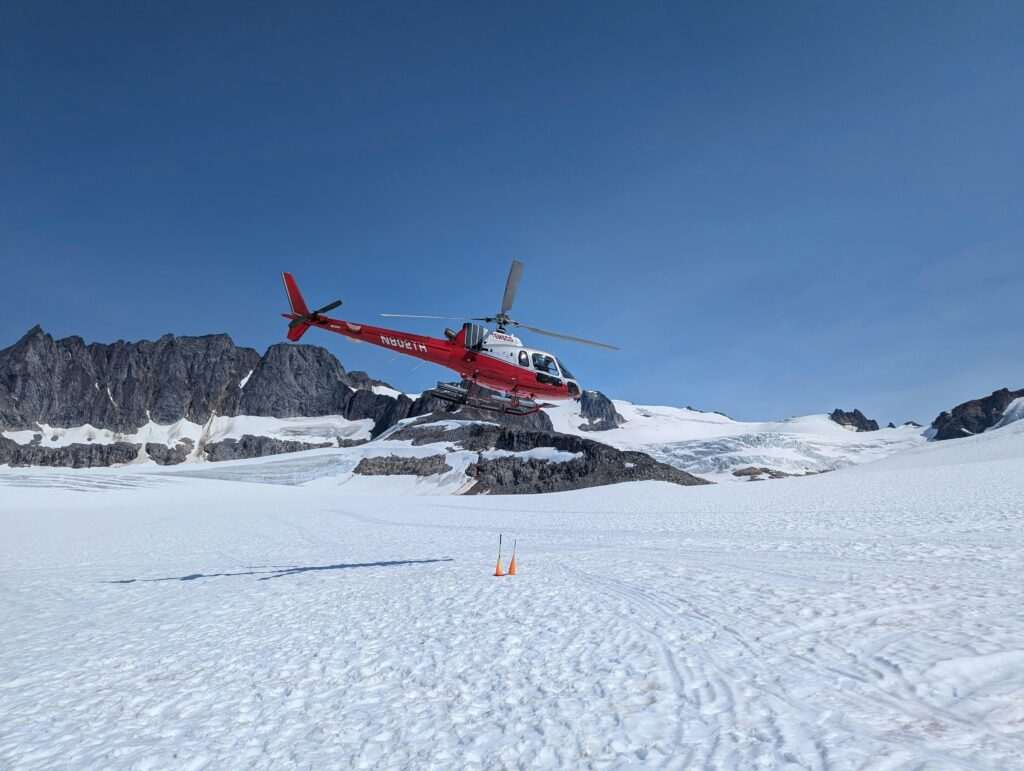
A helicopter tour in Alaska occupies a different category from nearly every other visitor activity in the state. The experience is not primarily about what you do from the aircraft — it is about what becomes visible from it. Glaciers that take weeks to reach on foot are below you in fifteen minutes. The summit environment of Denali, which less than a thousand climbers reach in a typical year, unfolds around you at eye level. Brown bears fishing in a salmon stream appear in a meadow that no road touches. The helicopter makes Alaska’s most inaccessible landscapes accessible to any visitor willing to pay for the access — and the range of tours available in 2026, from short glacier landings near Anchorage to multi-hour Denali circumnavigations, means there is a version of this experience at most price points and time commitments. Here is how the major categories compare.
Glacier Landing Tours Near Anchorage
The most widely booked helicopter experience in Southcentral Alaska is the glacier landing tour — a 45 to 90-minute flight that typically departs from the Anchorage area, reaches a glacier surface in 20 to 30 minutes of flying, and allows passengers to step out and walk on the ice. The Knik Glacier, in the Matanuska-Susitna Valley about 50 miles from Anchorage, and the Matanuska Glacier, farther up the Glenn Highway near Palmer, are the primary destinations for these tours.
Landing on a glacier is a qualitatively different experience from seeing one from the air or from a glacier hike accessed by road. The scale becomes physical — the crevasses, the blue ice visible where meltwater has carved channels, the silence, the cold radiating from the surface even on a summer day. Most tours allow 20 to 30 minutes on the glacier surface, which is enough to absorb the environment without the exhaustion of a full glacier trek.
Typical costs for Anchorage-area glacier landing tours run $350–$500 per person on a shared charter, with private charters running $1,200–$2,000 for the aircraft regardless of party size (typically a 4–6 person maximum). The season runs May through September, with July and August offering the most reliable weather and longest days. Operators including Rust’s Flying Service run regular glacier landing departures from Anchorage throughout summer; booking 2–4 weeks in advance is advisable for July dates.
Denali Flightseeing with Glacier Landing
The Talkeetna-based Denali flightseeing tour is a fundamentally different experience from a shorter glacier landing: a 1 to 2-hour flight that circles or transects the Alaska Range, approaches Denali at altitude, and typically lands on the Ruth Glacier or Kahiltna Glacier — the same Kahiltna that serves as base camp for the approximately 1,200 people who attempt to summit Denali each year. The standard route takes passengers from Talkeetna over the foothills, up through the Alaska Range to the flanks of Denali, and to a glacier surface at 7,000–10,000 feet elevation.
Standing on the Kahiltna in full view of Denali’s 20,310-foot south face is one of the genuinely superlative experiences Alaska offers. The mountain’s scale is incomprehensible from the ground; from a glacier landing at its base, it becomes physically present in a way that changes how you understand the word “large.” On calm clear days, the silence at this elevation — the aircraft engine off, the glacier extending in every direction, the summit pyramid overhead — is absolute.
Denali flightseeing tours cost significantly more than shorter glacier landings: typically $500–$750 per person on a shared charter, $2,000–$3,500 for a private aircraft. Talkeetna is the staging point — 115 miles north of Anchorage, accessible by car or train. The season is late April through mid-September; late May through early July offers the best combination of snowpack for glacier landings and weather stability. This is the bucket-list version of Alaska helicopter touring and requires advance booking — several weeks minimum for peak season dates.
Bear Viewing Helicopter Tours
Brown bear viewing by helicopter is a different kind of tour entirely: the aircraft is transportation to an observation point, not the experience itself. Operators running from Homer and Anchorage fly clients to remote coastal meadows and stream systems where brown bears concentrate during salmon runs — primarily the Katmai coast and Kodiak Island area — and then observe from ground level or low hovering altitude while bears fish, graze, and interact. The experience is analogous to Katmai National Park’s famous Brooks Falls bear viewing but without the flight connection to King Salmon and the competition for viewing platforms.
The season is tightly tied to the salmon runs: the peak viewing windows are July (sockeye run) and late August through mid-September (silver salmon run). Outside these windows, bear helicopter tours are less productive because bears are more dispersed. Cost runs $600–$900 per person for a 3–5 hour experience including flight time and ground observation. Homer-based operators have direct access to the Katmai coastline; Anchorage-based operators typically fly longer to reach equivalent habitat. Tour operators like Get Up And Go Tours can help coordinate logistics and match timing to the best conditions available during your visit window.
Volcano and Remote Wilderness Tours
Alaska’s helicopter touring options extend well beyond the glacier and bear categories. Augustine Volcano, an active stratovolcano in Cook Inlet visible from the Homer area, can be approached by charter helicopter for a view of its caldera and lava dome. Katmai’s Valley of Ten Thousand Smokes — a landscape formed by the 1912 Novarupta eruption, one of the largest volcanic events in recorded history — is accessible by bush plane and offers terrain unlike anything else in Alaska. Private charter helicopters from Anchorage can reach truly remote landscapes in the Tordrillo Range, the Talkeetna Mountains, and the Chugach back-country, including glacier skiing drop-offs in winter and remote climbing objectives year-round.
These specialty tours are generally private charter arrangements rather than scheduled shared tours. Chugach Adventures operates in the Chugach Range near Anchorage and can customize access to a range of mountain and glacier environments for groups with specific objectives — photography, alpinism, or simply remote wilderness access.
Shared Charter vs. Private Charter
Most helicopter tour operators offer both shared and private charter options. Shared charters seat 4–6 passengers and are priced per person; private charters price the entire aircraft regardless of how many people fill it. The per-person economics favor private charter at 3 or more passengers for many tours — a private Denali glacier flight at $2,500 shared among four passengers costs $625 each, roughly comparable to per-person shared charter rates, but with full schedule flexibility, no waiting for seats to fill, and the ability to customize the route.
Families and groups of 3–6 should specifically ask operators about private charter pricing before booking shared seats. The math often tips in favor of private at group sizes of three and almost always does at four or more.
Weight Limits, Motion Sickness, and Practical Preparation
Helicopter operators enforce weight limits for safety and balance — typically 250–300 lbs per passenger limit, with combined passenger weight determining aircraft loading configuration. Booking requires disclosing accurate weight, and operators may reposition seating accordingly. This is standard aviation practice and applies to all operators regardless of how they frame it.
Motion sickness is a genuine consideration for some passengers. Helicopter flight involves vibration and sudden directional changes that can trigger nausea more readily than fixed-wing aircraft. If you are susceptible, take an over-the-counter motion sickness medication an hour before the flight — Dramamine or a scopolamine patch. The front seat in most helicopter configurations is generally smoother than the rear bench. Inform the pilot if you feel unwell during the flight; they can descend, slow down, or open fresh air to help.
Dress in layers regardless of the ground temperature. Glacier landings involve stepping onto ice at altitude, and even summer temperatures on a glacier surface can drop 20–30 degrees below the valley floor. Waterproof outer layers, gloves, and sunglasses (for snow glare) are essential kit that operators frequently remind guests to bring but that guests frequently leave in the car. Bear viewing tours are conducted at lower elevations but still benefit from wind-resistant layering given the rotor wash during approach and departure.
How to Book
Most Alaska helicopter tour operators take reservations 2–6 weeks in advance for peak summer dates. Shared charter tours typically have a minimum passenger count to operate — usually 2–4 — so confirming departure before travel to a remote staging point like Talkeetna is essential. Cancellation policies due to weather are standard and usually offer a full refund or rebook; helicopter tourism in Alaska is weather-dependent in a way that beach holidays are not. Book with operators who have a clear weather cancellation policy and be prepared to be flexible by a day or two if you are scheduling around a tight itinerary.
Photo: Daniel P / Pexels
No comments yet.