
Natural Dyeing with Indigo in Anchorage: Vat Chemistry, Shibori, and Overdyeing (2026)
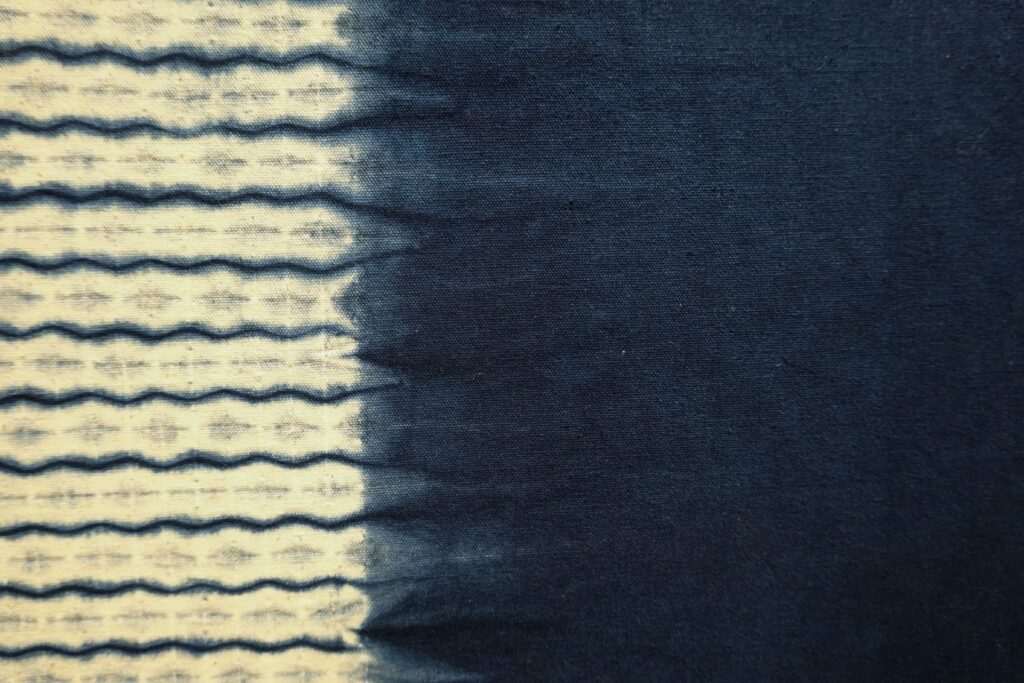
Natural dyeing with indigo is one of the oldest and most scientifically fascinating fiber arts practices in human history. Indigo blue — produced by extracting and fermenting a pigment from plants in the genus Indigofera, from woad in Europe, or from Japanese Polygonum tinctorium — has been used for textile dyeing for at least 6,000 years, appearing in ancient Egyptian cloth, Indian trade textiles that preceded the spice routes, and the indigo-dyed blue jeans that became a global uniform in the 20th century. What makes indigo distinctive as a dye is its chemistry: it doesn’t bond to fiber directly but requires a chemical reduction process that converts it from its blue, water-insoluble form to a yellow-green, soluble “leuco” form that can penetrate fiber, then oxidizes back to blue on contact with air. The visible color change — watching fabric emerge yellow-green from the dye vat and transform to blue in seconds — is one of the most genuinely magical moments in any craft practice. In Anchorage, indigo dyeing workshops connect fiber arts practitioners to a tradition spanning Japan, West Africa, and Central America, and the rich blue hues pair particularly well with Alaska’s natural color vocabulary. This guide covers vat indigo vs synthetic, shibori resist techniques, reduction chemistry, the oxidation shift, aftercare, and overdyeing for 2026.
Vat Indigo vs Synthetic Indigo
Two forms of indigo are available to contemporary dyers, with different implications for process and values:
Natural Vat Indigo
Extracted from plants — most commonly the dried and fermented leaves of Indigofera tinctoria, available as a concentrated pigment powder from natural dye suppliers. Natural indigo varies slightly in quality and pigment content by source; Indian indigo and Japanese indigo have slightly different dye characteristics and color qualities. Building a fermentation vat with natural indigo (using organic reduction agents like ripe fruit, bran, or lime) is a more complex process than chemical vats but produces distinctive, complex blues that many dyers consider uniquely beautiful. Natural indigo fermentation vats have a characteristic ammonia-copper scent that’s unmistakable once known.
Synthetic Indigo
Chemically identical to the natural pigment but synthesized industrially — synthetic indigo is cheaper, more consistent in pigment content, and easier to obtain than natural indigo. It’s the indigo used in all commercial denim production. For most workshop contexts, synthetic indigo is the practical choice: it produces beautiful, consistent blues without the variability of natural fermentation. The ethical distinction matters to some practitioners (natural indigo supports sustainable agriculture; synthetic indigo eliminated much of the historical indigo farming industry), but the end color on fiber is genuinely very similar.
Shibori: Japanese Resist Tie-Dye Techniques
Shibori is the Japanese term for a family of resist-dyeing techniques that prevent sections of cloth from absorbing dye by compressing, binding, or stitching them. The bound or compressed areas emerge undyed (white or the cloth’s natural color), while exposed areas take on the indigo blue. Shibori is typically associated with indigo dyeing because the technique’s bold graphic results suit indigo’s high contrast particularly well:
- Itajime shibori: Fabric is folded repeatedly (accordion folds work well) and clamped between two identically-shaped pieces of wood, plastic, or rubber. The clamp resists the dye from the contact points; the exposed edges take the color. Itajime produces geometric patterns — diamonds, triangles, stripes — determined by the fold pattern and clamp shape. It’s the most reproducible shibori technique and the best for workshop instruction with beginners.
- Arashi shibori: Fabric is wrapped diagonally around a pole or pipe, then compressed by pushing the fabric toward one end. The pole resists the dye from the interior; the surface dyes in a diagonal pattern. “Arashi” means storm — the diagonal stripe pattern resembles rain. Arashi shibori on scarves produces striking, rhythmic designs.
- Kumo shibori: Fabric is pleated or gathered into points, then bound tightly with thread or rubber bands at multiple points. The bound areas resist the dye; the technique produces circular or starburst patterns depending on the gathering approach.
- Nui shibori: Running stitches sewn through the fabric and then pulled tight to gather the cloth resist the dye at the gathered areas. The stitch pattern determines the design. Labor-intensive but capable of the most controlled, complex patterns.
Reduction Chemistry and pH Balance
Building an indigo vat requires converting water-insoluble indigo to its soluble “leuco” form through chemical reduction. Three common reduction systems:
Hydrosulfite (Chemical) Vat
Sodium hydrosulfite (a common reducing agent) combined with soda ash (raising the pH to alkaline) in warm water reduces indigo quickly and reliably. This is the standard workshop vat for beginners because it’s fast (ready in 30–60 minutes), predictable, and doesn’t require fermentation knowledge. The limitation is that sodium hydrosulfite degrades quickly and the vat has a limited useful life.
Iron (Ferrous Sulfate) Vat
Ferrous sulfate combined with lime produces a “iron vat” that’s gentler on fiber than hydrosulfite. Popular for silk and delicate fibers, the iron vat produces slightly muted blues with a characteristic cool undertone. pH control is critical — too acidic or too alkaline and the vat won’t reduce properly.
Fermentation Vat
The traditional approach — organic materials (wheat bran, ripe fruit, or Japanese hana indigo paste) fermented with bacteria over 1–2 weeks create the reducing environment. Fermentation vats are the most sustainable and produce the most complex color, but they require temperature control (around 90–95°F / 32–35°C) and ongoing monitoring. Adding alkaline material (wood ash lye or pickling lime) maintains pH in the 9–11 range required for reduction.
Regardless of vat type, a healthy indigo vat shows a characteristic “flower” — a coppery, iridescent sheen on the liquid surface caused by the reduced leuco-indigo. The vat liquid itself should be yellow-green, not blue. Blue liquid indicates the indigo has already oxidized back to its insoluble form and won’t dye effectively.
The Oxidation Color Shift
The most dramatic moment in indigo dyeing is the color change on extraction. Fiber removed from the vat emerges yellow-green — the color of reduced leuco-indigo that’s still in its soluble form. As the fiber is exposed to air and the reduced indigo oxidizes back to insoluble blue, the color visibly shifts from yellow-green to green to teal to blue over the course of 2–3 minutes. The depth of the final blue depends on the concentration of the vat, the duration of immersion, and the number of dip cycles.
Multiple short dips (2–5 minutes each) with full oxidation between dips produce richer, more even color than a single long immersion. Three dips produces a medium blue; six or more dips begins to approach the deep navy associated with traditional Japanese indigo fabrics. Between dips, the fiber should oxidize completely (fully returned to blue) before re-entering the vat — re-entering while still green introduces partially-oxidized indigo that blocks further dye uptake.
Afterbath Care
Newly dyed indigo fabric requires careful handling to set the color and remove vat residue:
After final oxidation, rinse the fabric thoroughly in cool water to remove unfixed surface indigo (indigo doesn’t “bond” to fiber in the way acid dyes do — it sits mechanically within the fiber structure). A rinse in a mild acid bath (a tablespoon of white vinegar in a gallon of water) neutralizes any residual alkalinity from the vat. Wash in cool water with a small amount of neutral detergent; hot water can cause indigo to bleed more aggressively. Dry in shade rather than direct sunlight — ultraviolet light fades indigo more quickly than other dyes.
Indigo-dyed fabric is lightfast but not wash-proof in the same way as synthetically bonded dyes. The characteristic “fading” of denim — which many people find attractive — is indigo gradually wearing off the fiber surface over time. Washing inside out and in cool water preserves depth.
Overdyeing for Complex Greens and Purples
Indigo’s blue combines predictably with other natural dye colors to produce complex secondary tones:
- Indigo + weld (yellow) → green: Dyeing fiber first in a yellow natural dye (weld, woad berries, onion skins) then overdyeing in indigo produces greens ranging from grass green to sage depending on the depth of each bath. Alternatively, indigo first and yellow second produces the same result. This two-bath technique is the traditional source of “Lincoln green,” the medieval English textile color.
- Indigo + madder (red) → purple: Mordanting fiber in alum, then dyeing in madder (red), then overdyeing in indigo produces purples ranging from violet to near-black depending on proportions. Achieving purple from natural dyes historically required expensive mordants (iron, tin) or exotic dye sources — indigo overdyed with madder is the most accessible traditional approach.
Indigo Dyeing Workshops in Anchorage
Anchorage natural dyeing workshops typically include indigo vat sessions in 3–4 hour formats that cover vat preparation, shibori resist setup, multiple dip cycles, oxidation observation, and rinsing. The visible chemistry of the vat — the color-change on extraction — makes indigo dyeing particularly compelling as a workshop subject. Alaska-specific fiber (qiviut, raw wool from Kenai Peninsula farms) can be substituted for cotton or silk in advanced workshops for a distinctive regional material experience. The Anchorage Native Arts & Culture Festival is a valuable context for understanding Alaska’s Indigenous resist-dyeing and textile coloring traditions alongside the contemporary natural dyeing practice.
Workshop prices run $55–$110, including fiber, shibori supplies, and shared vat materials. Our free things to do in Anchorage guide covers the fiber arts community events and markets — including the Anchorage Market & Festival, where fiber artists and natural dye practitioners exhibit their indigo-dyed textiles — where Anchorage indigo dyers exhibit and sell their work. Our Anchorage hiking guide covers the natural environments and plant communities — including Kincaid Park‘s birch stands and meadows where dye-plant species are accessible for personal-use harvest — where Alaska’s wild dye plants — including several species usable for overdyeing — are found in their seasonal context.
Photo by Teona Swift on Pexels.

No comments yet.