
Wire Sculpting Classes and Workshops in Anchorage: A Complete Guide
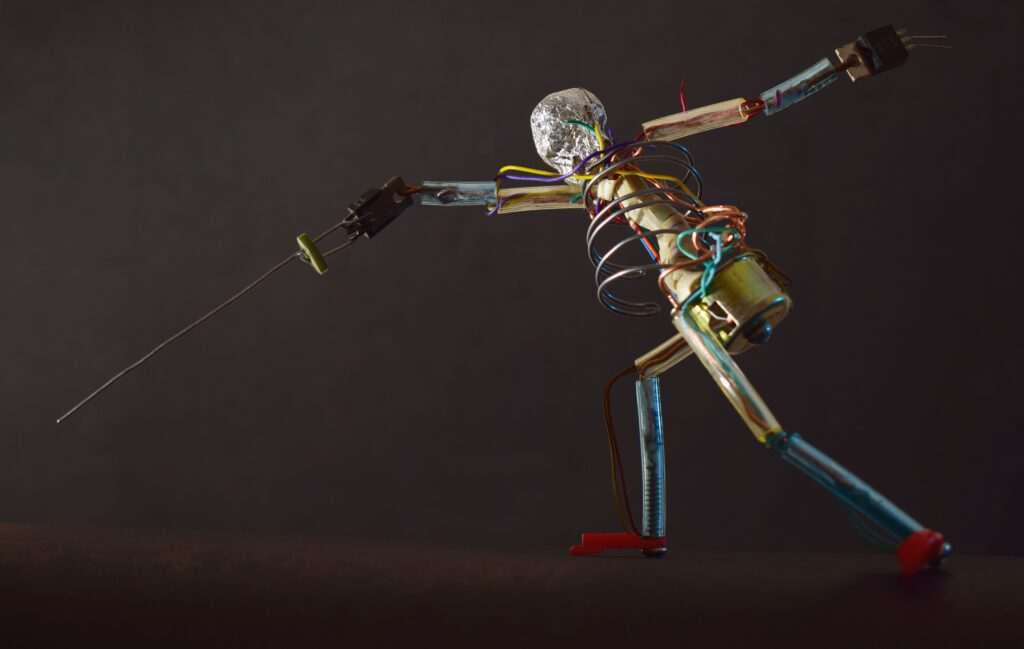
Wire sculpting occupies a unique position in three-dimensional art — it’s among the most technically demanding sculpture approaches (bending, joining, and shaping metal wire requires specific tools and developed manual strength) and simultaneously among the most visually distinctive, producing work with a linear, drawing-in-space quality that no other medium replicates. Alexander Calder’s wire portraits of the 1920s and 30s — continuous line drawings rendered in three dimensions — established wire as a serious fine art medium; contemporary wire sculptors have extended the tradition into detailed representational work, large-scale installation, jewelry, and functional decorative objects. Wire sculpture’s appeal lies in the visibility of its construction: the wire’s path is the artwork, and the spaces between wires are as compositionally active as the wire itself. In Anchorage, wire sculpting workshops have attracted practitioners interested in both figurative work and the abstract spatial possibilities of a linear medium, and Alaska’s wildlife imagery — the angular, graphic quality of raven forms, the fluid lines of salmon, the structural silhouette of moose — translates with particular effectiveness into wire’s linear vocabulary. This guide covers wire gauges and types, tools, armature building, linear vs. solid form approaches, mixed-media combinations, and beginner projects in 2026.
Wire Gauges and Types
Wire gauge (thickness) and material type determine how easily wire bends, how well it holds its shape, and what surface quality the finished sculpture has:
Gauge Numbers
Wire gauge follows an inverse numbering system (like needle gauges in felting): higher numbers indicate thinner wire. 18-gauge wire is thick, stiff, and holds structural curves reliably — used for armature frameworks and large-scale sculptural forms. 24-gauge wire is thin and flexible, used for detail work, fine wrapping, and connections between thicker structural elements. 20–22-gauge wire is the versatile middle range used for most intermediate sculptural work.
Wire Materials
- Aluminum wire: The most beginner-friendly wire for sculpture — very soft, bends easily by hand, lightweight, and available in a range of colors and gauges. Aluminum wire doesn’t rust, is inexpensive, and is forgiving of the repeated bending and adjustment that beginners do while working out a form. The trade-off is that aluminum doesn’t hold sharp bends as crisply as copper or steel, and it’s softer than necessary for large-scale structural work. Standard recommendation for beginner wire sculpture workshops.
- Copper wire: Harder than aluminum and produces a warm, reddish surface that develops a natural patina over time. Copper holds bends more precisely than aluminum and is the standard for fine detail wire work and jewelry-scale wire sculpture. It’s workable by hand at thin gauges; heavier gauges require pliers. Available in bare copper, oxidized (dark brown/black), and various colored coatings. More expensive than aluminum but produces results with a distinctly different aesthetic character — the patinated copper surface of a finished wire figure reads as more refined and permanent than aluminum.
- Steel wire (galvanized or stainless): Much harder than aluminum or copper, requiring pliers for almost all bending even at thin gauges, and resisting hand-bending at structural gauges. Steel wire is used for large-scale installation sculpture and structural armatures that need to support significant weight or tension. Not recommended for beginner work; the force required risks tool slippage and injury until technique is well developed.
- Craft wire (colored copper): Copper wire with a colored polymer coating, available in dozens of colors, used for craft-scale wire work and jewelry. The coating adds visual variety and prevents the copper’s natural color from influencing the color palette of the finished piece.
Forming Tools
Wire sculpting uses a specific set of hand tools for bending, cutting, and joining:
- Round-nose pliers: Pliers with tapered round jaws that produce loops and curves of different radii depending on where along the jaw the wire is placed. The primary tool for creating consistent loops, spirals, and curved forms. Round-nose pliers are essential for jewelry-scale wire work and detail work in larger pieces.
- Chain-nose pliers (needle-nose): Flat-jawed pliers with a tapered tip used for gripping wire precisely, making sharp bends, and closing loops. The standard companion to round-nose pliers in wire work — you typically have a round-nose in one hand and chain-nose in the other.
- Flush cutters (wire cutters): Side-cutting pliers that produce a flat, flush cut on one side of the cut end. Flush cuts are essential for neat wire ends that don’t leave a sharp protruding point — critical in jewelry and decorative sculpture where wire ends contact skin or are prominent in the finished piece.
- Bent-nose pliers: Chain-nose pliers with a bend near the tip, allowing access to tight areas that straight-nose pliers can’t reach. Useful for closing wire connections in enclosed forms.
- Jigs and mandrels: Jigs (boards with removable pegs in a grid pattern) allow consistent, repeatable wire shapes — identical loops, consistent curves, and symmetrical elements produced reliably. Mandrels (solid cylinders of specific diameters) wrap wire around to produce circles, coils, and spirals of precise size. Both tools extend the precision of wire forming beyond what’s achievable freehand.
Armature Building
Complex wire sculptures — particularly figurative work — benefit from an armature: a structural wire skeleton that establishes the pose and proportions of the figure before surface detail work begins. An armature for a human or animal figure is built from heavier-gauge wire (18–20 gauge) bent into the skeleton’s structure — spine, limbs, head position — and joined at points with wire wraps or twist connections. Thinner wire layers are then wrapped, woven, and coiled over the armature to build out the three-dimensional form and surface texture.
Working out the armature’s proportions and pose before adding surface wire is the sculptural equivalent of planning a composition before painting — the armature establishes the fundamental structure that surface work must follow. Getting the armature proportions wrong produces a finished figure with structural problems that surface detail work amplifies rather than hides.
Linear vs. Solid Form Approaches
Wire sculpture divides into two distinct aesthetic approaches:
Linear wire sculpture uses wire as a drawing tool in three dimensions — single continuous wire or a sparse open network defines form through line rather than mass. The spaces between wires are as important as the wire itself; the form is read from the interplay of line against the background and the negative spaces the lines define. Calder’s wire portraits are the canonical example: a face rendered in a single continuous wire loop, instantly recognizable despite (or because of) the radical reduction to line.
Solid form wire sculpture builds dense, woven, or coiled wire to fill volume and create surface — more analogous to traditional sculpture in its mass-and-surface approach, but executed in wire’s distinctive material. Tightly coiled wire creates dense, textured surfaces; woven wire panels create fabric-like sheets; multiple layers of wrapping build up solid volumes. The resulting work looks dense and material rather than linear and transparent.
Many practitioners combine both approaches within a single piece — a linear armature defining overall form and pose, with denser wire work in areas where solid mass or texture is needed (a bird’s body in solid coiled wire, wings in open linear wire, legs in single heavy-gauge wire).
Combining Wire with Other Materials
Wire’s structural and visual properties make it an excellent mixed-media element:
- Beads and found objects: Threading beads onto wire or incorporating found objects into the wire structure adds color, texture, and material variety. Glass beads, natural stones, shells, and recycled metal hardware all combine with wire effectively.
- Paper and fabric: Wire armatures support paper and fabric additions — a wire bird’s wing can be stretched over with tissue paper, a figure’s garment suggested with wrapped fabric. The combination of structural wire and soft materials produces work with visual complexity neither material achieves alone.
- Resin: Clear resin poured into wire forms or dripped over wire creates solid, transparent panels within wire structures — capturing the linear quality of the wire while adding surface and translucency.
Beginner Projects
Wire tree: A classic beginner wire sculpture — multiple twisted wire trunks branch into progressively thinner wire divisions, producing a three-dimensional tree with a natural branching structure. Teaches twisting, branching, and the three-dimensional spatial thinking that wire sculpture develops. Alaska’s birch and spruce forms make natural and regionally resonant wire tree subjects.
Simple animal figure: A raven, salmon, or moose built on a wire armature with additional surface wire develops armature construction, proportional thinking, and the transition from structural to surface wire work.
Wire Sculpting Workshops in Anchorage
Anchorage wire sculpting workshops run 2–3 hours for beginner linear and small figure projects, with multi-session courses covering armature-based figurative sculpture. Alaska wildlife subjects — the angular graphic quality of ravens particularly suits wire’s linear aesthetic — appear consistently as workshop project subjects.
Workshop prices run $40–$75, with aluminum or copper wire, tools, and reference materials included. A beginner home wire sculpture kit (aluminum wire in two or three gauges, round-nose pliers, chain-nose pliers, and flush cutters) costs $25–$45. Anchorage craft workshop participants can show and sell their finished work at year-round events including the Anchorage Market & Festival, the Anchorage Native Arts & Culture Festival, and the Alaska State Fair. Our free things to do in Anchorage guide covers the art galleries and craft markets where Anchorage wire sculptors exhibit and sell their work. Our Anchorage hiking guide covers the wildlife environments — coastal bluffs for seabirds, river corridors for salmon and bear — where the animal subjects that inspire Anchorage wire sculpture are most accessible.
Photo by Stefan Airoaie on Pexels.


No comments yet.