
Alcohol Ink Art Classes and Workshops in Anchorage: A Complete Guide
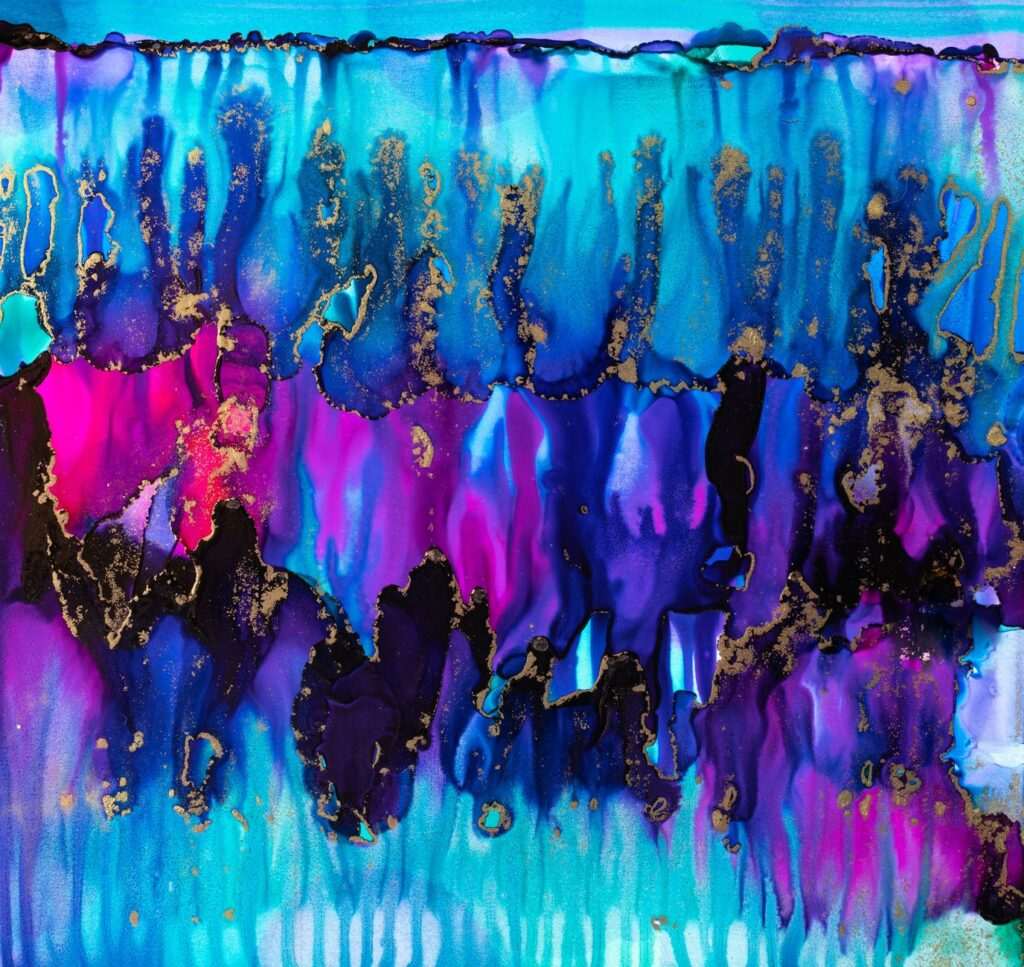
Alcohol ink art occupies a unique place in the fluid art landscape — it’s faster, more vivid, and more chemically distinctive than acrylic pouring, producing results with a brilliance and translucency that water-based media can’t replicate. The inks are intensely pigmented, alcohol-soluble dyes that flow, blend, and bloom on non-porous surfaces with extraordinary speed: dropped onto Yupo paper or a ceramic tile, a few drops of alcohol ink spread and blend in seconds, producing organic, unpredictable color forms that respond to the artist’s breath, a straw’s blow, or a brush drag. The alcohol carrier evaporates rapidly, leaving the dye behind — and the evaporation itself drives the ink’s movement as the alcohol flees the surface. Layering inks produces depth and complexity; adding 91% isopropyl alcohol lifts and blends color; embossing ink and metallic inks add dimension and contrast. In Anchorage, alcohol ink workshops have built a steady audience for the same reasons acrylic pouring has — immediate, dramatic results, no prior art experience required, and Alaska’s vibrant color vocabulary translates naturally into the fluid, luminous aesthetic of alcohol ink. This guide covers brand comparisons, surfaces, key techniques, and beginner projects in 2026.
Brand Comparisons: Ranger, Copic, and Pinata
Three brands dominate the alcohol ink art market, each with different strengths:
Ranger Adirondack Alcohol Inks
Ranger’s Adirondack line is the most widely available and most commonly used in workshop settings. The inks are well-saturated, flow smoothly, blend readily with each other and with isopropyl alcohol, and the color range (90+ colors) covers a full spectrum including metallics and specialty tones. They’re packaged in small dropper bottles that allow precise application. Adirondack inks are the standard recommendation for beginners: good quality, widely available, reasonably priced ($3–$5 per bottle), and well-documented in tutorials and technique resources. Their relative affordability makes them practical for the experimentation that alcohol ink art encourages.
Copic Various Inks
Copic’s alcohol inks (the same dyes used in Copic markers) produce exceptionally vibrant, pure color — highly saturated, with excellent lightfastness compared to other alcohol ink brands. They’re more expensive than Adirondack ($6–$10 per bottle) but favored by artists who prioritize color intensity and long-term vibrancy in displayed work. Copic inks blend beautifully and are compatible with Adirondack inks for mixing. Particularly well-regarded for the clarity of their blues and purples — important for aurora-palette work that’s popular in Anchorage.
Jacquard Pinata Alcohol Inks
Pinata inks are distinguished by their very high dye concentration, producing deeply saturated colors that go a long way — a few drops cover significant surface area. They have a strong following for their warm tones (golds, oranges, deep reds) and their distinctive flow characteristics. Pinata inks are slightly more viscous than Adirondack and Copic, which affects how they blend and flow on the surface. Often used in combination with Adirondack or Copic inks rather than exclusively — the Pinata metallics (gold, copper, silver) are particularly popular as accent inks in mixed-brand work.
Surfaces: Yupo, Ceramic Tile, and Metal
Alcohol ink art requires non-porous surfaces — on absorbent surfaces like standard paper or canvas, the ink soaks in immediately and produces flat, dull results without the flowing, blending quality that makes alcohol ink distinctive:
- Yupo paper: A synthetic polypropylene paper that’s 100% non-porous — the standard alcohol ink art substrate. Yupo is smooth, water-resistant, and completely non-absorbent, so alcohol ink pools on the surface and flows freely. The ink remains workable for several seconds, allowing blending and manipulation. Yupo comes in smooth and textured versions; smooth Yupo produces the most fluid, controlled results. It’s available in various weights; heavier weight Yupo (104 lb / 280 gsm) holds its shape better under the alcohol and is the standard for most work.
- Ceramic tiles: Unglazed ceramic tile absorbs ink slightly and doesn’t produce the same fluid blending as Yupo, but glazed ceramic tile is non-porous and works well for alcohol ink — producing a smooth, glossy surface that preserves the ink’s brilliance. Square ceramic tiles (4×4 or 6×6 inch) are popular beginner surfaces: inexpensive, readily available, produce a finished piece that works as a coaster or decorative object, and the rigid surface makes them easy to manipulate while working.
- Metal surfaces: Metal panels, copper sheets, and aluminum panel create a distinctive surface for alcohol ink — the metallic background shows through semi-transparent ink layers, producing a dimensional, jewel-like quality. Copper in particular produces a warm, luminous background that enhances amber, red, and gold inks. Metal surfaces need to be clean and oil-free for the best ink adhesion.
- Glass, Cradled panels, and specialty surfaces: Glass (sealed with a clear primer or heat-resistant surface coat) works for alcohol ink, as do gesso-sealed wood panels and specialty alcohol ink canvases. Each surface produces slightly different flow characteristics — part of the exploration of the medium is finding which surfaces produce the results you’re looking for.
Blending and Lifting Techniques
Alcohol ink’s fluid behavior makes it both exciting and unpredictable — understanding the techniques for directing that behavior is what separates intentional composition from happy accident:
- Dropping and blowing: The simplest technique — drop ink onto the surface and blow through a straw to direct the flow. The direction and intensity of the blow controls where the ink travels. Multiple colors dropped and blown from different directions create intersecting, layered flows.
- Brush application: Brushes (or felt-tip applicators) apply ink in specific areas or blend neighboring colors directly. A brush moistened with isopropyl alcohol and dragged through fresh ink creates streaks and flow lines. Stiff brushes produce different effects than soft brushes.
- Isopropyl alcohol (91% or higher): Adding drops of isopropyl alcohol to wet ink pushes it outward in a bloom — the alcohol spreads and carries the pigment with it, creating circular push-out effects where the dropped alcohol contacts the ink. Higher concentration isopropyl (91–99%) produces stronger blooms than lower concentration (70%). This is one of alcohol ink’s most distinctive and sought-after effects.
- Lifting: Isopropyl alcohol or a felted wool applicator can lift (remove) wet or even partially dry ink from the surface, creating light areas, wiping out sections for correction, or creating texture. Lifting with a felt applicator charged with alcohol produces soft, organic light areas in the ink.
- Layering: Because alcohol ink dries quickly, multiple layers can be applied in rapid succession. The lower layer shows through the translucent upper layer, creating depth and color mixing effects that single-layer application can’t achieve.
Sealing and Finishing
Alcohol inks are dye-based and aren’t lightfast unless sealed, and they remain soluble in alcohol until sealed — contact with alcohol (including some cleaning products) can dissolve a finished piece. Sealing is essential for displayed or functional work:
- Resin coating: A thin pour of epoxy or UV resin over a finished Yupo piece produces a thick, glossy protective layer that preserves the colors, adds depth, and transforms the surface from matte to glass-like. Resin is the most durable sealing option and produces the most impressive finished surface. It requires care in application (bubbles from stirring must be popped before the resin gels, usually with a torch flame) and a flat, level surface during curing.
- Varnish sprays: Kamar Varnish (Krylon), Archival spray, and specialized alcohol ink sealant sprays protect finished pieces from UV fading and alcohol re-solubility without the thickness or weight of resin. Multiple light coats build adequate protection. Spray varnishes are faster and easier than resin but less durable and less visually dramatic.
- UV-resistant topcoats: Applied with a brush or foam applicator, UV-resistant coatings extend the color life of displayed work significantly — alcohol ink dyes fade under direct sunlight without UV protection, so displayed pieces benefit from UV-protective varnish.
Alcohol Ink Art Workshops in Anchorage
Anchorage alcohol ink workshops typically run 2–3 hours, with participants producing two to four finished pieces on Yupo or ceramic tile. The immediacy of alcohol ink — results are visible within seconds of ink application — makes it one of the most engaging craft formats for group events and beginner workshops. Aurora-palette compositions (teal, purple, magenta, gold) are the most popular design direction in Anchorage alcohol ink workshops, connecting the medium’s luminous quality to Alaska’s most iconic natural phenomenon.
Workshop prices run $40–$75, with Yupo paper or tiles, inks, isopropyl alcohol, and application tools included. A home alcohol ink starter kit (three to five Adirondack ink colors, a pad of Yupo paper, isopropyl alcohol, and a package of ceramic tiles) costs $35–$60 and provides extensive experimentation. The most important beginner note: work in a ventilated space — alcohol vapors accumulate quickly in closed rooms, and adequate airflow matters for both safety and comfort. Anchorage craft workshop participants can show and sell their finished work at year-round events including the Anchorage Market & Festival, the Anchorage Native Arts & Culture Festival, and the Alaska State Fair. Our free things to do in Anchorage guide covers the art events and gallery openings where Anchorage alcohol ink artists exhibit their work. Our Anchorage hiking guide covers the landscapes — aurora skies, glacier ice, tundra wildflowers — whose translucent, luminous color quality is uniquely suited to alcohol ink’s aesthetic.
Photo by Sharon Snider on Pexels.


No comments yet.