
Spoon Carving Classes and Workshops in Anchorage: A Complete Guide
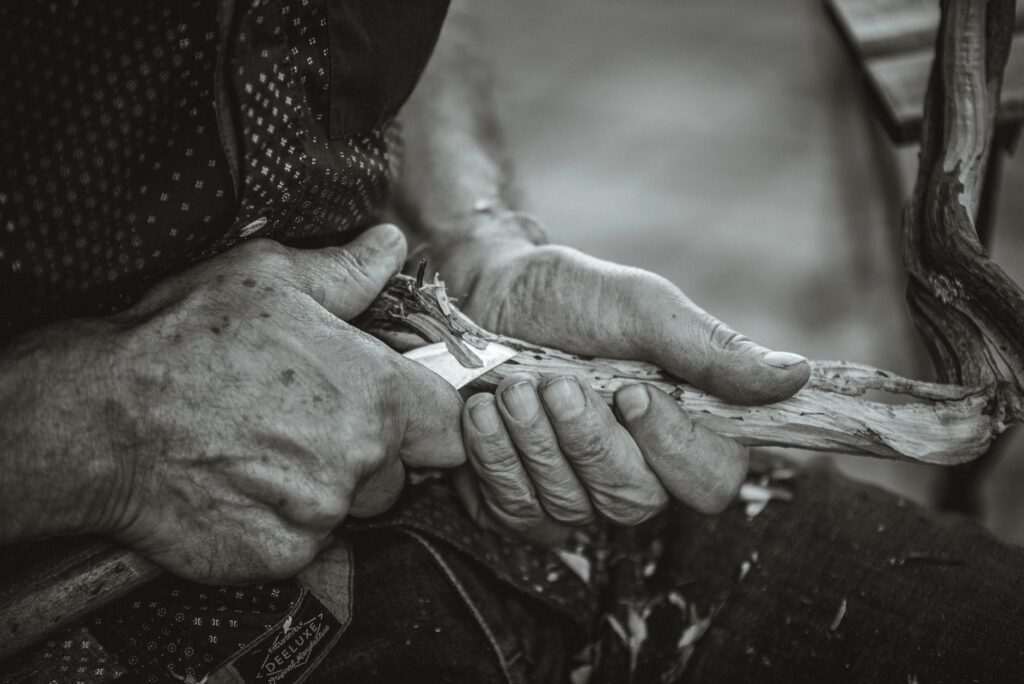
Spoon carving is among the oldest woodworking traditions in human history — people have been shaping eating and cooking utensils from wood with knives and axes for tens of thousands of years — but it’s also one of the most satisfying contemporary craft practices for exactly the reasons that ancient crafts tend to endure: the tools are simple, the material is beautiful, the process is meditative, and the finished object is genuinely useful. A hand-carved wooden spoon for stirring morning oatmeal, a butter spreader for the kitchen table, a ladle for a pot of stew — these are objects made and used in the daily rhythms of life, and the patina they develop with use connects maker to object in a way that manufactured items don’t. In Alaska, spoon carving has particular resonance: the birch forests surrounding Anchorage provide ideal carving wood, the long winter months invite extended sessions at the bench, and the craft connects to Indigenous Alaskan woodworking traditions that predate European contact. This guide covers wood selection, essential tools, grain reading, food-safe finishing, and beginner spoon projects in 2026.
Wood Selection: Green vs. Dry
The single most important decision in spoon carving is the wood, and the most fundamental choice is between carving green (freshly cut) wood or seasoned (dried) wood.
Green Wood
Green wood is freshly cut or recently harvested wood that still contains significant moisture in its cells. It’s dramatically easier to carve than dry wood: the fibers are supple, the knife moves through the wood with less effort, and detail work requires less force. Almost all traditional spoon carving uses green wood — the craft developed in an era before kiln-dried lumber, and the ease of working green wood is why hand-tool woodworking was practical without power tools. Green wood carves so much more easily than dry that learning on dry wood obscures how pleasant the craft can be.
The trade-off with green wood is that it moves as it dries. A spoon carved green will check (develop small surface cracks) and warp as the wood dries over days to weeks after carving, unless it’s kept consistently moist during carving and allowed to dry slowly after finishing. Most carvers work a green spoon over several sessions, keeping it in a sealed bag between sessions to slow drying, then allowing the finished piece to air-dry slowly away from direct heat. Minimal cracking is achievable with careful drying; some checking is often considered part of the character of hand-carved greenwood work.
Alaska-Relevant Wood Species
- Birch: Alaska’s most abundant hardwood and the traditional spoon carving material across Northern European and Alaska Native traditions. Alaska birch (Betula neoalaskana and related species) has a fine, even grain that carves cleanly, holds edge detail well, and develops a beautiful warm tone with use and oil finishing. Green Alaska birch is available from pruning, storm damage, and firewood processing — an excellent locally sourced material for Anchorage carvers.
- Basswood: The preferred wood for beginner carvers working in dry wood — it’s among the softest hardwoods, carves cleanly with sharp tools, and has an even, knot-free grain. Basswood blanks are widely available from craft suppliers. It doesn’t have the character or figure of birch or cherry, but it’s the easiest material to learn on.
- Cherry: A beautiful fine-grained hardwood that develops a rich reddish-brown patina over time. Slightly harder than basswood, it rewards sharp tools and produces spoons with exceptional surface quality. Black cherry grows across much of North America; dry cherry blanks are available from specialty wood suppliers.
- Spruce and cottonwood: Softwoods carve easily but produce less durable spoons for functional use. Better suited to decorative carving projects than everyday kitchen spoons.
Essential Tools
Spoon carving’s toolkit is elegantly minimal — three tools cover virtually all functional spoon work:
- Sloyd knife: The primary carving knife — a straight-bladed knife used for all the rough shaping, profile work, and surface refinement of a spoon. “Sloyd” refers to the Scandinavian craft tradition from which the tool comes. A quality sloyd knife has a full-tang construction, a comfortable handle, and a blade that holds an edge well and sharpens easily. Mora (Swedish) sloyd knives are the standard beginner recommendation: excellent quality, affordable ($20–$40), and widely available. The sloyd knife does 80% of the work in spoon carving.
- Hook knife (spoon knife): A curved blade used specifically for hollowing the bowl of the spoon — the concave interior that holds food. The hook shape allows the knife to travel in a curved path along the interior of the bowl, removing material that a straight knife can’t reach. Hook knives come in different sweep radii for different bowl depths and styles; a medium-sweep hook knife handles most spoon sizes. Like the sloyd knife, Mora makes an excellent, affordable starter hook knife.
- Axe or hatchet: For rough shaping from branch or billet, a small carving hatchet or a basic hatchet does the heavy material removal quickly that would take much longer with a knife. The axe is optional for carvers starting from pre-profiled blanks (kits), but it’s the traditional tool for working from raw wood and dramatically speeds up the initial shaping stage. Scandinavian-style carving hatchets (Gransfors Bruks, Husqvarna) are well-made and purpose-designed; a basic hardware store hatchet works adequately for beginners.
All cutting tools require sharpness that most beginners underestimate. A dull spoon carving knife is frustrating, tiring, and actually less safe than a sharp one (because it requires more force, causing less controlled movements). Leather strops charged with stropping compound maintain a working edge between sharpenings; learning to strop is a fundamental skill that’s inseparable from spoon carving itself.
Reading Grain and Avoiding Splits
Wood grain direction determines whether knife strokes cut cleanly or tear and split the wood fiber. Carving “with the grain” (knife cutting in the direction the grain fibers run) produces smooth, controlled cuts; carving “against the grain” causes the wood to split unpredictably and produces a rough surface. Reading grain direction before each cut — observing which direction the grain lines run on the wood surface — is the core spatial skill spoon carving develops. Many beginning carvers learn this through experience: a sudden split or tear signals you’ve cut against the grain, and the correct response is to reverse direction.
Food-Safe Finishing
Spoons intended for kitchen and food use need a food-safe finish that protects the wood from water damage while remaining safe for food contact:
- Raw linseed oil (flaxseed oil): The traditional finish — food-safe, penetrating, and effective. Applied warm and allowed to soak in over several coats. It takes longer to fully cure than other options but produces an excellent protective finish.
- Food-grade mineral oil: Widely available, inexpensive, odorless, tasteless, and non-toxic. The standard recommendation for beginner carvers — it’s effective, easy to apply (wipe on, let soak, wipe off excess), and safe for food contact. Reapply periodically as the wood absorbs it.
- Beeswax and oil blends: A mixture of beeswax melted into food-grade oil produces a conditioning finish that’s slightly more water-resistant than oil alone. Many Anchorage carvers use locally sourced Alaska beeswax for this finishing step — a natural connection between the craft and the local environment.
Beginner Spoon Projects
The classic beginner sequence moves from simple to complex as tool skills develop:
A butter spreader is the simplest starting project — a thin, flat spatula shape with no deep bowl hollowing, requiring only profile shaping and surface refinement with the sloyd knife. It’s completeable in a single session and requires no hook knife work. A simple eating spoon introduces the hook knife for bowl hollowing — the key additional skill that most workshops focus on teaching. A cooking spoon or ladle scales up the dimensions and requires more material removal, developing axe skills and extended knife technique. Each project in the sequence builds on the previous one.
Spoon Carving Workshops in Anchorage
Anchorage spoon carving workshops typically run 3–4 hours, producing a rough-shaped spoon (sometimes finished, sometimes taken home to complete) along with the knife skills to continue working independently. Alaska birch as the workshop material gives Anchorage spoon carving a regional specificity — participants are learning to work the same species that Alaska Native carvers and Scandinavian settlers have worked in this region for generations. The Alaska State Fair in Palmer each August features a woodworking and hand-carving competition where you can see exceptional carved spoon and utensil work and meet practitioners across the skill range.
Workshop prices run $55–$90, with wood, tool use during the session, and finishing oil typically included. A beginner spoon carving kit (Mora sloyd knife, Mora hook knife, and a piece of green birch or basswood blank) costs $60–$80 and provides everything needed to begin carving at home. Our free things to do in Anchorage guide covers the craft markets — including the Anchorage Market & Festival at Town Square Park, where Anchorage wood carvers regularly exhibit and sell their spoons, bowls, and carved objects through the summer months — where you can meet local carvers and see finished work in person. Our Anchorage hiking guide covers the birch forests and wooded trails — including the birch stands throughout Kincaid Park, where storm-fall and pruning waste provide a steady supply of green birch for carvers who source locally — where Alaska’s primary spoon carving material grows.
Photo by jordan besson on Pexels.



No comments yet.