
Dinner Cruises from Anchorage 2026 — Alaska Sunset & Wildlife Dining on the Water
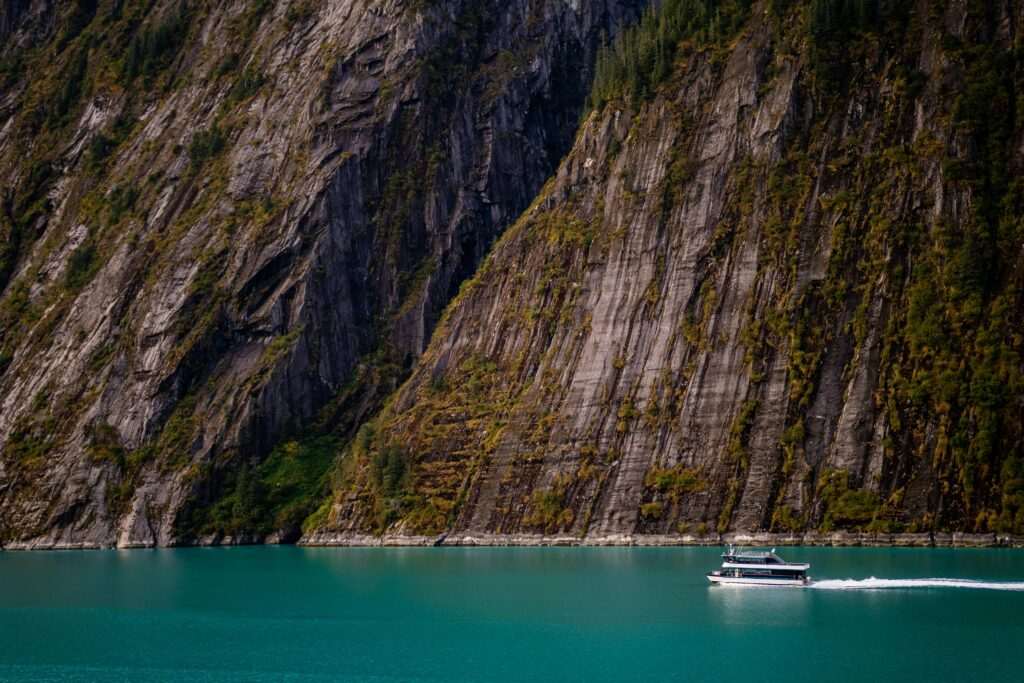
Dinner cruises from the Anchorage area are not what the name implies in most cities. There is no vessel circling a bay while a DJ plays and appetizers circulate on trays. What exists instead is something more interesting: a small-vessel wildlife and glacier cruise out of Whittier or Seward, scheduled for evening departure when the low-angle summer light turns the water and the ice into something that a midday tour cannot replicate. Alaska’s summer sun does not set until after 11 p.m. in June and July, which means a 5 or 6 p.m. departure produces hours of golden-hour conditions with glaciers, sea otters, humpback whales, and puffins as the backdrop. The meal on board is part of the experience, not the point of it.
Getting to the Departure Ports
Evening cruises from Anchorage reach the water from two directions. Whittier is sixty miles southeast via the Seward Highway and Anton Anderson Memorial Tunnel — a drive of about an hour, with the tunnel adding a brief wait during its single-lane operations schedule. Prince William Sound opens immediately on the far side of Whittier, and the town’s harbor puts glaciers within thirty minutes of departure. Seward is approximately 125 miles south of Anchorage on the Seward Highway, a two-hour drive that follows Turnagain Arm, crosses the Kenai Peninsula, and deposits you at a working fishing port at the mouth of Resurrection Bay.
Both drives are among the more scenic in Southcentral Alaska. The Seward Highway corridor between Anchorage and the Kenai Peninsula is a National Scenic Byway, and the section along Turnagain Arm at low tide — with the bore tide mudflats, the Chugach Range above, and the inlet stretching west toward Cook Inlet — is worth slowing down for even on a schedule. Plan to leave Anchorage by 3 p.m. for a 6 p.m. Seward departure; earlier for Whittier if tunnel timing is uncertain.
Prince William Sound Evening Cruises
Prince William Sound Glacier Tours operates out of Whittier and runs tours into the sound’s western section, including Columbia Glacier — one of the largest tidewater glaciers in the Northern Hemisphere. Evening cruises enter waters where the sound’s geography concentrates wildlife: sea otters raft in the kelp, Steller sea lions haul out on rocky outcrops, and the absence of large cruise ship traffic that characterizes some parts of the sound means the experience is quieter than the visitor numbers might suggest.
The sound’s protected waters make for a stable ride even on evenings with light chop on the open inlet. Smaller vessels — the norm for Prince William Sound evening tours — can maneuver closer to glacier faces and rocky wildlife haul-outs than large ships, and the intimacy of a fifty-person boat versus a three-hundred-person catamaran changes the texture of what you see.
Lazy Otter Charters runs private and small-group trips out of Whittier that can be structured as evening outings for parties wanting a dedicated experience rather than a scheduled group departure. Charter operators in Whittier are particularly useful for groups with specific interests — a focus on photography, fishing alongside the cruise, or simply staying on the water past the standard tour window until the sun drops toward the Chugach peaks at 10:30 p.m.
Kenai Fjords Evening Cruises from Seward
Major Marine Tours runs glacier and wildlife cruises in Kenai Fjords National Park out of Seward, with departures that include afternoon options that extend into the evening light. The Kenai Fjords coastline is among the most wildlife-dense in the Pacific — Steller sea lions, sea otters, harbor seals, orcas, humpback whales, and at least seven species of seabirds including tufted and horned puffins concentrate along the protected fjords that push deep into the Kenai Mountains.
Major Marine’s vessels include hot food service — chowder, salmon, and standard hot meals prepared on board — which makes the cruise genuine dinner-cruise territory without requiring a separate reservation. The combination of glacier viewing, wildlife, and a hot meal consumed while passing through the fjords with the evening light hitting the hanging glaciers is specific to this part of the world, and it is difficult to replicate through any other experience available from Anchorage in a single day.
What the Evening Light Changes
The decision to take an evening departure rather than a morning tour comes down to what the light does. Midday sun in Alaska in summer produces a flat, overhead illumination that photographs adequately and reveals the scale of the scenery accurately. The low-angle light between 6 and 10 p.m. does something different: it hits glacier ice from the side, turning the blue tones in the seracs and crevasses into something vivid, and it catches wildlife on the water surface in a way that creates definition against the dark water. Wildlife activity also tends to intensify in the evening — feeding patterns, surface behavior, and the general movement of sea mammals and seabirds pick up as temperature drops and baitfish rise.
The practical upside of an evening cruise is that the morning is free for a full Anchorage day. Drive south in the afternoon, cruise through dinner, and return to Anchorage by midnight with a full day of the city behind you. This works particularly well on a multi-day Anchorage visit where a single evening cruise slot fills out the itinerary without consuming an entire day.
Practical Details
Dress as if the temperature will drop twenty degrees by the time you return to port, because it will. Even in July, the water temperature in Prince William Sound and Kenai Fjords runs in the upper forties, and the wind on deck when the vessel is moving amplifies the chill. Bring a waterproof outer layer, a mid-layer fleece, and gloves regardless of what the Anchorage forecast says. Seasickness is uncommon in the protected waters of the sound but worth addressing in advance for anyone susceptible — the open water between the tunnel exit and the sound’s interior can kick up on windy evenings.
Book evening cruise slots two to three weeks in advance for July; June and August have more flexibility. Most operators take online reservations. Confirm meal service is included before booking if that is a priority — some vessels offer full hot meals, others provide snacks only, and the distinction is not always clear in the summary listing. Parking in both Whittier and Seward is available near the harbor and is free or inexpensive.
Are there dinner cruises from Anchorage?
Evening wildlife and glacier cruises that include meal service depart from Whittier (one hour from Anchorage) and Seward (two hours south). Major Marine Tours in Seward includes hot food service — chowder, salmon, and prepared meals on board — on its Kenai Fjords cruises, making it the closest equivalent to a traditional dinner cruise. Prince William Sound operators out of Whittier also offer evening departures into Columbia Glacier territory with food available on board.
How do I get from Anchorage to Whittier for a cruise?
Whittier is sixty miles southeast of Anchorage via the Seward Highway and Anton Anderson Memorial Tunnel — approximately one hour by car. The tunnel operates on a single-lane alternating schedule; check current tunnel times before departure to avoid a thirty-minute wait. Most Whittier cruise operators recommend arriving thirty to forty-five minutes before departure for check-in and boarding.
What wildlife can I see on an Alaska evening cruise?
Prince William Sound and Kenai Fjords evening cruises regularly produce sea otters, Steller sea lions, harbor seals, tufted and horned puffins, bald eagles, humpback whales, and — less predictably — orcas. Columbia Glacier in the sound and the tidewater glaciers in Kenai Fjords National Park are accessible on the same cruise. Evening hours tend to produce more active surface behavior from marine mammals than midday departures.
What should I wear on an Alaska dinner cruise?
Dress in layers with a waterproof outer shell. Water temperature in both Prince William Sound and Kenai Fjords stays in the upper forties through summer, and wind chill on a moving vessel drops the effective temperature significantly below the air temperature. Bring gloves and a warm mid-layer regardless of the Anchorage forecast. The difference between comfort and misery on a three-hour cruise is usually one layer.
An evening cruise from Whittier or Seward is one of the more complete Alaska experiences available from Anchorage on a single-day itinerary. The scenery, the wildlife, the meal, and the light are all at their best in those late-afternoon hours when the sound quiets and the sun finds the glacier faces at an angle that makes the blue in the ice visible from the deck. Leave Anchorage by mid-afternoon, eat dinner on the water, and be back before midnight with the mountains still bright against the northern sky.
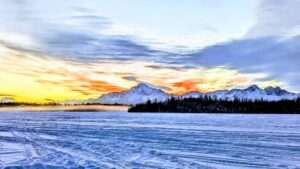
Featured photo by James Wheeler on Pexels.
No comments yet.