
Eklutna Historical Park 2026 — Alaska Native Spirit Houses & Village History
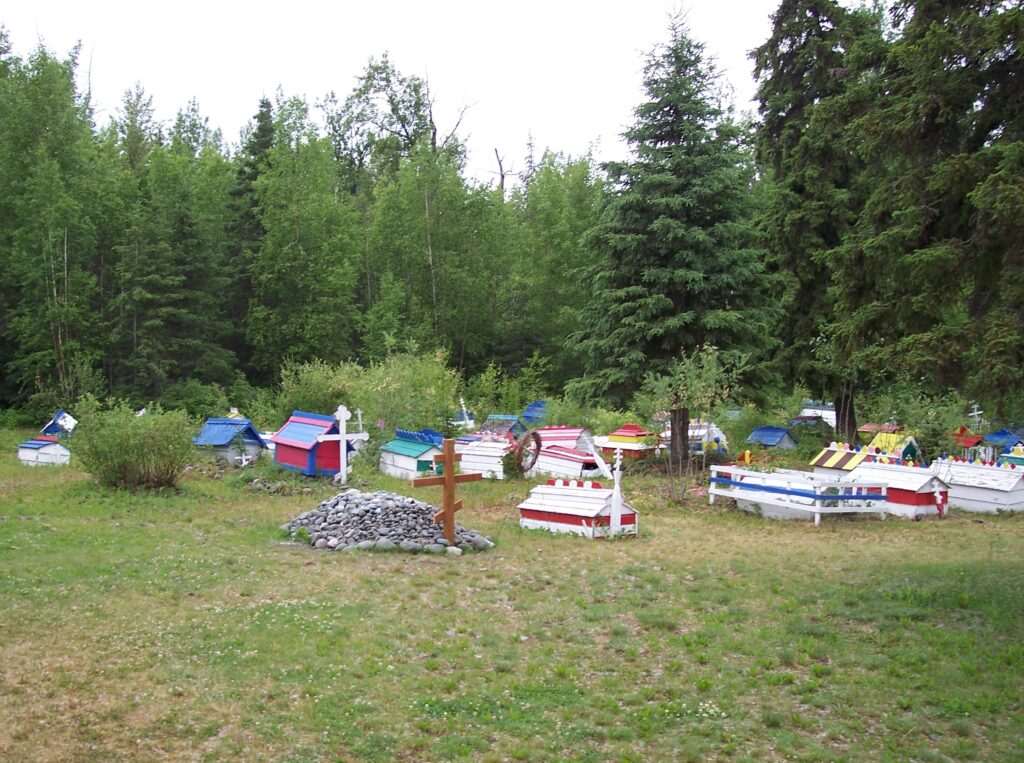
Twenty-five miles northeast of Anchorage on the Glenn Highway, at the Eklutna exit, a short road leads into one of the most distinctive cultural sites in southcentral Alaska. Eklutna Historical Park occupies the grounds of a traditional Dena’ina Athabascan village that has been inhabited for at least 800 years — making it one of the oldest continuously occupied sites in the Anchorage area. What visitors find here is unlike any other heritage site in Alaska: a burial ground where hand-painted spirit houses stand over the graves in a forest clearing, alongside a small 19th-century Russian Orthodox log church that reflects the layered history of this community. It is a place that rewards quiet attention.
The Spirit Houses
The spirit houses are what make Eklutna Historical Park singular. Each is a small wooden structure placed over a grave — some no larger than a child’s playhouse, others more elaborate — hand-painted in the colors and patterns that belong to the deceased person’s family. No two are alike. The tradition blends Dena’ina Athabascan burial customs with Russian Orthodox religious practice, reflecting the cultural history of a community that maintained its own identity through colonization and conversion alike. For the Dena’ina, the spirit house marks a place of respect and continued relationship with those who have gone before — not a relic of the past but an ongoing cultural practice maintained by families today.
The clearing where the spirit houses stand has a quality of stillness that the photographs do not fully capture. The bright paint against the boreal forest — the birch and spruce that ring the site — creates an image unlike anything in Alaska’s parks or state attractions. This is a real, living cemetery, maintained by real families, and it carries the weight of that reality.
Saint Nicholas Russian Orthodox Church
At the edge of the clearing stands the Saint Nicholas Russian Orthodox Church, a small log structure built in the late 1800s that remains one of the oldest standing buildings in the Anchorage area. The church is simple, its log construction weathered and unpretentious, and it sits in its setting with the kind of rightness that comes from being built for exactly this place. Russian Orthodox missionaries arrived at Eklutna in the 19th century, and the community’s adoption of Russian Orthodoxy was not the erasure of Dena’ina culture it might appear — it became part of it, a synthesis visible in the spirit houses themselves, which combine Native burial custom with Christian practice.
Visiting the Park
Eklutna Historical Park operates seasonally, generally from May through September. Guided tours are available during the season, led by knowledgeable staff who can explain the meaning of the spirit houses, the history of the Dena’ina community at Eklutna, and the role of the church in the site’s history. A small admission fee applies to support the organization and its educational mission. The tours typically run 45–60 minutes. Self-guided visits are also possible, though the guided interpretation adds significant depth to what the site holds.
Check current hours and tour schedules directly before your visit, as they vary by season and staffing. The grounds are compact — the core of the site takes less than an hour to walk — but the weight of what you’re seeing rewards time spent rather than a hurried loop.
The Dena’ina at Eklutna
The Dena’ina are the Athabascan people of southcentral Alaska — one of the only Athabascan groups to live at tidewater, adapting the inland traditions of their broader language family to the rivers, forests, and coastal edges of the Cook Inlet basin. Eklutna, known in the Dena’ina language as Idlughet, was a village site of considerable importance, positioned at the confluence of the Eklutna River drainage with the broader travel routes through the region. The community at Eklutna today traces direct continuity from this history, and the park is operated by the Eklutna Native Village as both a heritage site and a living expression of Dena’ina identity. Proceeds from the park support the village’s cultural programs.
Combining with Eklutna Lake
Eklutna Lake, one of the premier recreation areas in Chugach State Park, is about ten minutes from the historical park by car. The lake offers flatwater kayaking, mountain biking on trails that ring the 7-mile lake, camping, and views of the twin Eklutna Glacier arms visible from the eastern shore. Combining a morning at the historical park with an afternoon on Eklutna Lake makes for one of the fuller day trips from Anchorage — cultural and natural history together, in a single corridor of the Glenn Highway.
For visitors spending multiple days in the Anchorage area, the Eagle River Nature Center is 15 minutes south on the Glenn Highway and offers trail access into the Eagle River Valley — a completely different Chugach terrain from Eklutna’s open glacier lake character. The Alaska Botanical Garden in east Anchorage provides an entirely different kind of cultural-natural experience for visitors who want to contrast the historical park with something more horticultural.
Getting There and Practical Information
From Anchorage, take the Glenn Highway northeast approximately 25 miles to the Eklutna exit. Follow the signs to Eklutna Historical Park. The drive takes 30–40 minutes depending on traffic. Parking is available at the site. A small admission fee applies — check the park’s current fee schedule before visiting. The grounds are not paved for accessibility; wear comfortable walking shoes.
What are the spirit houses at Eklutna?
Spirit houses are small hand-painted wooden structures placed over the graves of Dena’ina community members. Each reflects the family’s colors and patterns. The tradition combines Dena’ina Athabascan burial custom with Russian Orthodox religious practice and is a living tradition maintained by families today.
Is photography permitted at Eklutna Historical Park?
Respectful photography is generally permitted at the site. Follow all posted guidelines and any guidance from tour staff. The cemetery is an active burial ground — photograph with the same respect you would show at any cemetery.
When is Eklutna Historical Park open?
The park generally operates May through September. Hours and tour availability vary; check directly with the Eklutna Native Village or the park organization before your visit, as schedules can change seasonally.
How far is Eklutna Historical Park from Anchorage?
About 25 miles northeast of downtown Anchorage via the Glenn Highway — a 30–40 minute drive depending on traffic. It can be visited in a half-day from Anchorage, especially if combined with Eklutna Lake nearby.
Featured photo by Vasilis Karkalas on Pexels.


No comments yet.