
Anchorage Saturday Market 2026 — Alaska’s Largest Open-Air Weekend Market
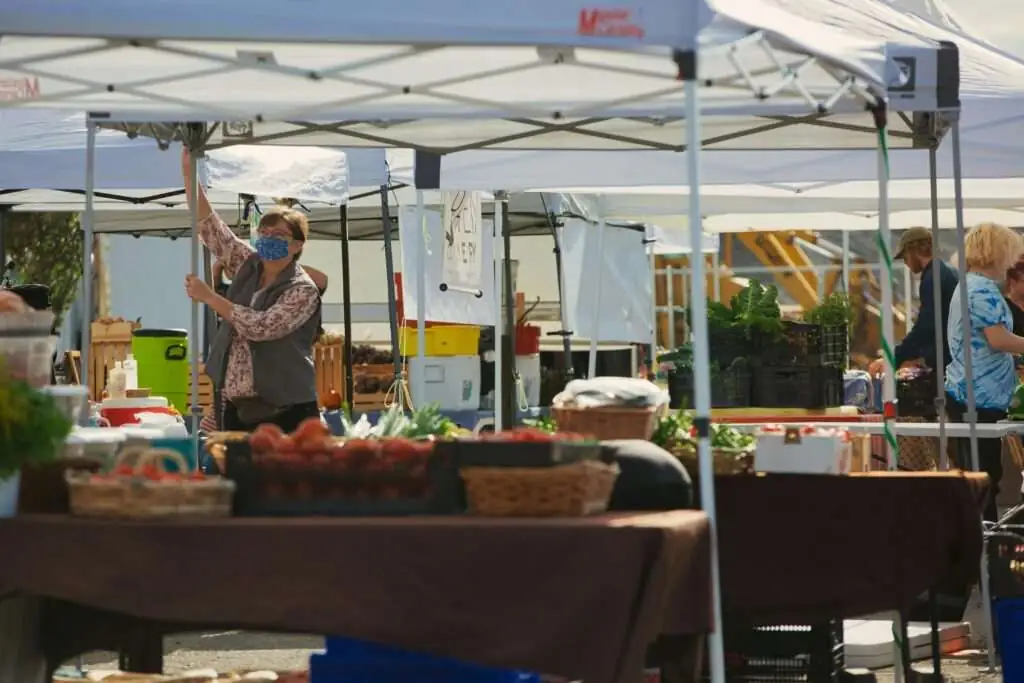
The Anchorage Market & Festival runs every Saturday and Sunday from late May through mid-September in the heart of downtown Anchorage, making it one of the defining summer institutions in Alaska’s largest city. With more than 300 vendors filling the outdoor stalls along West Third Avenue and C Street, the market is Alaska’s largest open-air weekend market — a place where visitors pick up smoked salmon packed for the flight home, where local families grab reindeer hot dogs for lunch, and where genuine Alaska Native artists sell work alongside flower farmers, berry jam producers, and homemade craft vendors. If you’re in Anchorage on a summer weekend and you visit one thing, make it the Saturday Market.
Schedule and Location
The Anchorage Market & Festival operates Saturdays and Sundays from approximately 10 a.m. to 6 p.m. during its seasonal run, which typically opens the Saturday before Memorial Day weekend and runs through the second weekend of September. Hours can shift slightly in the first and last weeks of the season — check current-year signage or local listings if you’re visiting at the seasonal margins.
The market occupies a large open-air footprint in downtown Anchorage along West Third Avenue between C Street and E Street. Parking is available in the adjacent Dimond Center lots and at downtown garages on Fifth and Sixth Avenues; expect the area to be congested on peak summer weekends. The best arrival strategy is to come early — before 11 a.m. — or late, around 4 p.m., when crowds thin and vendors begin offering end-of-day deals on produce and prepared food. Many of the most popular food vendors sell out by early afternoon.
The Food
Alaska’s food culture is inseparable from its geography, and the Saturday Market puts that culture on full display. The market’s food vendors offer a range of Anchorage food experiences you won’t find concentrated anywhere else in the city.
Reindeer hot dogs are the market’s most iconic food item — grilled reindeer sausage served in a bun, often with caramelized onions, is Anchorage’s unofficial street food and a genuine tradition rather than a tourist contrivance. The reindeer meat is local and distinctive: leaner and more flavorful than beef, with a mild gamey note that pairs perfectly with the sautéed onions. Lines form early at the busiest reindeer vendors.
Smoked salmon appears in several forms — whole sides, vacuum-packed portions, salmon dip, and smoked salmon spread. The market vendors are among the most reliable sources of locally caught, locally smoked product in Anchorage. Alaska-style smoked salmon — brined and cold-smoked over alder — travels well in checked luggage and makes a serious gift. Ask vendors about their species (king, sockeye, and silver all appear) and smoking style before buying.
Halibut tacos and fish and chips show up at multiple vendor stalls, usually made with Pacific halibut caught from Cook Inlet or Resurrection Bay. The halibut at its freshest — caught within the week — has a clean, sweet flavor that pre-frozen product can’t replicate. When halibut vendors specify their source and catch date, they’re worth the premium.
Berry jams, syrups, and preserves from wild Alaska berries — blueberries, salmonberries, cloudberries, crowberries, highbush cranberries — fill several stalls. These products are made in small quantities from hand-foraged fruit; the jams in particular make excellent and uniquely Alaskan pantry souvenirs. Stock up early — the berry vendors are among the first to sell out.
The market also includes a wide range of other prepared food: Thai, Mexican, and Filipino food trucks, baked goods, fresh-squeezed lemonade, and seasonal produce from the Matanuska Valley farms north of Anchorage. The valley’s long summer daylight hours produce famously large vegetables — look for cabbages and lettuces of improbable size at the farm stalls.
Alaska Native Art and Crafts
The Saturday Market is one of the best places in Alaska to buy authentic Alaska Native art directly from Native artists and co-operatives, without the retail markup of gift shops or the uncertainty of provenance in tourist markets. Alaska Native artists must sign their work with their name and tribal affiliation under state law, and many of the market’s most serious buyers know to ask for that documentation.
Oomingmak Musk Ox Producers’ Co-operative is the most celebrated Native-owned vendor associated with the Anchorage market scene — a co-operative of Alaska Native women who hand-knit qiviut (the extremely soft undercoat of the musk ox) into hats, scarves, and stoles in traditional Yup’ik and Inupiaq patterns unique to each village. Qiviut is warmer than cashmere and dramatically softer; the co-operative’s pieces are heirloom-quality items made by the community that designs them. These are not souvenirs — they are Alaska’s finest textile tradition, and prices reflect the skill and time invested.
Beyond Oomingmak, the market hosts carvers working in ivory, bone, and wood; beadwork artists producing jewelry and accessories in traditional motifs; and drum makers and skin sewers whose work spans contemporary and traditional forms. Not every “Native art” item at the market is made by a Native artist — look for the signed label and ask about origin before purchasing.
Flowers, Plants, and Garden Vendors
Alaska’s gardening season is compressed but intense, and the Saturday Market reflects it. Flower vendors bring cut arrangements of Matanuska-grown blooms — fireweed, lupine, peonies, and dahlias — that are local both in origin and in character. The fireweed in particular is deeply Alaskan: its pink blooms progress up the stalk through summer, and traditional lore holds that when fireweed blooms to the top, there are only six weeks until winter.
Bedding plant and vegetable start vendors appear in the market’s early weeks, serving Anchorage’s serious garden culture. The Matanuska Valley’s summer daylight makes home vegetable growing genuinely productive, and the vendors who sell locally adapted seed starts know their stock is suited for the short season.
Live Music and Atmosphere
The Saturday Market stages live music throughout the weekend, with performers ranging from Alaska folk and bluegrass acts to Indigenous drumming and dance groups. The music stage at the market’s interior is free to watch and provides both entertainment and a gathering point when the crowds are large. Local musicians who play the market represent a cross-section of Anchorage’s active independent music scene — the performances are genuine, not background filler.
The market’s atmosphere on a clear summer day is genuinely festive. Anchorage summers are short enough that residents treat good weather as an occasion — the crowds at a sunny July Saturday market are large, cheerful, and include a mix of longtime residents, recent transplants, and visitors from across Alaska and beyond. The Ship Creek area immediately adjacent to the market adds another dimension to the outing.
Ship Creek and the Adjacent Area
The Ship Creek Salmon Viewing Area sits just a few minutes’ walk from the Saturday Market, and the combination makes for one of Anchorage’s best half-day outings. Ship Creek hosts runs of king salmon from late May through July, and sockeye and silver salmon follow through the summer. The creek’s banks fill with anglers during peak runs — a scene locals call “combat fishing” — and the viewing area provides a platform to watch the action without a fishing license.
Seeing king salmon in an urban creek — large, silver fish working their way upstream past downtown office buildings — is an Anchorage-specific experience that surprises most visitors. Combine a Saturday Market visit with a walk to Ship Creek and you’ve seen two things that exist nowhere else in quite the same form.
What to Bring and Practical Tips
Cash is still the preferred payment method for many of the market’s smaller vendors, though most established stalls now accept cards. Bringing both — $40–60 in small bills for food and produce, a card for larger purchases — avoids friction at busy stalls. Bring a reusable bag or two: produce and smoked salmon add up fast.
Anchorage summer weather is variable. A clear morning can shift to rain by noon; a cool overcast morning often burns off by 11 a.m. Layering is standard practice — a light windshell in your bag covers both contingencies. Crowds peak between 11 a.m. and 2 p.m.; if your priority is the produce and fish vendors, earlier is better. If your priority is live music and a relaxed browse, mid-afternoon offers a better pace.
Children do well at the market — the reindeer sausage, the flower stalls, and the music stage all hold attention, and the open layout gives families room to spread out. The market is stroller-accessible throughout its footprint.
Planning Around the Market
The Saturday Market pairs naturally with Anchorage’s downtown core — the Tony Knowles Coastal Trail is a short walk west, the Alaska Center for the Performing Arts is a block away, and the Anchorage Museum is within easy walking distance for a post-market cultural stop. For visitors based downtown, the market is walkable from every major hotel.
For a full Saturday in Anchorage: arrive at the market by 10 a.m. for the best produce and food selection, spend two hours browsing and eating, walk to Ship Creek to check the salmon run, and pick up a few provisions for an afternoon trailhead outing or evening cook. The Saturday Market is a useful resupply point as much as it is a destination.
Featured photo by Greg Thames on Pexels.



No comments yet.