
Whale Watching from Anchorage Alaska 2026 — Tours, Tips & Best Spots
Alaska is home to some of the most productive whale watching waters in the world, and Anchorage is closer to those waters than most visitors expect. Belugas appear in Turnagain Arm — the tidal inlet that runs directly alongside the Seward Highway — as early as June, visible from the roadside without a boat or binoculars. Two and a half hours south by car, Seward is the departure point for full-day Kenai Fjords cruises that produce humpback whales, orca pods, and fin whales in open Pacific waters. Between these options, visitors staying in Anchorage can realistically see two distinct whale species in a single day trip without ever setting foot on a boat. This guide covers every practical option from Anchorage, from roadside beluga viewing to open-water humpback tours.
Beluga Whales in Turnagain Arm
The Cook Inlet beluga whale population is a critically endangered subspecies numbering fewer than 300 animals, and Turnagain Arm — the sixty-mile tidal inlet extending southeast from Anchorage — is their core habitat. Belugas follow salmon runs into the arm, moving with the tides to intercept fish in the shallows. The sightings are opportunistic but frequent enough in summer that regular commuters on the Seward Highway see belugas multiple times per season.
The best beluga viewing windows correspond to salmon runs and tide cycles. As the tide rises and salmon push into the arm, belugas often chase the fish into surprisingly shallow water — white bodies rolling through gray-green water against a backdrop of the Chugach Mountains. Bird Creek, Potter Marsh, and the Beluga Point pullout around mile 110 of the Seward Highway are the most consistently productive roadside viewing spots. A spotting scope helps but is not required; belugas surfacing in the arm can be seen with the naked eye when the light is right and the water is calm. The key timing consideration is tide: mid-rising and high tide concentrate the fish and the whales in the upper arm. Check the tide tables for Turnagain Arm before departing if beluga viewing is a priority.
Cook Inlet belugas are not commonly seen on commercial tours and are not reliably present on any given day. They are a bonus encounter for road travelers, not a guaranteed attraction. The critical endangerment status of the population means that kayaking or boating to approach them is restricted; roadside viewing is both the practical and the legally appropriate way to see them.
Kenai Fjords: Humpbacks, Orcas, and Fin Whales
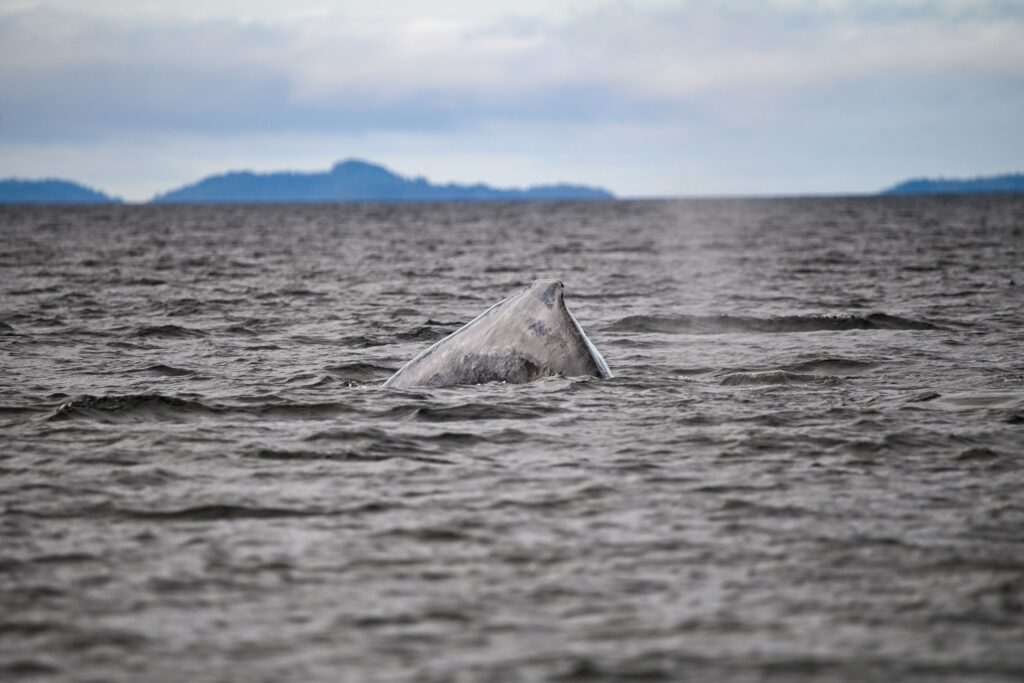
The outer coast of Kenai Fjords National Park, accessible by boat from Seward, is where the predictable large-whale watching happens. Humpback whales summer in the Gulf of Alaska and move through the Kenai Fjords outer waters from May through October, feeding on herring and krill in the productive upwelling zones. Peak concentrations align with the height of herring and salmon season in July and August. A full-day cruise departing Seward at 8 or 9am and returning by 5pm will cover the outer fjords where humpback activity is highest, and most departures in midsummer encounter humpbacks within the first two to three hours of reaching open water.
Major Marine Tours operates the largest fleet of Kenai Fjords day cruises from Seward and covers the outer coast including the Chiswell Islands area where whale concentrations are reliable. Their full-day tours include a narrated natural history program and often feature multiple humpback encounters, with bubble-net feeding behavior — a coordinated hunting technique where multiple humpbacks produce a spiral of bubbles to concentrate fish before lunging through the surface — visible during peak feeding periods in August. A skilled naturalist guide on board provides species identification and context that significantly improves the quality of the experience.
Orca pods are present in Kenai Fjords waters year-round, and both resident fish-eating orca and transient mammal-hunting orca move through the outer coast. Transient orca sightings near humpback concentrations are spectacular — the contrast between a humpback breach and an orca fin cutting through the same water within minutes is the kind of concentrated wildlife encounter that Alaska is capable of producing. Fin whales, the second-largest animal on Earth, are seen less frequently than humpbacks but appear in outer Kenai Fjords waters during the summer months, identifiable by their tall, backward-curving dorsal fins and the chevron pattern on their right jaw.
For visitors wanting a more intimate experience than a large-vessel tour, Lazy Otter Charters and other small-boat operators based in Whittier and Seward offer customized tours for smaller groups. The tradeoff is range — a 12-person vessel cannot cover the same distance in a day as a 150-person tour boat — but the close-range wildlife encounters on a small boat feel qualitatively different from watching the same animal from three decks up on a large vessel.
Bonus Wildlife on Whale Watching Tours
The same tours that produce whale sightings in Kenai Fjords waters also pass through some of the most productive seabird and marine mammal habitat on the Pacific coast. Sea otters are a constant presence — they float on their backs in the kelp beds adjacent to the cruise route and are among the most reliably entertaining wildlife on any tour. Steller sea lions haul out at the Chiswell Island rookery in numbers that make the whole rock visible from a distance; the smell reaches the boat before the individuals become distinct. Tufted and horned puffins nest on sea stacks along the outer coast and are visible from May through August, diving from cliff faces and swimming through the surface chop with the mechanical urgency of birds that are not efficient fliers but exceptional divers. The variety of wildlife packed into a single Kenai Fjords day tour is one of the most compelling arguments for booking the full-day option rather than the half-day coastal cruise.
Best Months and Practical Tips
May through September is the whale watching season from Anchorage. May offers early-season humpback arrivals and the first beluga activity in Turnagain Arm, with lower prices and smaller crowds than peak summer. July and August are peak months — maximum whale concentrations offshore, peak beluga activity in the arm, and the most consistent daily tour departures from Seward. September extends the season with coho salmon runs driving continued whale feeding activity, and the fall light on the outer coast produces exceptional photography conditions as the low-angle sun illuminates the fjords at dramatic angles.
Seasickness is a real consideration on the Kenai Fjords outer coast tours. The full-day tours cross open Pacific water that can have significant swell even on calm-looking days. Over-the-counter medication taken the night before and morning of departure is substantially more effective than medication taken after symptoms begin. Ginger supplements, pressure-point wristbands, and staying on deck in fresh air near the vessel’s center are additional mitigation measures. If you are susceptible to motion sickness, ask the booking operator whether the day’s tour is going to the outer coast (more exposed) or staying in the protected inner fjords (significantly calmer).
Binoculars are useful but not mandatory for whale watching from a large tour vessel — humpbacks at fifty yards are visible without optical assistance. They are important for the seabird colonies at the Chiswell Islands and for scanning distant horizon lines for spouts before the vessel redirects course. A 10×42 binocular is the practical standard. Dress for thirty to forty degrees cooler than Anchorage air temperature on the water; a calm 65°F day in Seward can feel like 45°F at sea with wind. Bring more layers than you think you need and store them in a dry bag if rain is forecast.


No comments yet.