
Midnight Sun Activities in Anchorage 2026: What to Do When It Never Gets Dark
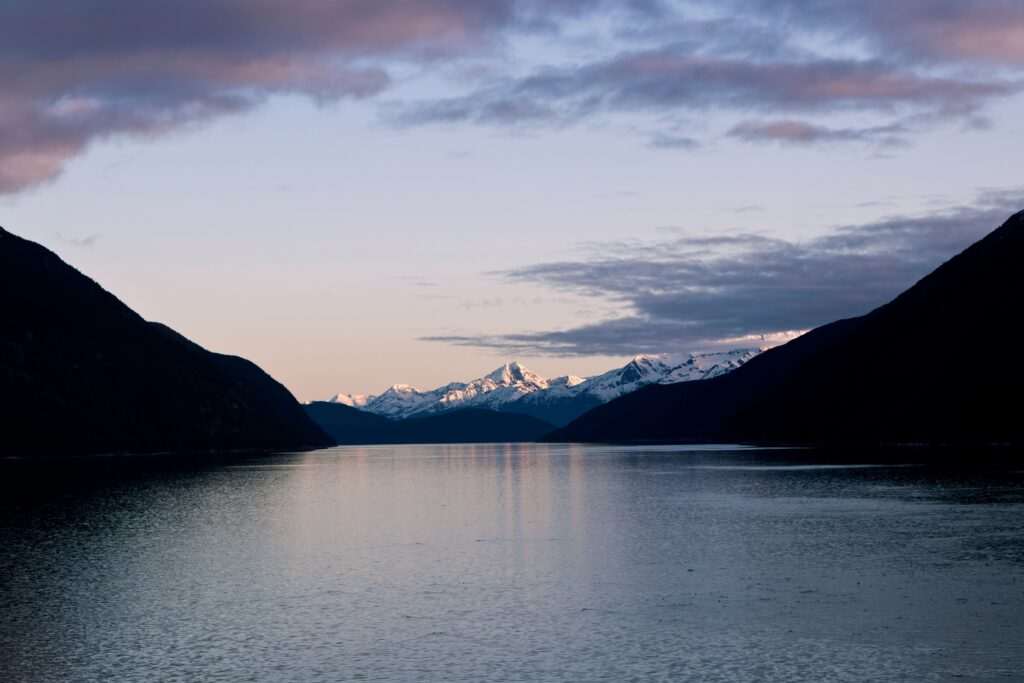
On June 21, the summer solstice, Anchorage gets 19 hours and 22 minutes of official daylight. What the daylight counter doesn’t capture is the hours on either side: nautical twilight, when the sky is fully lit and functional but the sun sits below the horizon, extends the usable light window until it is, by any practical measure, never dark. By late June, the sky over Anchorage goes through a brief period of deep orange-pink twilight somewhere around 1 a.m. and brightens again by 3 a.m. — with full daylight returning well before most residents wake up. This is the midnight sun: not the unbroken arctic day of Barrow or Utqiaġvik, where the sun never sets for weeks, but something more striking in its own way — a city with sidewalk restaurant patios full of people at 10 p.m., golfers finishing a round at 11, and hikers reaching trailhead summits in the golden light that most latitudes only see for twenty minutes at dusk.
What the Midnight Sun Actually Looks Like
The confusion visitors often bring is expecting the sun to be directly overhead at midnight. In Anchorage (latitude 61°N), the midnight sun means the sun is low on the northern horizon during the late-night hours — not overhead, but not set. The quality of light during this period is exceptional: long shadows, warm orange-pink tones, and an atmospheric softness that photographers spend careers chasing. The “golden hour” of photography becomes the “golden several hours” in Anchorage from late May through late July — from roughly 9 p.m. to midnight the light sits at angles and intensities that flatter landscapes, trail vistas, and faces equally.
The practical effect is that Anchorage functions as a nearly 24-hour outdoor city from mid-June through early July. Restaurants fill their patios. Trailheads stay busy past 9 p.m. Parks buzz with families running out an extra hour of energy. For visitors accustomed to sunset as a natural endpoint to the day’s activities, Anchorage’s summer requires a recalibration of schedule — the day simply does not end at the expected time.
Best Midnight Sun Activities in Anchorage
Late-Night Coastal Trail Walking
The Tony Knowles Coastal Trail is Anchorage’s premier recreational trail, running 11 miles from downtown along the bluff above Knik Arm and Turnagain Arm to Kincaid Park. At 9 or 10 p.m. on a clear solstice evening, the trail delivers one of the signature Anchorage summer experiences: the low sun painting the mudflats of Knik Arm orange while Denali and the Alaska Range sit on the western horizon, all of it in clear light with no crowds. The full trail from Second Avenue downtown to Kincaid takes roughly 2–3 hours at a casual pace. Cyclists, inline skaters, and joggers share the trail, and the paved surface is smooth enough for strollers in the family-friendly sections near Earthquake Park and the beach access points. The trailhead parking at the Westchester Lagoon end stays lit — figuratively and literally — well into the summer night.
Midnight Golf
Moose Run Golf Course, on Fort Richardson and accessible to civilians, offers summer rounds that can legitimately tee off at 10 or 11 p.m. under functional daylight. This is not a novelty claim — the Midnight Sun Golf Tournament, an annual Anchorage tradition, draws players who play a full round starting near midnight on the summer solstice. Even outside organized events, booking a late tee time on any June or July evening means finishing 18 holes in that long golden light with Chugach peaks behind the fairways. Moose Run has two 18-hole courses and green fees that undercut most urban courses in the Lower 48. Reservations are recommended for peak summer times.
The Anchorage Saturday Market
The Anchorage Market & Festival operates on Saturdays from early May through mid-September and typically runs into the early evening — meaning late arrivals in June and July wander a full outdoor market in warm golden light rather than darkening afternoon. The market covers multiple blocks of downtown near Third Avenue and E Street, with produce, Alaska artisan goods, hot food stalls, and live entertainment spread through the vendors. The food section in particular draws diners pairing market browsing with dinner from stall operators selling reindeer sausage, salmon tacos, and local berry desserts. A Saturday evening visit in late June — arriving at 5 or 6 p.m. and staying for dinner — unfolds in full golden light with no sense of the day winding down, because it genuinely isn’t.
Evening Recreation at Kincaid Park
Kincaid Park anchors the southern end of the Tony Knowles Coastal Trail and offers 1,500 acres of trails through boreal forest and coastal bluff, with views across Cook Inlet to the Alaska Range and Denali on clear days. In summer, the trail network sees active use well into the evening — mountain bikers running technical singletrack, trail runners covering the cross-country loops that double as Nordic ski trails in winter, and families walking the wider paths through spruce forest. The park’s position at the tip of the peninsula means spectacular late-evening light over Cook Inlet, with the western mountains catching the low sun at angles that hold color long after the clock reads 10 or 11 p.m. Restrooms, parking, and a disc golf course are available at the main lot off Raspberry Road.
Outdoor Dining and Late Patios
Anchorage’s restaurant culture adapts visibly to the midnight sun season. Downtown and Midtown establishments with outdoor seating stay occupied well past normal dinner hours — a 9 p.m. reservation at a restaurant with a west-facing patio delivers a meal in direct evening sunlight. Resolution Brewery near the waterfront, Glacier Brewhouse downtown, and several South Anchorage restaurants extend patio hours through summer. The absence of darkness removes the usual ambient cue to head home, and dinner-to-drinks progressions stretch longer than they would in most cities. Visitors who plan for this — eating late, choosing west-facing venues, and expecting to stay out past what their body clock considers “evening” — make the most of the extended outdoor social season.
Photography Tips for Midnight Sun Light
Alaska’s extended golden hour rewards photographers who show up when most visitors are at dinner. Practical considerations:
- Shoot between 9 p.m. and midnight. The sun’s angle during this window produces the warmest light and longest shadows. Light quality exceeds midday, and crowds at popular viewpoints thin significantly after 8 p.m.
- Face north or west. The low summer sun tracks along the northern sky; shooting north puts warm light beside subjects. Westward views at 10 p.m. — Cook Inlet from Kincaid Park, the Coastal Trail bluffs, the Earthquake Park beach — put the golden light directly in your frame.
- Use a tripod for the 1–3 a.m. window. During the brief twilight hours, light levels drop enough that handheld shots will blur. A lightweight travel tripod opens up low-light landscape options that smartphone cameras handle surprisingly well with night mode.
- Try Westchester Lagoon after 10 p.m. The lagoon near the Coastal Trail reflects late-evening sky color on calm nights — still water in the middle of the city producing images that look processed beyond reality.
Practical Tips for Visiting During the Midnight Sun
Blackout curtains are essential for sleep. Most Anchorage hotels provide them; Airbnb and short-term rentals vary. Without them, the absence of darkness means nothing in your environment signals that it’s time to sleep — melatonin timing becomes entirely behavioral rather than light-driven. Pack a sleep mask as backup.
Stay hydrated. Extended outdoor activity in light that doesn’t signal heat the way direct afternoon sun does means visitors underestimate fluid loss. Carry more water than you think you need on any trail outing longer than an hour.
Build buffer time into evening plans. The sense that there’s still daylight has a way of extending activities past planned endpoints. If catching a morning flight or boat, set alarms and treat them seriously — without darkness as a cue, “just one more hour” can slide past midnight without registering as late.
When to Visit for the Midnight Sun
Peak midnight sun in Anchorage runs from approximately June 10 through July 10. The days around the June 21 solstice are most dramatic: the sun’s late-night arc is most pronounced, and the brief twilight period around 1–3 a.m. holds the warmest color. Mid-May through late July offers extended daylight without the full midnight-sun effect — the sun sets, but twilight holds until 11:30 p.m. or later, giving most of the practical light benefits without the continuous day of June. This shoulder window suits visitors who want extended evening light without the all-night brightness that challenges sleep. Late July sees daylight shrink noticeably each week, but evenings remain long enough to catch the golden-hour effect through early August.
Featured photo by Tiffany Bumgardner on Pexels.
No comments yet.