
Midnight Sun in Anchorage — What to Expect & Best Activities 2026
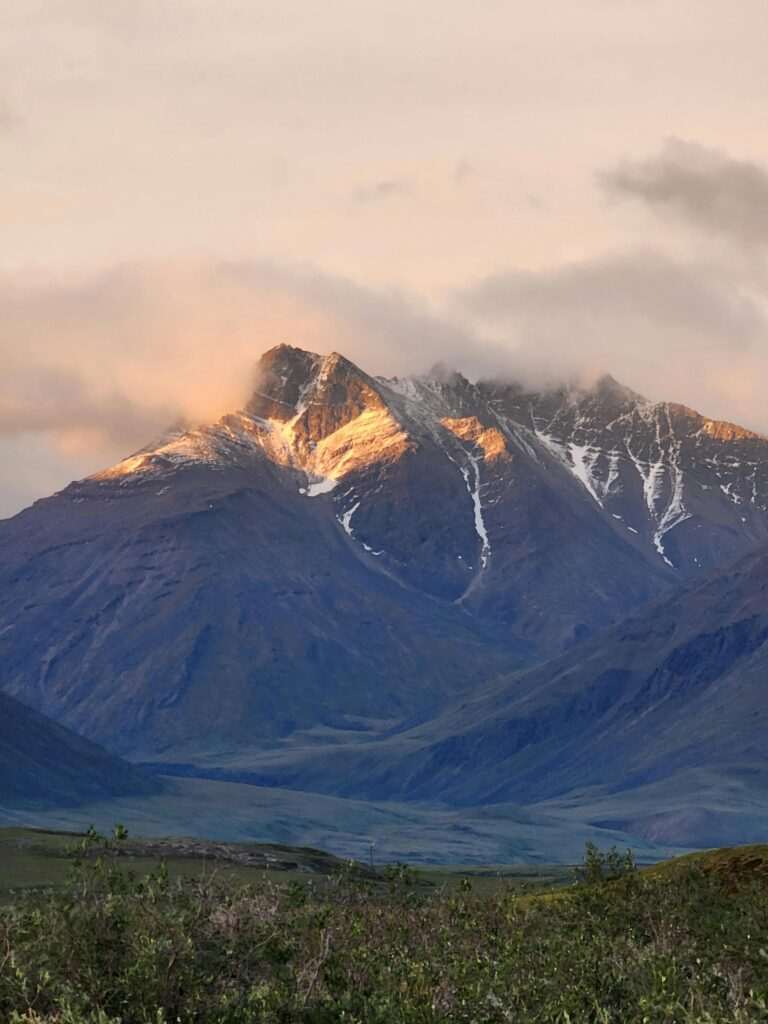
On June 21 in Anchorage, the sun sets at 11:42 p.m. and rises again at 4:21 a.m. — and between those two events, the sky never goes dark. For roughly five weeks each summer, centered on the summer solstice, Anchorage experiences the midnight sun: a phenomenon where the sun dips below the horizon briefly but the sky remains lit in a long golden twilight that never transitions to night. For visitors from temperate climates, this is one of Alaska’s most disorienting and genuinely magical features.
What Is the Midnight Sun?
The midnight sun occurs at latitudes above the Arctic Circle — but Anchorage, at 61°N, sits just below that threshold, meaning the sun does briefly dip below the horizon rather than staying above it all night. What visitors actually experience is something only slightly less dramatic: an extended golden twilight centered on midnight, during which the light transitions through amber and rose tones but never darkens to night. The sky maintains a glow bright enough to read by, hike safely, and photograph without artificial light. True astronomical darkness — the complete absence of twilight — doesn’t occur in Anchorage from approximately May 14 through July 28.
When Does It Happen? Daylight Month by Month
The daylight swing in Anchorage across summer is dramatic. From roughly 15 hours in early May to nearly 19.5 at the solstice, then contracting through August:
| Date | Sunrise | Sunset | Daylight Hours |
|---|---|---|---|
| May 1 | 6:14 a.m. | 9:37 p.m. | 15h 23m |
| May 15 | 5:30 a.m. | 10:14 p.m. | 16h 44m |
| June 1 | 4:51 a.m. | 11:02 p.m. | 18h 11m |
| June 21 (solstice) | 4:21 a.m. | 11:42 p.m. | 19h 21m |
| July 4 | 4:31 a.m. | 11:36 p.m. | 19h 5m |
| July 15 | 4:58 a.m. | 11:17 p.m. | 18h 19m |
| August 1 | 5:41 a.m. | 10:37 p.m. | 16h 56m |
| August 15 | 6:17 a.m. | 9:57 p.m. | 15h 40m |
The practical consequence: dinner at 8 p.m. is still full daylight. A hike that starts at 9 p.m. can reasonably extend three hours. Wildlife that would typically be invisible in low light becomes viewable well past midnight. Schedule-based planning becomes largely irrelevant; Anchorage in June operates on energy and appetite rather than clock time.
What the Midnight Sun Actually Looks Like
The common assumption is that the midnight sun looks like regular noon light. It doesn’t. The sun at 11 p.m. is low on the horizon — between 5 and 10 degrees above the Chugach Mountains to the northwest — and casts the long, warm light of a sustained golden hour. Shadows stretch across the valley floor. The Chugach peaks catch pink alpenglow that holds for hours. Cook Inlet turns bronze. The quality of light is what landscape photographers spend careers chasing, available nightly for six weeks.
The genuine disorientation isn’t about brightness — it’s about the absence of the cues that normally trigger fatigue and time awareness. There is no darkening that signals the day is done. Restaurants stay busy past 10 p.m. Children play outside at midnight. The concept of “late” simply doesn’t function. Most visitors describe losing two to four hours somewhere in the evening and not knowing exactly when it happened.
Best Midnight Sun Activities in Anchorage
Midnight Hiking
Flattop Mountain on a midsummer evening is one of the signature Anchorage experiences. The summit views at 10 p.m. — downtown spread below, Cook Inlet shining bronze, the Alaska Range in violet silhouette to the north — are substantially more dramatic than the same view at noon. The trail is 3.4 miles round-trip with 1,300 feet of gain; bring layers, as summit temperatures run 15°F cooler than the trailhead and the wind comes up after 9 p.m. The broader Chugach State Park trail network includes the Powerline Trail (flat, 11 miles through the front range) and numerous routes accessible well into the evening with no additional preparation beyond extra layers.
Late-Night Biking
The Tony Knowles Coastal Trail at 10 p.m. in June runs with a steady stream of cyclists, joggers, and walkers — locals who have built their schedules around the available light. The 11-mile trail runs along Cook Inlet’s shoreline with mountain views across the water and wildlife (moose, beluga whales during salmon run timing) visible from the path. Bike rentals are available near the trail. The paved surface handles the evening traffic well, and the combination of golden light on the water and the Alaska Range across the inlet makes this one of the more photogenic cycling routes in the state.
Midnight Golf
The Anchorage Golf Course hosts a Midnight Sun Golf event annually around the June solstice — tee times after 10 p.m. for fully playable rounds under natural light from start to finish. No headlamps, no adjustments to normal play. The experience of reading a green with the sun still above the mountain ridge is memorable in a way that’s difficult to reproduce elsewhere. Book early for solstice-week tee times, which sell out in advance.
Solstice Events and Community Runs
The Anchorage Solstice Run (10K and 5K) takes place on or near the summer solstice each June, with late-evening start times to maximize the midnight sun effect. The race is a community event with broad local participation, an easy entry point for visitors who want to experience the solstice alongside residents. Check the Anchorage Downtown Partnership calendar for current solstice-week programming — the Town Square Park area typically hosts outdoor events in the extended evening hours.
Wildlife Viewing at Dusk and Dawn
Moose and bears in the Chugach greenbelt are most active in the low-light hours of early morning and late evening — which in midsummer means roughly 9 p.m. to 4 a.m. Potter Marsh Bird Sanctuary, 10 miles south on the Seward Highway, is especially productive in the extended twilight, when shorebirds, cranes, and Arctic terns feed actively in light that makes identification easy. The Westchester Lagoon section of the coastal trail is a reliable moose viewing area in the evening hours, with animals feeding in the shallow margins without the midday heat that drives them into shade.
Tips for Sleeping Through the Midnight Sun
Blackout curtains are not optional in Anchorage summer — they are a functional requirement for sleep. Most hotels have them; verify before booking if you are light-sensitive. If your accommodation lacks them, a sleep mask is mandatory. The light at 2 a.m. through a standard curtain is equivalent to late afternoon — sufficient to prevent sleep onset for most people who are not acclimated.
Practical adjustments: set a phone alarm to trigger a firm bedtime regardless of how bright it is outside. Keep curtains closed from 9 p.m. onward to let your brain register dimming conditions. Avoid scheduling an early-morning commitment on the day after a midnight hike. Accept that you will sleep less than usual, plan a lower-key recovery day mid-trip, and build the time flexibility into your itinerary from the start.
Photography in 24-Hour Light
The midnight sun creates conditions that don’t exist at lower latitudes. The hour between 9:30 and 10:30 p.m. produces the warmest, longest-shadow light of the day — equivalent to a temperate-latitude golden hour, but lasting 90 minutes rather than 30. Shoot toward the Chugach with the sun behind you for dramatic foreground detail. Shoot toward Cook Inlet for silhouette and reflection. Exposure settings behave normally despite the late hour; meter as you would at any golden-hour session.
The common mistake is treating the midnight sun as a novelty and ignoring the actual composition. A mediocre composition with midnight sun light is still a mediocre photo. The light is the starting point, not the subject. The scenes that work best — mountain reflections, wildlife portraits, urban landscapes with long shadows — work because the composition holds up independently of the unusual timing.
Planning Your Visit
Late June is the peak window: maximum daylight, warmest temperatures, and the cultural moment of the solstice. The two weeks before and after the solstice are nearly equivalent in daylight and typically see fewer crowds than solstice week itself. July remains excellent through mid-month; by late July the nights darken noticeably and the effect diminishes. Early August is a shoulder period — still long days, but the quality of the late-evening light has shifted. May has significant daylight but temperatures run 10–15°F cooler than July and trails may still be wet from snowmelt.
The midnight sun is not a single event — it is a season. Building a trip around it means arriving with a loose schedule, no fixed bedtimes, and the willingness to be outside at 11 p.m. on a warm evening when the light is doing something extraordinary. The itinerary will fill itself.
Featured photo by Ian Robertson on Pexels.
No comments yet.