
Anchorage Midnight Sun 2026 — What Happens at Summer Solstice & How to Enjoy It
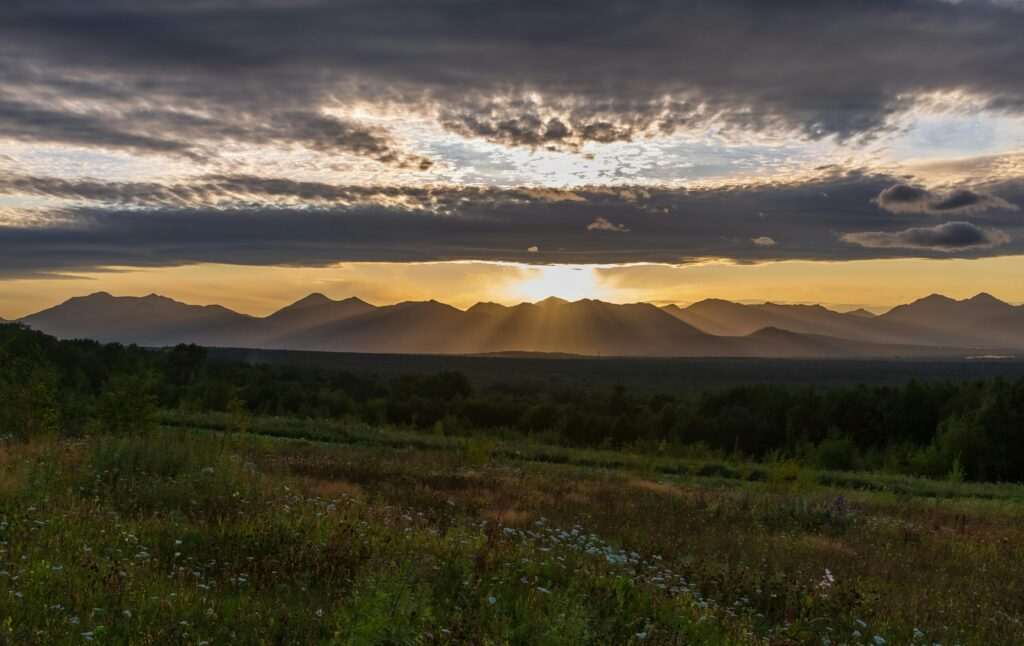
On June 21, 2026, the sun will set in Anchorage at 11:42pm and rise again at 4:20am. At midnight — the technical middle of the night — the sky over the Chugach Mountains holds a deep amber glow, the light coming in at an angle so low and warm it looks like the extended close of a summer evening that simply refuses to end. This is the midnight sun: not perpetual daylight in the way it exists further north, but something arguably stranger — a night that never goes dark, a summer compressed into a few weeks of relentless, exhilarating luminosity.
For visitors, it is one of Alaska’s most disorienting and memorable experiences. Understanding what to expect — and how to make the most of it — turns the midnight sun from a jet-lag complication into one of the primary reasons to visit Anchorage in summer.
The Science: Why Anchorage Has a Midnight Sun
Anchorage sits at 61 degrees north latitude. The summer solstice on June 21 produces approximately 19 hours and 21 minutes of daylight — sunrise around 4:20am and sunset around 11:42pm, with nautical twilight filling the remaining hours so that true darkness never arrives. The sky does not go black; at its darkest, around 1–2am, it maintains a deep blue-purple twilight visible on the northern horizon.
The effect is different from inside the Arctic Circle (where the sun literally does not set). In Anchorage, the sun does technically dip below the horizon for a few hours, but the angle is so shallow that it takes nearly two hours for the sky to dim after sunset and another two hours to fully brighten before sunrise. In practical terms: from late May through mid-July, there are roughly five weeks when a visitor with no blackout curtains will not experience a full night.
What the Sky Actually Looks Like
The midnight sun in Anchorage produces some of the most unusual light you will encounter anywhere. Because the sun travels along the northern horizon rather than arcing overhead, the golden hour stretches for two to three hours — not the 20-minute window common at lower latitudes. Photographers call it the “endless golden hour,” and it is exactly that: the low-angle, warm, directional light that photographers spend thousands of dollars chasing, available for hours on end.
At true midnight on or near the solstice, look north from any elevated viewpoint in Anchorage. The sky above the Chugach Mountains glows amber and rose. The inlet catches the light. Mountains that appear ordinary at noon become dramatically backlit. The visual effect is unlike anything else in the continental United States.
Best Activities During the Long Days
Evening Hiking
Chugach State Park, directly bordering Anchorage’s eastern edge, offers trails accessible until late evening. Flattop Mountain — the most climbed peak in Alaska — provides panoramic Anchorage and inlet views that are extraordinary at 9 or 10pm when the light goes golden. The park’s upper trails empty out after 6pm as day hikers return; starting a hike at 7pm gives you the mountains largely to yourself in spectacular light.
The Bird Creek Trail at Mile 101 on the Seward Highway offers inlet views and a chance to spot Dall sheep on the cliffs above — both more photogenic in evening light than at noon. Trails here are accessible until late into the evening without any need for a headlamp through the summer solstice period.
Wildlife Watching at Dusk
Wildlife is often most active at dawn and dusk — but in Alaska’s midnight sun summer, “dusk” is 11pm. The Potter Marsh Bird Sanctuary at Mile 117 of the Seward Highway is active with waterfowl, shorebirds, and occasional moose through the late evening hours when the marsh light is at its most dramatic. The boardwalk is open during daylight, which means it is effectively open until midnight in June.
For photography specifically, Alaska Photo Treks runs guided photography tours timed to maximize the midnight sun light — a good option for visitors who want help composing shots in conditions they have never photographed before.
Kayaking and Water Activities
Paddling a kayak on a calm inlet at 10pm under lingering golden light is a singular experience. Several outfitters in Anchorage and on Turnagain Arm offer sunset and evening kayak tours specifically timed to the golden hours. The still water in sheltered coves reflects the sky with mirror quality in the long, low light.
Evening Fishing
The salmon runs that make Anchorage a fishing destination peak in June and July — exactly when the midnight sun is most intense. Ship Creek’s downtown fishing is active through 11pm on summer evenings, with anglers chasing king salmon under a sky that looks like it is perpetually one hour from dark. It is an otherworldly experience that no photograph fully captures.
The Midnight Sun Game
On the Friday nearest the summer solstice, the Anchorage Bucs and Anchorage Glacier Pilots — both collegiate summer baseball leagues — play the Midnight Sun Game at Mulcahy Stadium, starting at 10:30pm and playing through midnight without any artificial lights. The game has been played annually since 1906, making it one of the longest-running sports traditions in Alaska. Tickets are affordable and the atmosphere is festive; it is worth prioritizing if your visit coincides with the solstice period.
The Alaska Botanical Garden in Summer
The Botanical Garden’s 110 acres of native plant collections and perennial gardens peak in June and July, directly coinciding with the midnight sun period. Evening visits (the garden is open late in summer) let you experience both the garden at its most vibrant and the extraordinary quality of Alaska’s extended golden-hour light filtering through the tree canopy and across the wildflower beds.
Practical Tips: Sleeping and Managing the Light
- Blackout curtains are essential. Most Anchorage hotels and vacation rentals that cater to summer visitors provide them. If yours does not, a sleep mask is a reasonable substitute. Without light blocking, many visitors find themselves naturally staying awake until 1am — the sky looks like 8pm.
- Reset your internal clock with meals. Eating at consistent mealtimes, regardless of how the light makes you feel, helps regulate your body’s sense of day and night.
- Embrace the disruption. If your body does not want to sleep at 10pm when it looks like noon, do not fight it. Go for a walk instead. The midnight sun is finite — most visitors are only in Anchorage for it once.
- Sunscreen at 9pm. The sun’s angle is low but UV radiation is still present through the evening. Visitors regularly underestimate this and get sunburned during what feels like an evening stroll.
- Peak window: The most dramatic midnight sun effect is May 20–July 20. The solstice (June 21) is the maximum. Daylight hours drop noticeably after July 4th.
The midnight sun is not something that can be fully understood from description. It needs to be experienced — the strange energy of a city that does not quite settle down, the impulse to keep doing things at hours when your body expects darkness, the peculiar beauty of a mountain range lit from below at 11:30 at night. Plan to be surprised by how profoundly it changes the texture of a visit.
Featured photo by Александр Максин on Pexels.

No comments yet.